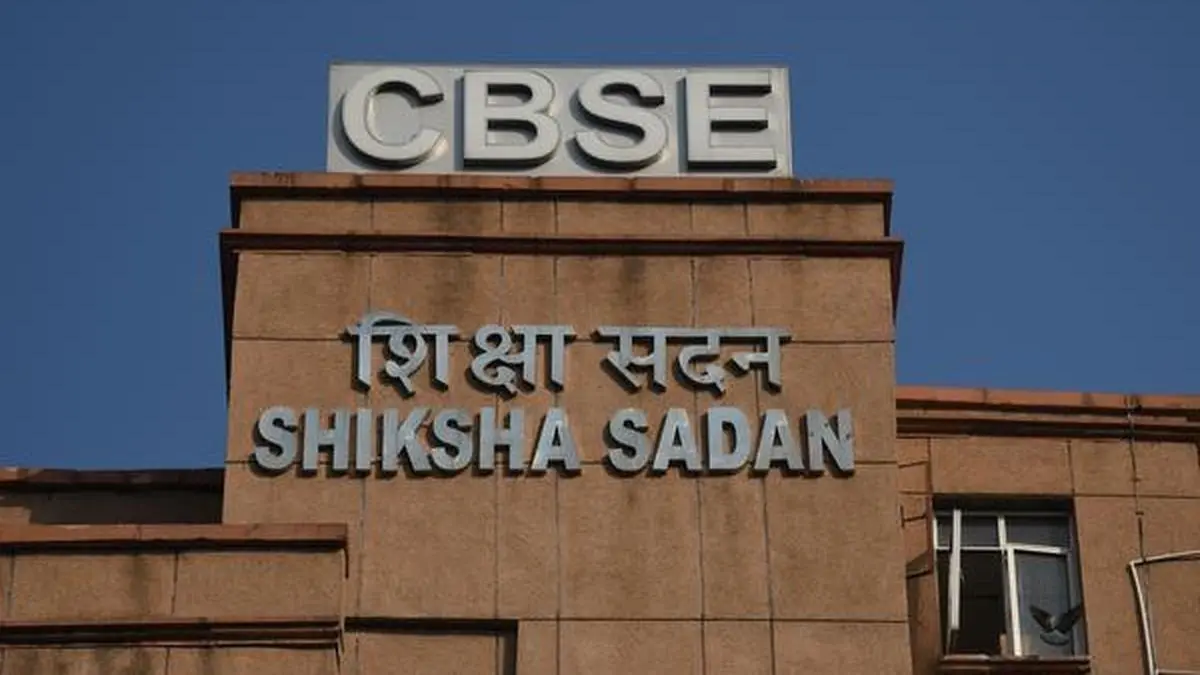
The Centre told the Supreme Court that it was working on suggestions and implementation modalities for the CBSE’s three-language policy for Class 9 students.
| Photo Credit:
KRISHNAN VV
The Centre informed the Supreme Court on Thursday that it was working on its suggestions on implementation of the CBSE’s policy mandating the study of three languages, including two native Indian languages, for Class 9 students.
Additional Solicitor General Aishwarya Bhati told a bench comprising Chief Justice Surya Kant and Justices Joymalya Bagchi and V Mohana that CBSE is in the process of working out various modalities and sought time.
The top court took note of the submission and deferred the matter by a week.
Observing that children should not come under pressure, the top court on August 20 stressed the need to find a solution to issues arising out of the CBSE’s three-language policy for Class 9 students.
It observed that while there was nothing wrong in introducing the policy, the only concern of the petitioners was the manner in which it was being introduced.
“You may revisit some of these problems. There is no doubt that sooner or later, it has to be introduced; there is nothing wrong with that. But how it is to be streamlined so that whatever impediments or blockades are coming up, you may find a solution to those,” the bench had said.
One aspect to be considered was how to build adequate human resource infrastructure for the language options available, it had said.
On May 27, the top court agreed to examine a plea challenging the policy and issued notices to the Centre, the CBSE and the NCERT seeking their responses.
According to a circular issued by the Central Board of Secondary Education (CBSE), the study of three languages, including at least two native Indian languages, has been made compulsory for Class 9 students beginning July 1.
The move is part of the CBSE’s alignment of its scheme of studies with the National Education Policy 2020 and the National Curriculum Framework for School Education 2023.
According to the circular issued on May 15, students opting for a foreign language may do so only as the third language after studying two native Indian languages, or as an additional fourth language.
“With effect from July 1, 2026, for Class 9, the study of three languages (R1, R2, R3) shall be compulsory, with at least two languages being native Indian languages,” the circular said.
The board said till the dedicated R3 textbooks are available, Class 9 students shall use Class 6 R3 textbooks (2026-27 edition) of the chosen language.
The CBSE said to keep the focus on learning and reduce any undue pressure on students, no board examination shall be conducted for R3 at the Class 10 level.
Source: Read the original article on www.thehindubusinessline.com