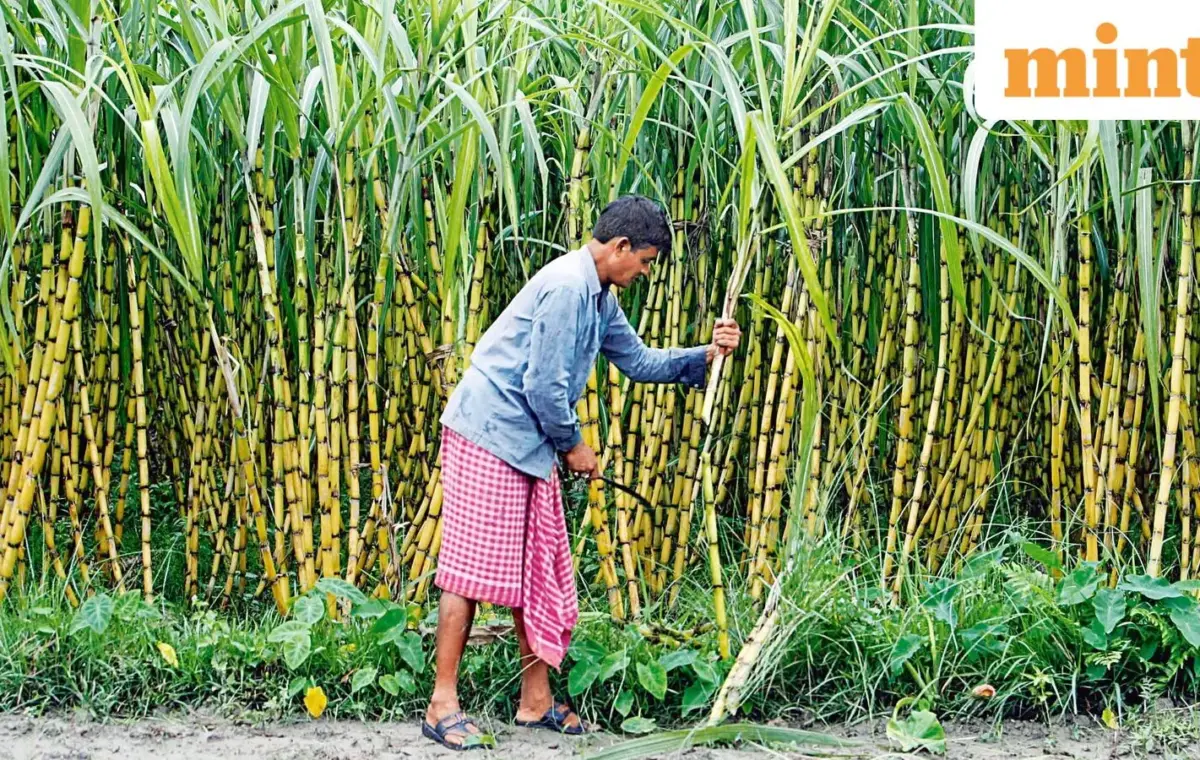
The Centre plans to hold an interministerial meeting to devise a forward-looking strategy to diversify ethanol feedstocks amid declining sugarcane and maize acreage, three people aware of the matter said.
The strategy could involve greater reliance on grains to sustain E20 fuel blending, given the lower availability of sugarcane and maize, particularly in the 2026 kharif season, and a sharp rise in sugar prices ahead of the festive season.
Average retail sugar prices stood at ₹63.28 per kilogram on 31 August, up 37.5% year-on-year. The government has taken several measures to curb the rise, including allowing imports of 1 mt of raw sugar, halving the stockholding limit for sugar dealers to 2,000 quintals, and restricting bulk consumers to stocks equivalent to 15 days of consumption.
“The government is also considering limiting the diversion of sugarcane for ethanol to protect sugar supplies amid lower output and rising prices,” said the first of the three people cited above.
“The emerging road map could focus on balancing food and fuel needs while expanding grain-based distillery capacity,” this person said, adding that there has been no discussion of rolling back the 20% ethanol blending mandate.
“The policy landscape will focus on keeping the allocation quota flexible and allowing diversification of raw material for ethanol production, based on the actual availability and production of sugarcane, maize and other grains,” the second person said.
Mint reported on 27 August that the petroleum ministry is in talks with state-run oil marketing companies (OMCs) to explore the feasibility of replacing E20 (20% ethanol) with E10 in Octane 95 petrol.
Maize remains India's largest ethanol feedstock, followed by surplus Food Corporation of India grains, sugarcane juice, B-heavy molasses and damaged foodgrains.
But the area under maize and sugarcane has declined in the latest acreage data, potentially tightening the availability of two key feedstocks for the country’s ethanol programme. Maize acreage stood at 8.99 million hectares as of 28 August, down from 9.38 million hectares a year ago. Sugarcane acreage was 5.84 million hectares, around 43,000 hectares lower than a year ago.
“For a country like India, maintaining stable prices of sugar and livestock feed is key to ensuring stability in the supply chain. Any disruption could lead to price increases, as witnessed in the case of sugar and poultry feed, where higher feed costs have pushed up egg prices. If the trend continues, milk prices could also come under pressure,” the third person said. All three spoke on the condition of anonymity.
“Ensuring that prices remain affordable for consumers is a government priority. In this case, a balancing act is the need of the hour, as both objectives are essential to building a developed economy by 2047,” the third person added.
Mint's queries emailed to the ministries of agriculture, petroleum and natural gas and the department of food and public distribution remained unanswered.
C.K. Jain, president of the Grain Ethanol Manufacturers Association (GEMA), said that sugarcane and maize will be very important to meet this requirement. "DDGS (Distiller's Dried Grains with Soluble) from food grains is also available, while surplus rice stocks are quite high. Let us see how the government approaches this. It will entirely depend on how much surplus rice is utilized and what feedstocks are used, whether sugarcane, maize or other feedstocks.”
“The FCI has also taken the resultant broken rice. It has reduced the broken rice component in rice from 25% to 10%, freeing up around 100 lakh tonnes (10mt), of which 55 lakh tonnes (5.5mt) has been reserved for the industry.”
India’s rice stocks stood at 40.2 million tonnes (mt) as of 1 August, well above the 13.5mt buffer stock norm.