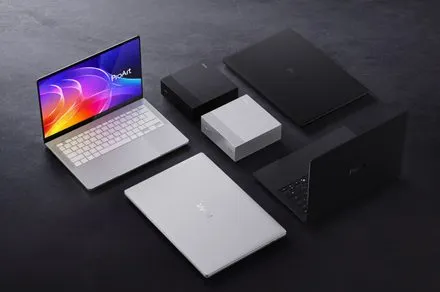
Asus is taking its ProArt lineup deeper into the AI era with the new ProArt P16 and ProArt P14, the first ProArt laptops powered by Nvidia’s RTX Spark platform. The company is showcasing the machines at IFA 2026 in Berlin, positioning them as portable workstations for creators and developers who increasingly want to run AI workloads directly on their PCs.
The biggest change is happening under the hood. Nvidia RTX Spark combines a Blackwell RTX GPU with 6,144 cores, an Nvidia Grace CPU with up to 20 cores, and fifth-generation Tensor Cores with FP4 precision. Asus says the platform can deliver up to 1 petaflop of AI performance and up to 128GB of unified memory.
For creators, that means the ProArt laptops are being built around a different idea of what an AI PC should do. Instead of constantly sending prompts, files and creative workloads to the cloud, users can run demanding AI applications locally. Asus highlights benefits such as avoiding token-based cloud costs, keeping sensitive creative assets on the machine, and working with AI even when offline.
The hardware is also surprisingly portable for what Asus is promising. The ProArt P16 measures just 12.9mm thick and weighs 1.77kg, making it the company’s thinnest 16-inch ProArt laptop. The ProArt P14 weighs 1.48kg and measures 13.9mm thick. They pack 99Wh and 90Wh batteries respectively, giving mobile creators plenty of capacity for longer creative sessions.
The displays are clearly aimed at professional creative work rather than simply gaming or general productivity. The ProArt P16 supports up to a 4K 120Hz OLED display with VRR, while the P14 goes up to 3K resolution. Both use Asus Lumina Pro OLED technology with Delta E below 1 for color accuracy, while peak brightness reaches 1,600 nits.
Asus is pairing the hardware with its own local AI software. MuseTree integrates local image-generation models including FLUX and WAN, allowing creators to generate content without relying on cloud tokens. StoryCube uses AI for scene recognition, media organisation and asset management. Asus is also demonstrating agentic workflows through ComfyUI, showing how AI agents could move between generation, editing and asset management instead of operating as isolated tools.
The RTX Spark-powered ProArt P16 and P14 therefore represent Asus’ attempt to make local AI genuinely useful for creators, rather than simply adding an AI badge to another laptop. Asus has not provided pricing or detailed regional availability in the supplied announcement.