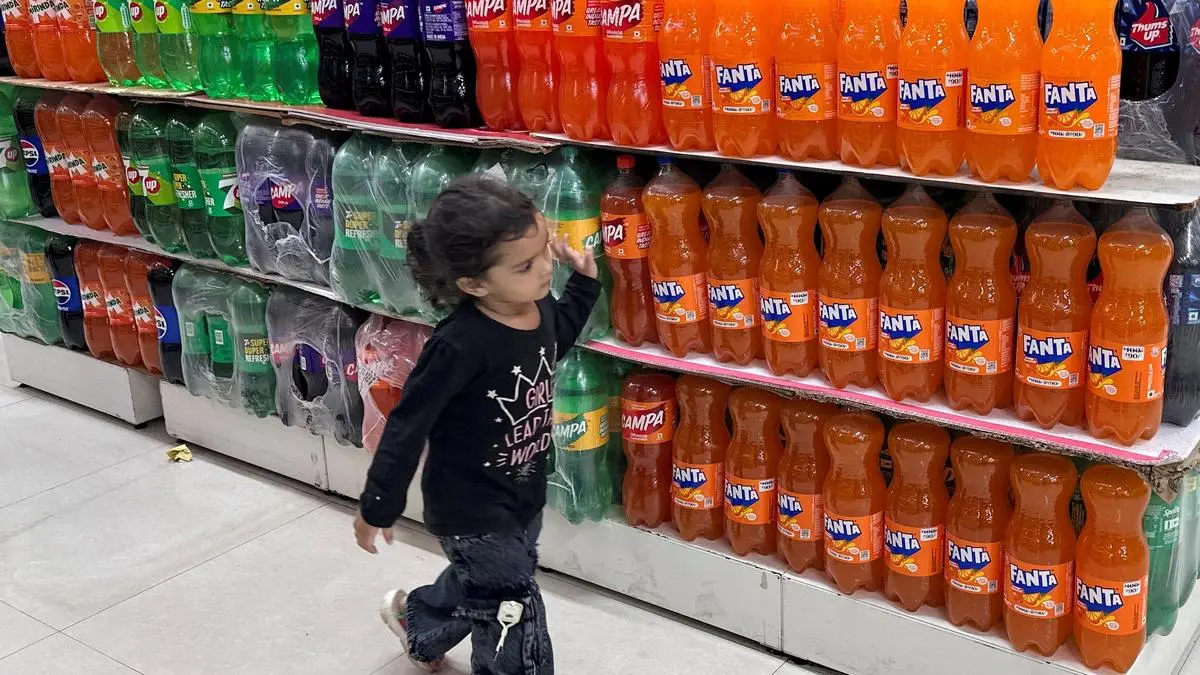
For global health safety experts, India’s proposed two-nutrient threshold is however a key concern because products that are high in just one of the three flagged nutrients will effectively escape scrutiny.
| Photo Credit:
REUTERS/FRANCIS MASCARENHAS
The Indian government is facing fierce opposition on proposed food warning labels from both health experts and food giants – activists say many items will escape scrutiny while companies warn that the strict thresholds will put red flags on a wide range of products.
In a setback to India’s over $100 billion packaged food industry, which has long opposed any form of front-of-pack warnings, the Food Safety and Standards Authority of India (FSSAI) last week proposed a red-coloured hexagonal label for products that exceed limits in at least two of three nutrients — added sugar, salt or saturated fat.
The proposal came amid intense public anger and debate after Reuters reported that India’s government had yielded to industry lobbying in March when Coca-Cola and groups backing Nestle and PepsiCo opposed having warning labels on the front of food and drinks packaging.
For global health safety experts, India’s proposed two-nutrient threshold is however a key concern because products that are high in just one of the three flagged nutrients will effectively escape scrutiny.
“It will be meaningless. No other country uses the double nutrient approach,” said Barry Popkin, a professor in the Department of Nutrition at UNC Gillings School of Global Public Health. “Every country with warning labels has a separate label with large fonts for each key nutrient.”
Globally, researchers say warning labels have benefited public health, and India’s Supreme Court has called for their implementation while hearing pleas from activists.
Chile’s 2016 food labelling law, which puts separate black octagons on a pack for each nutrient that is excessive, was followed by a 23.7% decline in purchases of sugary drinks in the 18 months after it kicked in, according to a study in the journal PLOS Medicine.
Prime Minister Narendra Modi’s government this year flagged obesity concerns, saying retail sales of ultra-processed food increased 40 times between 2006 and 2019 to $38 billion. India had 180 million adults who were overweight or obese in 2021, projected to rise to 450 million by 2050, according to a study published in The Lancet.
The FSSAI has presented the labelling proposal to the Supreme Court and judges will decide on its merits during a hearing scheduled for September 10, a government source told Reuters when asked about health experts’ concerns.
The health group that challenged New Delhi in court, 3S And Our Health, has already prepared a draft submission for the judges challenging the proposal. Seen by Reuters, it says there are many loopholes including an exemption granted to honey, jaggery and similar inherently sugar- or fat-rich foods, and it also flags the “two-nutrient threshold”.
Under the current proposal, a Kellogg’s multigrain Chocos box in India, whose label shows it contains 27% added sugar by weight but has fat and salt within the proposal’s limits, will potentially escape warnings.
A spokesperson for Kellogg’s owner Mars said the company supports “clear, science-based nutrition information” and will comply with Indian laws as and when they change.
However, Mars added: “Ingredient requirements and local tastes vary regionally. We believe all foods can be part of a balanced diet.”
Unilever’s India unit also said it was committed to compliance with Indian labelling rules and supports measures to help consumers make informed choices. Nestle, PepsiCo , Coca-Cola and Mondelez did not respond to queries.
Source: Read the original article on www.thehindubusinessline.com