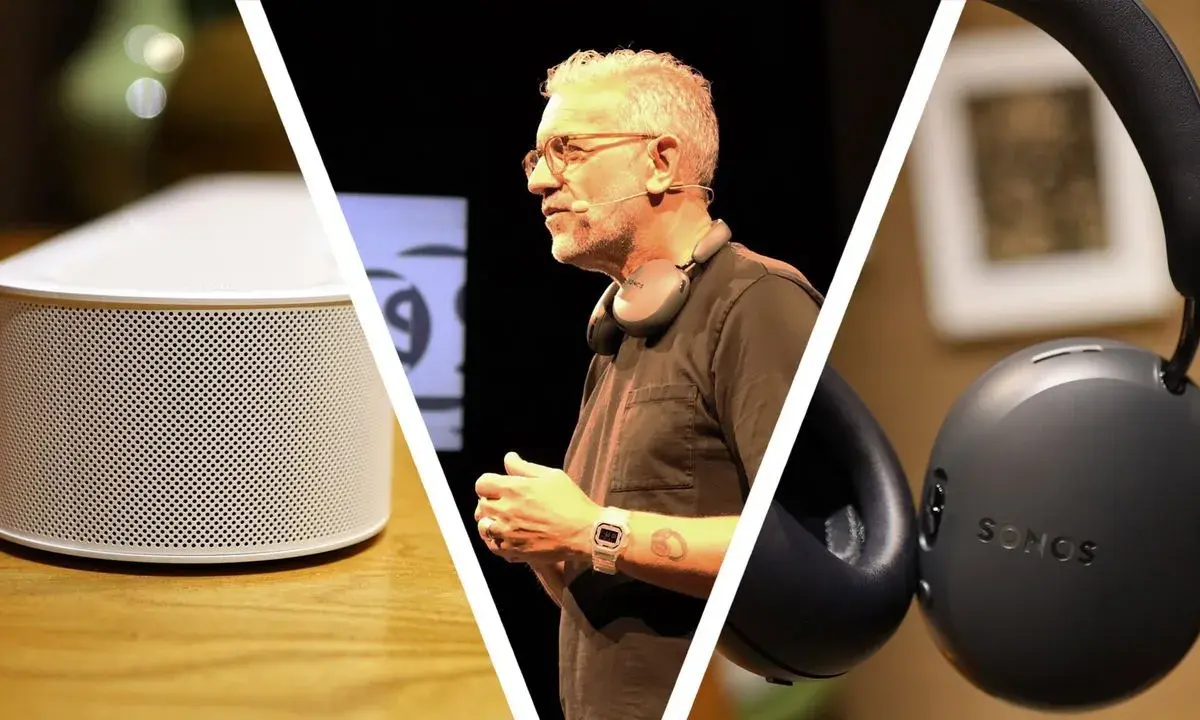
A platform, fabric, and some new hardware seem set to transform the once beleaguered tech company
When you purchase through links on our site, we may earn an affiliate commission. Here’s how it works.
Sonos, a name synonymous with effortless home audio, has had a somewhat spotty track record in recent years. The audio quality has been unfailingly excellent, but Sonos software efforts have been an enervating mix of doing too much and too little, leaving customers not just cold but actively frustrated. Its latest updates and innovations are quite different: The introduction of a unifying platform, Sonos 27, and the threads that can pull it all together in something unironically called Sonos Fabric.
I reached this conclusion on Tuesday as I sat in a darkened space and watched relatively new company CEO Tom Conrad dash from one demo living space setup to another, carrying a pair of Sonos Play speakers. He placed the pair of them on a credenza opposite the new Sonos Beam Ultra and then, without touching the Sonos app or even fiddling with the speakers, transformed the three audio sources into a unified surround sound system. And when he was done integrating the small speakers into the larger sound system, Conrad simply picked up the Sonos Play speakers and returned them to their original space. The speakers then reconnected to the standard Sonos Wi-fi network and resumed their regular roles.
This is Sonos 27 and Fabric at work, where Sonos products know when they're being lifted and moved and then can communicate ultrasonically with the Beam Ultra, which then makes a small mesh network connection to build a super-low-latency surround system.
It looked and sounded like magic and is exactly the kind of dream audio scenario I imagined when buying disparate speakers. Sonos, which has always allowed its speakers to communicate and create stereo sound systems, has long held the promise of this kind of automation, but it was never possible before Fabric.
It's a hardware and software feature that could excite existing customers and even inspire a legion of new ones.
Where Sonos' software development once seemed sort of aimless and disconnected from consumer demands, Conrad's Sonos appears to be hyper-focused on doing only what makes sense for its customers.
Take its Sonos 27Voice, which manages to up the intelligence of the Sonos voice system while staying firmly in the audio lane.
Sign up for breaking news, reviews, opinion, top tech deals, and more.
Read our exclusive interview with Sonos CEO Tom Conrad
Instead of trying to transform your Sonos speaker into a voice-activated hub for all your smart home needs, Sonos decided to keep the 27Voice fixated on Sonos capabilities, but with a bit of a twist that I think people will appreciate. In Conrad's demo, he asked a sort of rambling question about a musician, and 27Voice quickly connected him to his desired music. Time and again, Conrad's vague queries resulted in sonic pleasure.
Sonos' other strategic gem, though, is openness. So, if you want to ask your Sonos tougher questions, like how to properly cook tenderloin, it'll happily pass only the prompt to another AI of your choice.
This open approach also carries through in reverse, with AI models like Claude, ChatGPT, and, yes, Siri, able, via something Sonos calls Sopnos MCP, to control Sonos speakers through the new Sonos platform.
Sonos is also fixing past missteps by, for instance, making sure that new products joining the mix are complete and fully integrated members of the Sonos family.