Get the Popular Science daily newsletter💡
Breakthroughs, discoveries, and DIY tips sent six days a week.
Japan’s bears are still causing problems. The hefty predators continue to stray from mountainous forests in search of food, putting them in direct contact with the nation’s rapidly aging and dwindling population. According to the country’s Environment Ministry, bears have killed six people across the country since April 1, while a record 13 victims died during the previous fiscal year. It’s gotten so bad that Japan called in the armed forces to help, and companies are even running out of their popular robotic wolf deterrents.
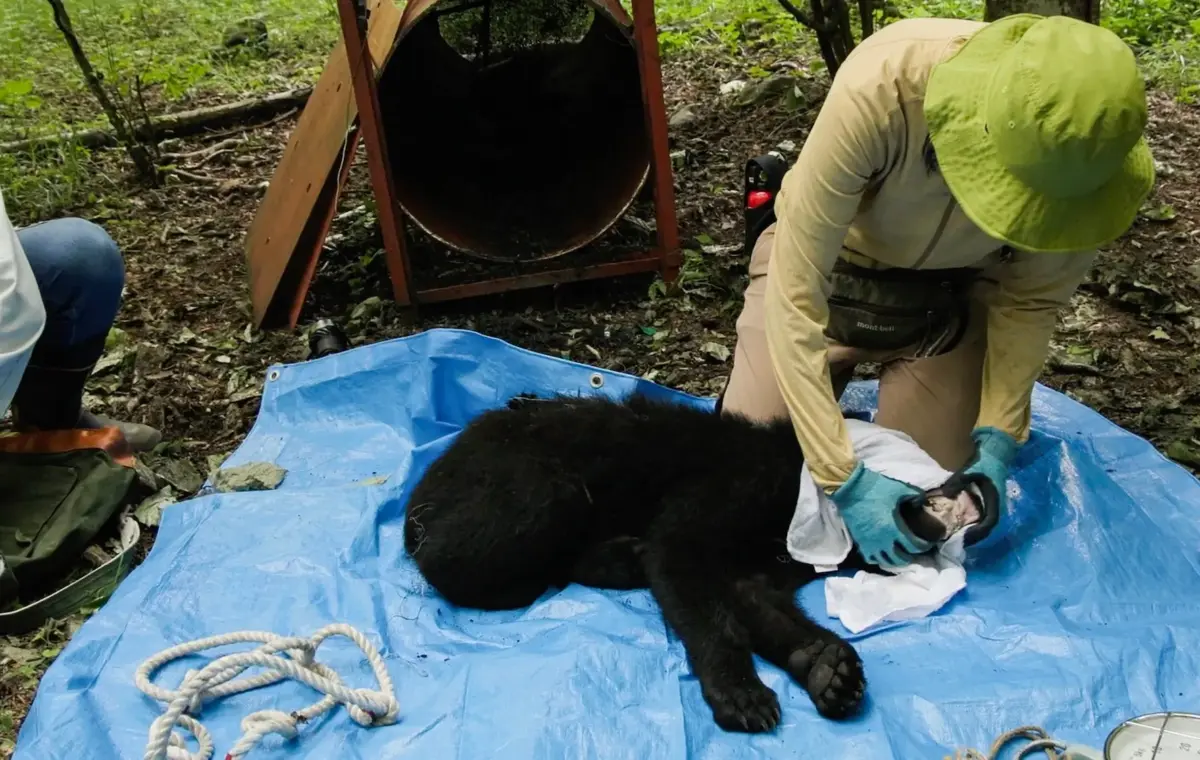
Culling strategies are reducing bear numbers, with around 14,000 killed during the last fiscal year. But in the central prefecture of Nagano on the main island of Honshū, conservationists are promoting a different approach to keeping both humans and bears safe. Using a combination of sensors, traps, and GPS monitoring, researchers are avoiding unnecessarily killing bears while improving the overall population’s wellbeing at the same time.
“By not killing too many of them, more bears survive to live out their expected lifespan. In that sense, a healthy bear population is being formed,” biologist Akiko Takii explained in a recent interview with AFP.
Takii is participating in a program with an over 30 year head start. In 1995, local authorities discovered bear numbers suddenly shrinking on Honshū, and slowly enacted new strategies like GPS monitoring and installing over 2,000 miles of fencing. But concerns for the animals have dwindled in recent years, as attacks and deaths continue to mount across Japan.
Takii and her supporters argue that simply culling bears is not a practical, ethical, or necessarily long-term solution strategy. Instead, members of Nagano’s Shinshu Asian Black Bear Research Association are using catch-and-release tactics to monitor animal movements and keep locals out of harm’s way. Meanwhile, Takii is overseeing school outreach classes to educate children and their parents about bears, as well as humanity’s relationship to them. While a combination of culling and conservation is likely the path forward, advocates like Takii hope officials will see the added benefits of humane interventions
“I am convinced it’s safe to live with them as long as humans don’t offend them,” a school principal recently told AFP , following one of Takii’s presentations.
2026 Popular Science Home of the Future Awards
39 products that will improve your everyday life.
Andrew Paul is a staff writer for Popular Science.