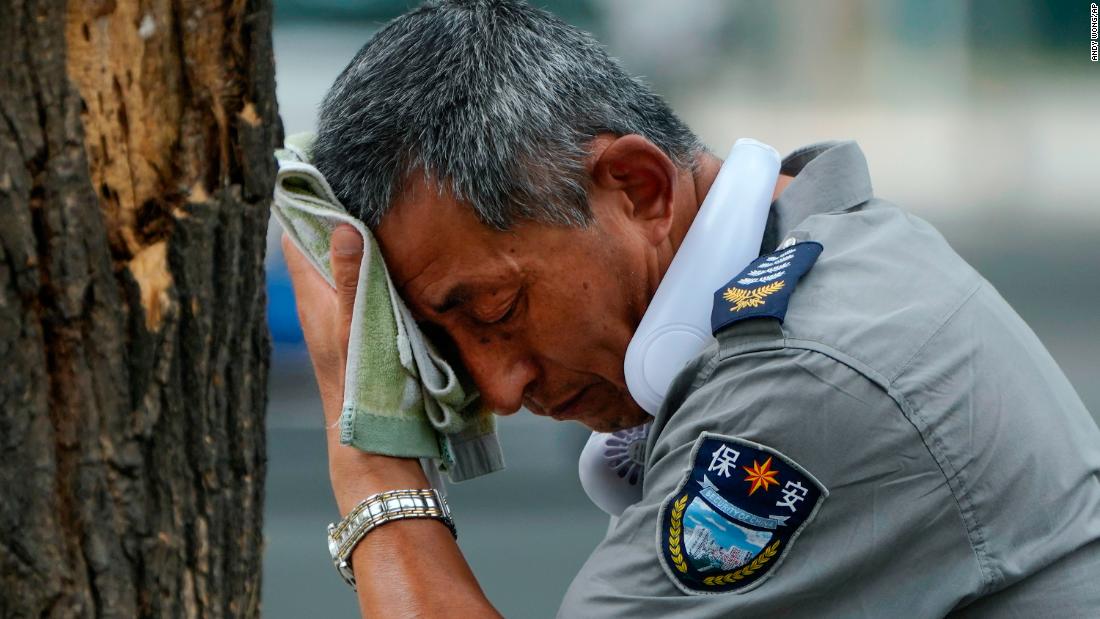
Human-caused climate change has already made heat waves around the world more frequent and intense.
Scientists who study the role of global warming on weather say that every heat wave today bears the fingerprints of the climate crisis.
Climate change, driven primarily by humans burning fossil fuels, is worsening global extreme weather in general, but much of that change is related to heat.
In the US, heat kills more Americans than any other weather-related disaster, and it will only continue to worsen as the world heats up from burning fossil fuels.
Here’s what happens to your body in extreme heat, what you need to watch out for and how to stay safe.
Normally, your body is used to a certain range of temperatures, usually between 97 to 99 degrees Fahrenheit. When your brain senses a change – either lower or higher than that – it attempts to help your body cool down or heat up, according to Dr. Judith Linden, executive vice chair of the department of emergency medicine at Boston Medical Center and a professor in the emergency medicine department at Boston University’s school of medicine.
“There are a number of different ways in which (the brain) attempts to cool the body down. One way, the most common way we think of, is that you sweat,” Linden said. “The pores open, the body sweats and the sweat evaporates, that cools the body.”
The second way your body cools itself down is by dilating vessels and upping your heart rate, which helps bring heat and blood to the surface of your body and helps releases that excess heat.
When you’re exposed to high temperatures, it becomes harder for your body to try and keep up with cooling itself down. And if your environment is hot and humid, sweat doesn’t evaporate as easily – which pushes your body’s temperature even higher, according to the Mayo Clinic.
“The higher the humidity, the lower temperatures you need for extreme heat,” Linden said.
High body temperatures can lead to damage to the brain and other vital organs, the CDC says. They can also lead to several heat-related illnesses.
Mild-heat related illnesses, including heat cramps, are most common, Linden said. Heat cramps can develop in people who sweat a lot, including during exercising. The excessive sweating uses up all of the body’s salt and moisture and can lead to muscle pains or spasms, usually in the abdomen, arms or legs, according to the CDC.
A heat rash can also develop. That’s a skin irritation caused by too much sweating in hot and humid weather, and is most common in young children, the CDC says. It is usually a red cluster of pimples or blisters, and tends to be in places including the neck, upper chest or in elbow creases.
When your body’s beginning to exceed its ability to cool itself down, you can develop what’s known as heat exhaustion.
“In this case you’re going to see excessive sweating because your body is really going to try and keep up with that extra heat. You’re going to feel light-headed, you may feel dizzy, often people present with nausea, headaches and their skin often looks pale and clammy and their pulse is often fast,” Linden said.