Do you really need more than the Snapdragon 8 Elite Gen 5?
When you purchase through links on our site, we may earn an affiliate commission. Here’s how it works.
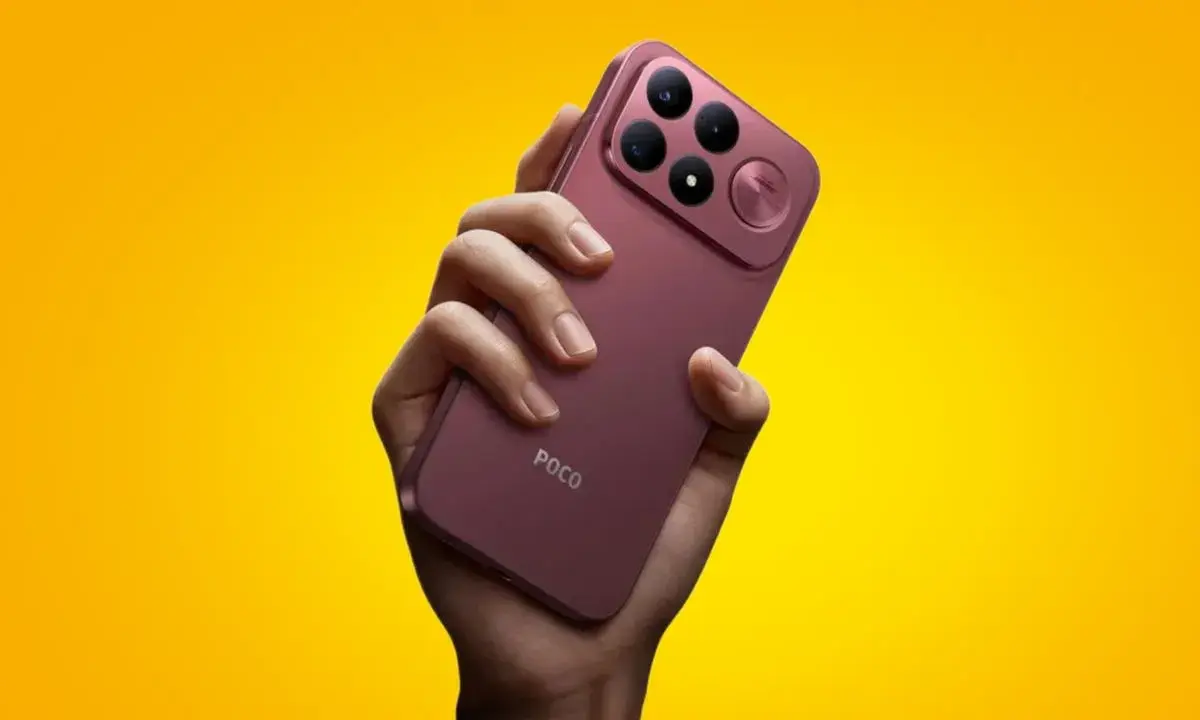
Poco has officially launched the Poco F9 Ultra and F9 Pro, two performance-focused phones that deliver “all-round upgrades in display, imaging, and battery life.”
Notably, the Xiaomi sub-brand doesn’t actually name-drop ‘performance’ in that list of F9 Series improvements, no doubt because the F9 Ultra, specifically, arrives with the same Snapdragon 8 Elite Gen 5 chipset as its predecessor, the Poco F8 Ultra.
Poco flagships have historically launched with the latest Snapdragon chipsets, so this year’s F Series marks something of a strategy shift for the Chinese company — and Poco hasn’t been shy about disclosing the reasons for this change.
In short, Poco has decided against equipping the F9 Ultra with Qualcomm’s new (and as-yet-unannounced) flagship chipset because 1) rising RAM prices have increased the cost of doing so, and 2) it believes the Snapdragon 8 Gen 5 remains powerful enough to deliver the level of performance Poco users expect. And I wholeheartedly agree with this take.
Here’s Poco’s full comment on why the F9 Ultra has an unchanged chipset, which was given in a press conference for the F9 Series by the company’s Senior Product Manager, Kang Lou, and Global PR lead, Olivia Jiang:
KL: I’d like to explain this. The overall situation is that rising memory costs are putting a lot of pressure on all of us [in] the smartphone industry. Poco is not escaping [these costs]. From our end, we believe performance is not always about chasing the latest chipset — of course, that’s important – but operationally speaking, having the latest chipset will cost [us] a lot more on the latest phone. We believe performance is a combination of everything: a powerful chipset, a powerful cooling system; the gaming experience is important too — gaming is a proving ground for us, to prove that overall performance is great.
OJ: For Poco, it’s not just about any single factor or any chipset roadmaps. Our product timing isn’t something we see as fixed; we continually evolve our launch plans based on what’s best for our users. We don’t make launch decisions based on the next generation of hardware, and we deliver [products] when we believe they are ready to deliver the performance our users expect. The Poco F9 Ultra remains highly competitive, and the price is competitive, too. So we’re confident that this generation will deliver the flagship experience that users need.
Sign up for breaking news, reviews, opinion, top tech deals, and more.
Despite shipping with an unchanged chipset, the Poco F9 Ultra does cost more than its predecessor — it starts at $799 / £899, where the F8 Ultra launched for $729 / £749 — but Poco evidently believes this price remains “competitive” given the other upgrades on offer.
The F9 Ultra ships with the brand’s new display-focused VisionBoost D8 chip, which facilitates a max display refresh rate of 185Hz for gaming — at the time of writing, more than 20 titles can make use of this enhanced frame rate, including Call of Duty: Mobile and PUBG Mobile. Elsewhere, the phone gets a hefty 8,050mAh battery (vs 6,500mAh in the F8 Ultra) and a predecessor-beating 200MP wide camera.
It’s worth remembering, too, that the Snapdragon 8 Elite Gen 5 is the same chipset that powers the flagship Xiaomi 17 Ultra, OnePlus 15, and many more of the best Android phones in 2026. We also described the Poco F8 Ultra’s performance as “immense” in our review; you’d have to be running NASA-level simulations on your phone to be left wanting for more power than the Snapdragon 8 Elite Gen 5 already provides.
From our end, we believe performance is not always about chasing the latest chipset
As Poco acknowledges, equipping phones with the latest chipset is “important” when performance is compromised by using a weaker chipset, but that’s just not the case with the F9 Ultra. We’re very much in ‘diminishing returns’ territory when it comes to mobile chipsets, and if Poco had decided to equip the the F9 Ultra with Qualcomm’s next chipset and charged even more for the phone as a result, it may as well have been called the Xiaomi 18 Ultra, which is expected to use this chipset, and cost significantly more than the F9 Ultra.