Updated September 1, 2026 — 2:28pm,first published 1:09pm
You have reached your maximum number of saved items.
SBS has secured the rights to broadcast the FIFA World Cup 2030 in a $30 million-plus bid to remain “the spiritual home of football” after this year’s blockbuster event.
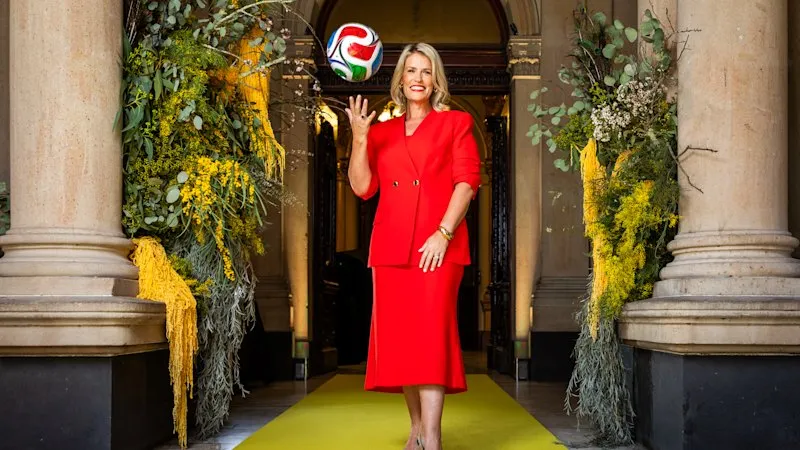
The public broadcaster’s boss Jane Palfreyman said she was thrilled to see the tournament stay on SBS after more than 18 million fans watched the recent World Cup on the network over June and July.
Palfreyman declined to comment on the price SBS has agreed to pay, though sources with knowledge of the deal said it is above the $30 million rumoured to have been paid for the 2026 tournament. She said the World Cup was an opportunity to celebrate Australia’s modern culture.
“We saw with this World Cup, it really brings Australians together across cultures, languages, and communities. We know that most Australians support not just one team, but two or three, so it’s the Socceroos plus a second or third team, either based on their sporting prowess or cultural heritage,” Palfreyman said ahead of SBS’ annual content showcase to media buyers in Sydney on Tuesday.
The costs of sports rights continue to rise, even as advertising revenues flowing to free-to-air television broadcasters have fallen drastically over the past five years. Live sports and news are the two remaining categories guaranteed to deliver audiences to TV networks, as evidenced by this year’s Cup which was held across Canada, Mexico and the United States – more than 1 million Australians watched 64 of its 104 matches.
This year’s edition was held in a favourable time zone for Australians, with the majority of matches kicking off during daylight hours, and the latter stage games at 5am. But the next edition will be jointly hosted by Spain, Portugal and Morocco, which are eight hours behind Australia’s Eastern Standard Time in winter.
There will also be one match held in each of Uruguay, Argentina and Paraguay to mark the centenary of the competition.
FIFA expanded the tournament this year from 32 to 48 teams, a move that delivered 40 additional matches for viewers. The governing body received criticism for its financial approach to the tournament, raising the cost of tickets, transport and hospitality in stadiums, as well as introducing a mid-game “hydration break”, which was widely viewed as a way to introduce more advertisements into broadcasts.
FIFA has since been in turmoil after a failed bid to sell off parts of the World Cup to private equity.
Unlike the ABC, which airs very little live sport due to budgetary constraints limiting its ability to outbid commercial broadcasters, SBS can offset the cost of rights packages like the World Cup by selling ads. A big part of that approach in 2026 was its partnership with online sports betting company Bet365.
Palfreyman said the broadcaster heavily promoted its opt-out feature in the lead-up to the World Cup to allow viewers to switch off gambling advertising when watching on digital streaming platform SBS On Demand.
“We’ve seen quite a significant take-up from audiences of the opt-out, specifically in relation to gambling. Actually, what we’ve also seen is a significant reduction in audience complaints, which is really pleasing and shows that we’re balancing that best-in-class consumer experience with the really strong ad experience,” she said.
SBS has recently been subject to attacks by One Nation leader Pauline Hanson, who says she plans to abolish the broadcaster if elected in 2028. But Palfreyman says its never been more important for SBS to deliver on its charter and ensure every Australian has the opportunity to understand both the world, the country and each other, “whether it’s the newest arrivals, whether it’s our oldest inhabitants, and to make sure they feel like part of our Australian story.”