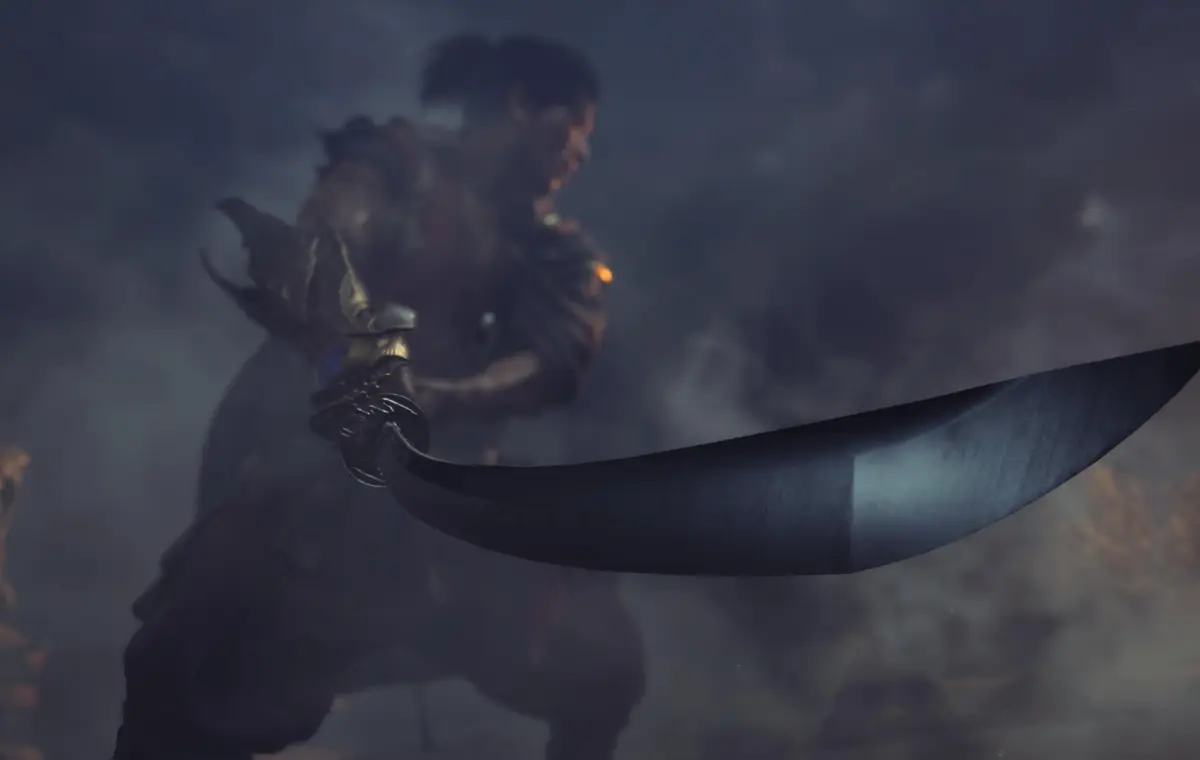
Review: I wanted to love Onimusha’s return, but I got tired of engaging the same fight over and over again.
The Marvel superhero Captain America’s story arc is about being frozen for decades and awakening in an unrecognizable world he must adapt to. Similarly, it’s been nearly two decades since an Onimusha game came out: The franchise went under the ice when action-arcade games reigned, and has emerged after parry-precise Soulslikes became the dominant subgenre.
Onimusha: Way of the Sword is a valiant attempt to split the difference, with a world of funky demons to kill using precision-timed swordplay that will please Elden Ring fans.
The result is more hit than miss, with largely satisfying swordfighting that allows for clumsy button-mashing in hectic moments, but rewards — and often requires — careful timing. The deeper into the game you go, the harder its repetition and some frustrating boss design grates on the experience.
It’s fun to stroll up to demonic enemies and expertly deflect their attacks until masterfully cutting them down; it gets old to run through the same fight a thousand times with the most basic of mooks while jogging from one similar task to the next.
Amid the resurgence of games set in feudal Japan, from 2019’s Sekiro: Shadows Die Twice to last year’s Assassin’s Creed: Shadows and Ghost of Yotei, Onimusha: Way of the Sword distinguishes itself with a fantastical retelling of historical figures.
You take on the role of the legendary swordsman Miyamoto Musashi, though the game portrays him in his younger, uncouth years — skilled with the blade but rude with his manners, believing in strength above all. An untimely death at the hands of demons and rebirth, thanks to the Onimusha series’ iconic soul-gathering Oni gauntlet, draws Musashi into battle against the demon horde that threatens the human world.
It’s a fun premise, and several characters challenge the loner Musashi into smoothing out his rough edges, from Shizuka, the elegant Oni trapped in his gauntlet, to the imposing Takamura, wise warrior with his own spirit gauntlet, to Okuni, a nimble kabuki dancer avenging her troupe. The ghost of famed Japanese author Murasaki Shikibu sends Musashi out to solve the peasantry’s problems to harvest fodder for her tales (and save her fluffy story-ferrying spirit hounds), rounding out the game’s early retinue.
Most of the game’s plot follows Musashi’s pursuit of the famous samurai general Minamoto no Yoshitsune, who has taken over Hell with his demon Genma army and sent them rampaging through Japan. It’s Yoshitsune who revives the young swordsman with his Oni gauntlet, though he does the same for Ganryu, a self-described rival to Musashi who grows unstably enamored with his gauntlet’s power.
He’s a dark mirror for Musashi in the quest for strength, but our hero is curbed by the nobler influence of his new companions; in one tense scene where Musashi is tempted down Ganryu’s darker path, Takamura reminds him of the Buddhist notion that life is full of suffering — but embracing the challenge is worth it. It’s a thesis for the game, though one that unconsciously applies to pummeling through a lot of similar fights to get to more climactic moments.
I played about 15 hours of the game, and most of that was spent in a wide area of Eastern Kyoto, the imperial capital. I enjoyed stalking the city’s dirt streets, cleaning up Genma scum, though most reappear every time you save at a Spirit Mirror (this game’s version of a Dark Souls bonfire). I used those to teleport around many corners of the city, cleaning up this or that shrine, tackling this or that tough enemy. It’s a way to pad the time and make expansive use of the game’s area; more rarely, I teleported out to remote zones like a forested temple or a mountain fortress.
The more I played, and the more I was sent back around areas I’d already visited or to new ones that hardly looked different, the more I found Way of the Sword’s recycled gameplay wearying. There’s a sense that this game was made with a shrewd budget, and its emphasis is in the right place — making sure the combat is tight enough, and that every encounter ends in a cinematic slash of your sword. But the most novel highlights in the game felt too brief, and I wished they were the norm rather than the exception.
In fighting demons and fitting Japanese history into its storyline, Way of the Sword stays true to the Onimusha franchise. The older games had more freeform action, so updating swordplay to the careful precision-parry of other Soulslikes ably fits Musashi’s character as a legendary duellist. His rudeness is an enjoyable flaunting of the more delicate, honor-bound portrayals of samurai ideals in other games, flavoring the skilled efficiency with which he — and the player — carve through groups of enemies.
But there are other elements seemingly adapted from Soulslikes that I grated against. Does nearly every single boss need two health bars with a second phase? Does their stamina need to be whittled down with parries until I can make a climactic strike, a la Sekiro? Do enemies and bosses need to swiftly alternate between unblockable attacks that can only be parried and others that can only be dodged, sometimes with questionable telegraphing?
I was relieved that the game has multiple difficulties and doesn’t punish you for switching between them on the fly. I played on the tougher “action” difficulty until I hit a wall with a fight against Ganryu later in the game, switched to the easier “story” setting to get through it, and went right back to the former thereafter.