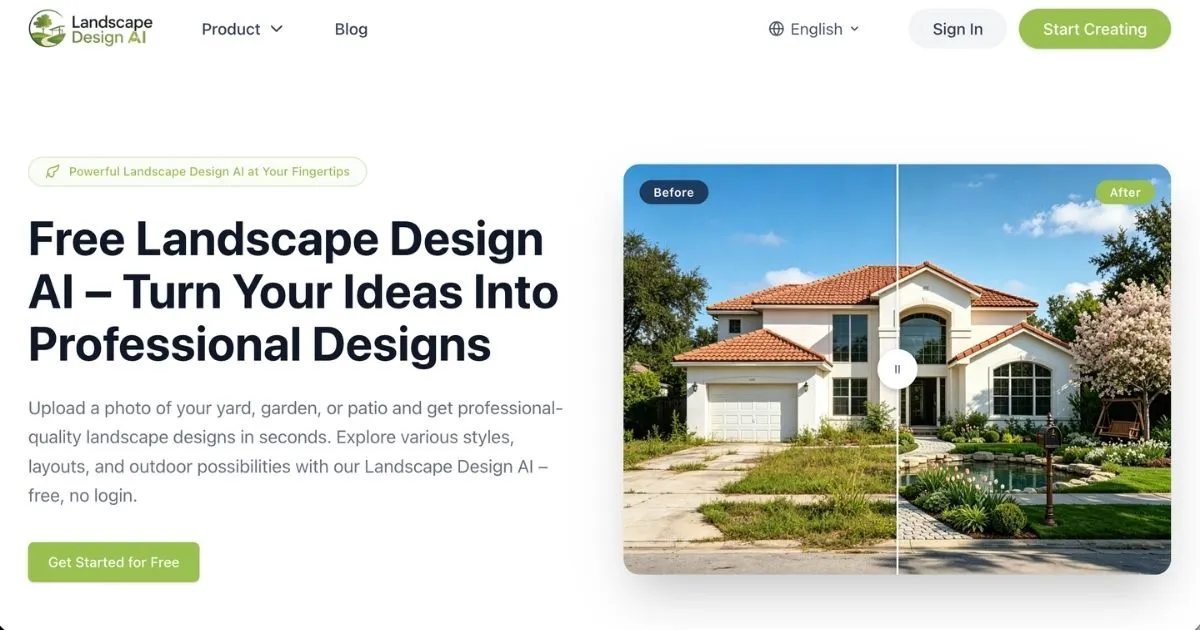
Transform your outdoor space with Landscape Design AI: AI-generated realistic designs tailored to your style and climate.
Landscape Design AI is a web-based tool that transforms an uploaded photo of your outdoor space—backyard, garden, patio, or similar—into a high-quality, photorealistic landscape design. Using built-in AI, it preserves existing elements like walls, fences, and trees, while generating new features such as plantings, hardscape materials, and layout redesigns. Users can choose from more than 30 preset design styles—modern, Mediterranean, Japanese, desert, tropical, coastal, and more—or supply custom prompts to tailor the aesthetic. The tool also considers location, climate, terrain, and sunlight when suggesting plants and materials. Designs are delivered quickly, in high resolution, and watermark-free.
Landscape Design AI suits homeowners, real estate developers, DIY renovators, and landscape contractors who want rapid visual concepts without hiring a professional. It is especially valuable for exploring style options, previewing before-and-after scenarios, or communicating designs for conceptual stages, HOA approvals, or marketing. It is not intended for detailed construction plans, engineering drawings, or legal compliance documents; any actionable work beyond visualizing ideas should be developed with qualified professionals.
There is currently no paid tier listed; Landscape Design AI is entirely free to use. Users are granted a daily allowance of free design generations: without logging in, two free uses; once logged in, an additional two daily free uses. These free uses refresh every day for signed-in users, but unused daily free generations do not roll over. There is no paid plan, subscription, or credits system in place at this time.
Landscape Design AI delivers strong visual design capabilities with minimal effort and cost—making it a useful tool for ideation, early-stage planning, and communicating design concepts. Its strengths lie in rapid processing, visual realism, and adaptability to climate and spatial context. However, its limitations—especially around commercial use, precision, and deliverables like scalable drawings—make it unsuitable as a substitute for professional design or architectural services when applying changes in reality. Businesses and professionals should use this tool as a complement to expert design work, not a replacement.
Keep up to date with our stories on LinkedIn, Twitter, Facebook and Instagram.