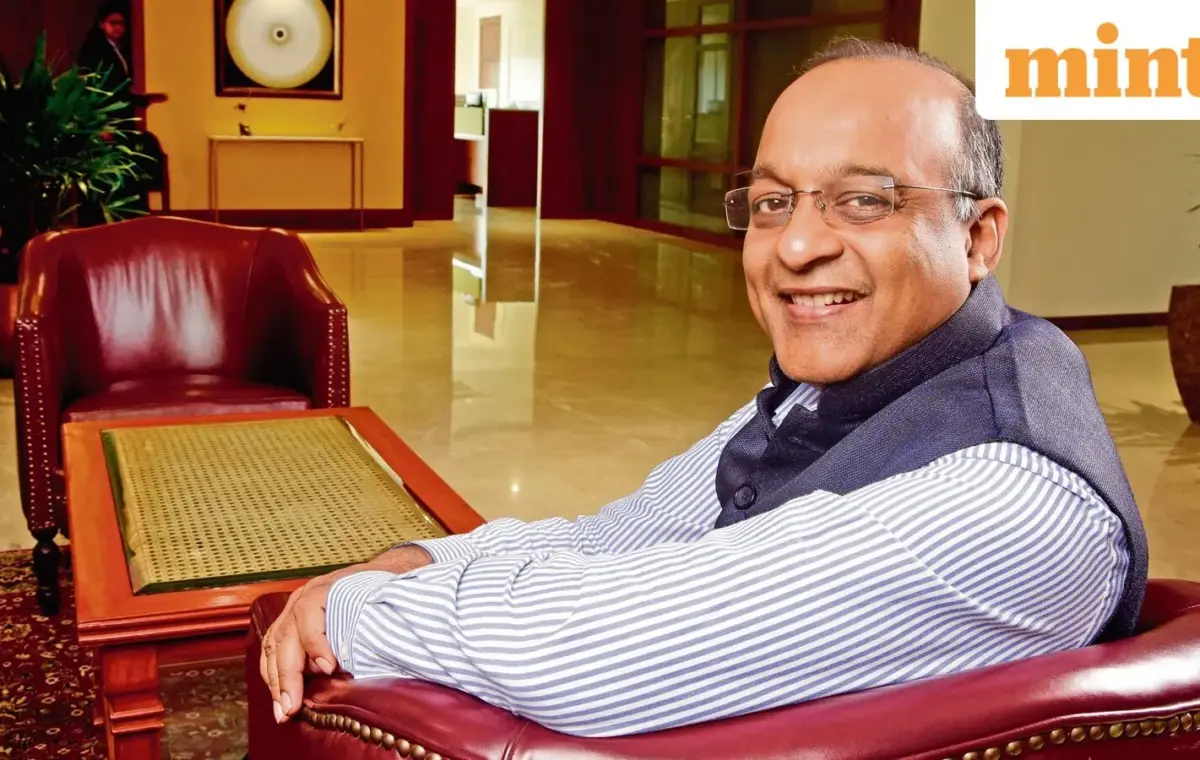
HDFC Bank’s news of a leadership reset briefly brought investor cheer on view that a new leader could help address concerns over alleged governance issues and regulatory lapses. Its shares rose nearly 2% intraday on Monday, the first trading day after the announcement of Sashidhar Jagdishan not seeking an extension as chief executive beyond his 26 October term. The stock then reversed course to close 1.5% lower, reflecting deeper concerns over India’s largest private-sector lender.
The one big challenge for Jagdishan’s successor will be to deliver on a merger whose promised benefits have been slow to show up.
Three years after mortgage giant HDFC Ltd was folded into the bank, margins and returns remain under pressure, the stock is down more than 28% this year, and investors are still waiting for the larger balance sheet to translate into stronger profitability and returns.
The leadership transition also comes after a turbulent few months for the bank, marked by the exits of former chairman Atanu Chakraborty and Sampath Kumar, (group head of branch banking), and controversies involving Credit Suisse AT-1 bonds, the Maharashtra State Road Development Corporation deposit and the alleged mis-selling of Carlisle’s Luxembourg Life Fund through the bank’s Dubai operations in 2019. Together with regulatory lapses and governance concerns, these have weighed on investor confidence.
Sunny Agrawal, head of fundamental research at SBI Securities, said: “The CEO uncertainty at HDFC Bank is overshadowing a more fundamental issue: the bank’s post-merger economics have not played out as expected.” Merger synergies have been slower to materialize, while regulatory lapses and governance concerns have further dented investor confidence.
A 31 August report by PL Capital said that while the post-merger transition had impacted financials and the core earnings quality is now stabilizing, some fundamental issues remain unresolved. These include the balance sheet construct in terms of loan-to-deposit ratio, lower net interest margin (NIM) due to an unfavourable incremental loan mix weighing on core return on assets (RoA), and a gap between management guidance and the actual execution.
Nirav Karkera, head of research at W by Groww, also believes the HDFC merger has taken longer to be absorbed by the Street than expected. The hope now is that return on equity (ROE) will improve, as funding costs ease, followed by better guidance.
There are some early positives, said Karkera. High-cost funding bonds are coming up for maturity, which could help lower funding costs if refinanced cheaply. He said the FCNR (foreign currency non-resident) opportunity could provide another cushion, while HDB Financial Services, a key subsidiary, is also shaping up well, he said.
The road ahead is, however, not without bumps. He noted that the bank's CASA growth remains a challenge, and while asset quality is healthy, there is still room for improvement. More importantly, the benefits of the merger have been slower to come through on the lines of Street expectations.
That partly explains why the bank has been the worst performer among Nifty Bank constituents, Karkera said. A mix of the merger overhang, minor controversies, continued foreign institutional investor (FII) selling and earnings that have not improved enough to lift sentiment has kept the stock under pressure, he said.
FIIs ownership in the lender fell to 41.04% as of the June quarter from 52.37% in December quarter of 2023, BSE data showed.
Overall, Karkera termed the situation as “a rough patch” for the bank. "Most things that could have gone wrong have gone wrong,” he said, quickly adding that “nonetheless, that also supports the case for a healthier turnaround”.
According to Bloomberg data, 47 brokerage firms have a ‘buy’ rating on the stock, while two have a ‘hold’ call.
Regarding the controversies surrounding the lender, Jefferies said in a research report on 31 August that “Interestingly, most of these happened before Sashi was appointed as a CEO… We will watch out if this leads to follow on exit among senior leaders of the bank. This can impact business and performance in the near term.”
The foreign brokerage expects the transition to weigh on revenue momentum from deposit mobilization and fees, prompting it to cut its FY27-29 earnings estimates by 3% each.