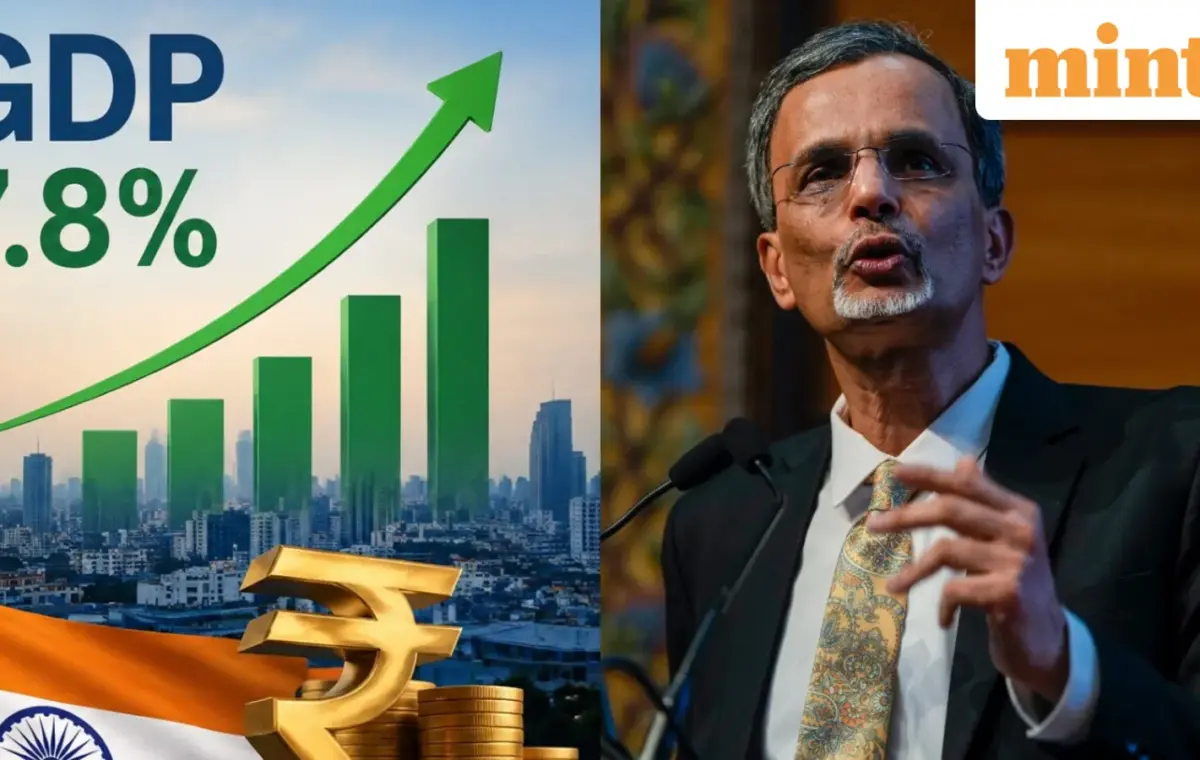
India's economy has shown continued resilience despite global uncertainties and disruptions caused by the conflict in West Asia, Chief Economic Adviser (CEA) V Anantha Nageswaran said on Monday, pointing to broad-based growth across agriculture, manufacturing and services.
His comments came after India recorded 7.8% real GDP growth in the first quarter of FY2026-27.
"What we are witnessing is continued resilience in the Indian growth performance," Nageswaran said. He noted that quarterly real GDP growth had picked up after a slowdown towards the latter part of FY2024-25 and had weathered global uncertainties relatively well.
"All three sectors have contributed," he said, adding that while agriculture contributed slightly less, manufacturing and services performed strongly during the quarter.
Nageswaran said manufacturing and services had continued to perform well despite uncertainties related to the West Asia conflict.
He attributed part of the resilience to government efforts to ensure that the availability of critical inputs was not disrupted during the crisis.
The CEA also highlighted the performance of exports, saying external demand had remained supportive. The improvement, he said, was not restricted to services, with core and manufacturing exports also recording healthy growth.
"The fact that manufacturing exports are rising indicates the beneficial effects of FTAs and the diversification efforts of the government," Nageswaran said.
He said India would need to continue diversifying its export markets while maintaining cost competitiveness. The trade agreement with the European Union is expected to become operational by the end of the calendar year, he added.
Domestic demand has also remained strong, according to Nageswaran. Private final consumption expenditure performed well, while an improvement in bank credit growth indicated that investment activity was strengthening, he said.
The CEA said India was "reaping the benefits of structural reforms in an uncertain environment", with resilience in both domestic demand and external-sector performance supporting growth.
Nageswaran said the economic impact of the West Asia conflict had so far remained contained, but risks continued.
Crude oil prices had not risen as sharply as initially feared, partly because global demand, particularly from China, remained subdued. However, the possibility of supply disruptions remains a risk and could keep energy prices elevated.
Higher diesel and natural gas prices could eventually weigh on private consumption, he said.
On agriculture, Nageswaran said several parts of the country had received adequate rainfall, while sowing remained only marginally below last year's level.