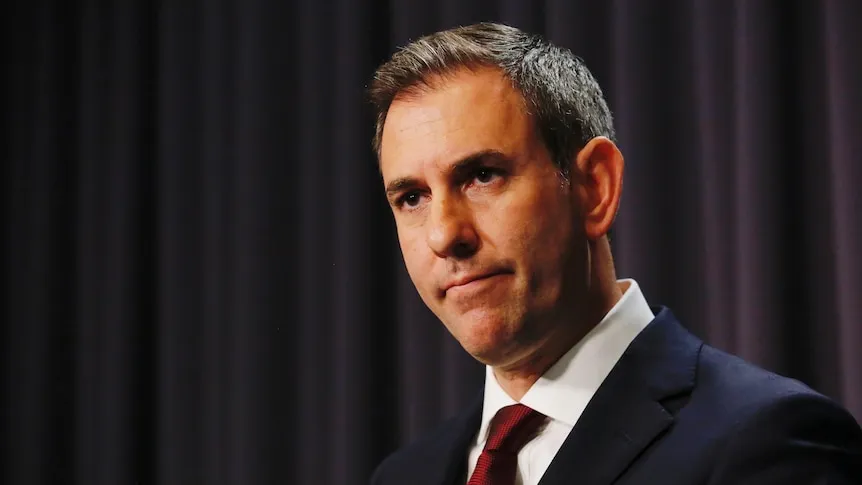
New advice provided to Treasurer Jim Chalmers says Australia's current AI uptake is widespread but shallow. (ABC News: Nick Haggarty)
Treasury says Australia risks missing out on the economic benefits of AI unless businesses go beyond basic use of the technology and make bigger changes to how they operate.
Fewer than one in 10 businesses report significant AI adoption, while officials say the feared jobs shock has not yet materialised.
Treasurer Jim Chalmers says he is confident Australia can capture the economic upsides and avoid the downsides of AI.
Australia will miss the economic benefits of the artificial intelligence (AI) boom unless businesses actually use the technology to make bigger changes, Treasury has warned.
New advice provided to Treasurer Jim Chalmers said Australia's current AI uptake was widespread but shallow, with less than 10 per cent of businesses reporting "significant" adoption.
Australia’s appeal as a destination for data centres has given it bargaining power in the AI boom.
The Treasury note said much-feared job losses have not yet materialised, but officials are watching young and entry-level workers overseas for early signs.
Officials described AI as the first "credible" accelerant of global economic growth in almost two decades, but found Australia was at risk of failing to capture the benefits of the technology.
Mr Chalmers said AI was shaping up to be the "biggest economic transformation in our lifetime" and he was confident Australia could "maximise the economic upside and minimise the risks".
"We can't just sit around and hope the benefits of AI fall into our lap. We have to reach out and take them."
Treasury said the "rate and breadth" of AI take up in Australian companies "remains slow".
"Around two-thirds of Australian businesses report some AI adoption, [but] less than 10 per cent report significant adoption," the department's note said.
Finance, insurance, information, telecommunication and professional services sectors have had the "highest" rates of AI adoption, but Treasury said access alone would not deliver economic gains.
As is so often the case in Australia, the politics came down to a fight over energy.