Basketball Australia refers proposed rule changes to Fiba
Idea aimed at delivering more highlights met with mixed reactions
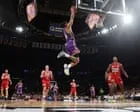
The slam dunk has long been a staple of basketball, its biggest billboard, showcasing the athleticism and ferocity of its athletes. Now, some within the game want more.
The Australian men’s professional league, the NBL, has lodged a request with the sport’s rule-makers about trialling a way to deliver more of these highlights in a proposal that threatens to alter the game’s fine balance.
A proposed experiment of a series of rule changes, including rewarding a dunk with three points rather than two, and awarding four points for a successful shot from mid-court – known as the “logo three” – has been tabled with Basketball Australia, which has referred the matter to international governing body Fiba.
The NBL had sought to increase interest in its NBL Blitz tournament, scheduled for this week in Bendigo, by trialling the suite of rule tweaks at the pre-season matches. The timeline proved too tight however, given Basketball Australia’s desire to include Fiba in the approvals process.
The league remains keen to pursue the test in the future, which would provide elite basketball’s biggest data collection exercise on levers some fans have long wanted pulled.
The dunk is already a shot cherished by coaches because of its high probability of success. The rate of dunking has actually increased in the NBA in recent years – currently at around 6% of shots attempted – even though the rise of the three-pointer has defined this so-called analytics era of basketball.
Despite the popularity of perimeter jump shooters like Steph Curry, this period of elite basketball has not been universally loved, and debate has erupted over the best version of the game.
NBA commissioner Adam Silver said last year he wanted to address the rise of three-pointers – which now account for around 40% of shots in the competition, up from less than 10% in the early 1990s – without making “kneejerk” changes like moving back the three-point line.
“To be honest, I wish it was as simple as just moving the three-point line back, because then we would just do it,” he told American broadcaster Colin Cowherd. “Part of the concern from the basketball folks is that if you move the three-point line back, you’ll end up just sort of clogging up the area under the basket, and that’s not such attractive basketball either.”
Such a radical change to dunk scoring is likely to result in a range of unintended consequences. Dunks are more common off turnovers, which may encourage teams to gamble on steals in a bid to generate more dunks. Three-point dunks might therefore encourage a more dynamic defence, but could also discourage risk-taking on offence.
Incentivising dunks is also likely to further advantage genetically gifted taller players. Rather than high-leaping explosive guards, it is lumbering centres who tend to accumulate the most dunks, and rewarding their effectiveness may further disenfranchise undersized but skilful or athletic players.
Our picture editors select their favourite sporting images from the past week, from the spectacular to the powerful, and with a little bit of fun thrown in
The proposal from the NBL has been widely condemned by the basketball community on social media, including by South East Melbourne Phoenix owner Romie Chaudhari. But that sentiment was not universal.