The MechLands Vibe99 is an admirable and largely successful attempt to cram a whole host of top-draw features into an affordable package. It has hot-swappable mechanical switches, a comprehensive 1800 layout, multiple wireless modes, and an integrated screen, all for less than $100. On top of that, it performs very well, thanks to the snappy and tactile keys. However, its accompanying software is quite poor (though functional), and it doesn’t look or feel particularly premium. These factors may diminish its value in the eyes of some gamers, but it’s hard to complain too much when the Vibe99 is this cheap.
Why you can trust TechRadar
We spend hours testing every product or service we review, so you can be sure you're buying the best. Find out more about how we test.
The MechLands Vibe99 is a mechanical keyboard that takes aim at the budget-end of the market, but does so without any apparent sacrifices to features or performance.
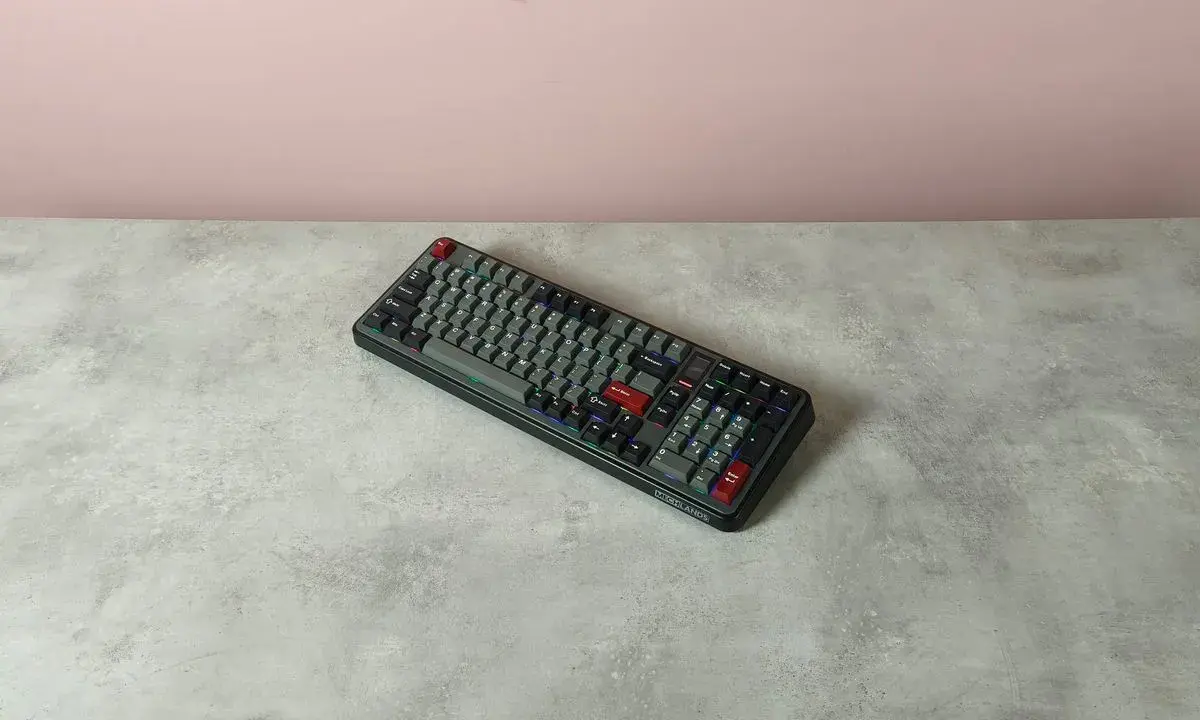
It doesn’t make a great first impression, however. The retro aesthetic fails to charm, with its chunky design and the copious amounts of grey in my review unit merely looking downmarket. Fortunately, the bright and customizable RGB backlighting does help to liven it up a little.
The build quality isn’t terribly impressive, either. The plastic chassis is solid but doesn't feel premium. Fortunately, the Double-shot PBT keycaps are much better, although their opaque legends don’t allow that aforementioned backlighting to shine through. Their Fn shortcuts aren’t labelled, either, unlike those installed in the best gaming keyboards.
However, the compact width of the Vibe99 is impressive, and thanks to the smart 1800 layout, you still get plenty of keys. What’s more, it also features an integrated screen. It may be a basic TFT affair with limited information displayed, but what it does show is useful, such as the time, date, and battery level. You can also upload GIFs to it if you so wish, but I wouldn’t advise that you do, given the screen’s small size and low fidelity.
You’ll need to use MechLand’s peripheral software to upload them, but it takes an incredibly long time to do so, and you can’t do much else while it’s in progress. What’s more, the whole app has a poor UI, lacking sharpness and clarity. The remapping suite is also disappointing, with only a basic selection of assignments and no direct visual indication of your rebindings.
The performance of the Vibe99 itself fares better. The keys are generously lubed yet quite clicky, lacking the dampening of the very best in the space. However, they’re satisfying to use and have plenty of snap, actuating and rebounding quickly while forgiving accidental hits. The natural tilt of the layout and the folding feet help to make the board more comfortable to use as well, although I still wish it came with a wrist rest.
It’s impressive that the Vibe99 offers all that it does at such a low price point. It’s far cheaper than many of the mechanical models offered by the big brands, and it’s even cheaper than some other great budget options. It’s not perfect, and the software isn’t as good as it should be, but the Vibe99 is still worth shortlisting if you’re looking to save.
Sign up for breaking news, reviews, opinion, top tech deals, and more.
The Vibe99 costs $82.99 / £63.99 / AU$120 and is available now in various colorways but with one switch type, which is MechLand’s Linear Mint model. It comes with a keycap puller and a braided USB cable.
This is a very competitive price for a 1800 wireless mechanical keyboard with hot-swappable switches. It’s even cheaper than the aluminum variant of the MonsGeek FUN60 Ultra, which has fewer keys. However, the build quality of that board is superior, and thanks to its analog switches, it has far more performance-related tweaks.
The Vibe99 is also considerably cheaper than big-name mechanical models, such as the Razer BlackWidow V4 Pro 75%. But the BlackWidow has a far superior build and unrivaled performance, thanks to the glorious response of its switches. Its software is much better, too.
The Vibe99 aims for that faux-retro appeal, but I don’t think it succeeds. Not only does the thick base look dated, but the grey and black finish of my review unit looked quite dour. The bright RGB backlighting did at least add some vividness though.
Unfortunately, the build quality isn’t anything to write home about either. Although it feels solid enough, the plastics used throughout feel cut-price, especially when compared to the aluminum frames of more upmarket gaming keyboards. Its saving grace is its keycaps, which have a Cherry profile and are made from Double-shot PBT. They’re also solidly installed with next to no play. However, it’s a shame their legends aren’t transparent to allow the backlighting to shine through. Also, the default Fn shortcuts across the Function row and dotted around elsewhere aren’t labelled, so you’ll have to commit them to memory.