Account subscription benefits alongside Premium Stories, Editorials,
Opinions and more. Unlock these with Subscription
The View From India
Looking at World Affairs from the Indian perspective.
First Day First Show
News and reviews from the world of cinema and streaming.
Today's Cache
Your download of the top 5 technology stories of the day.
Science For All
The weekly newsletter from science writers takes the jargon out of science and puts the fun in!
Data Point
Decoding the headlines with facts, figures, and numbers
THEdge
At the cutting edge of education and careers
Health Matters
Ramya Kannan writes to you on getting to good health, and staying there
Gender Agenda
Stories from beyond the binary.
The Hindu On Books
Books of the week, reviews, excerpts, new titles and features.
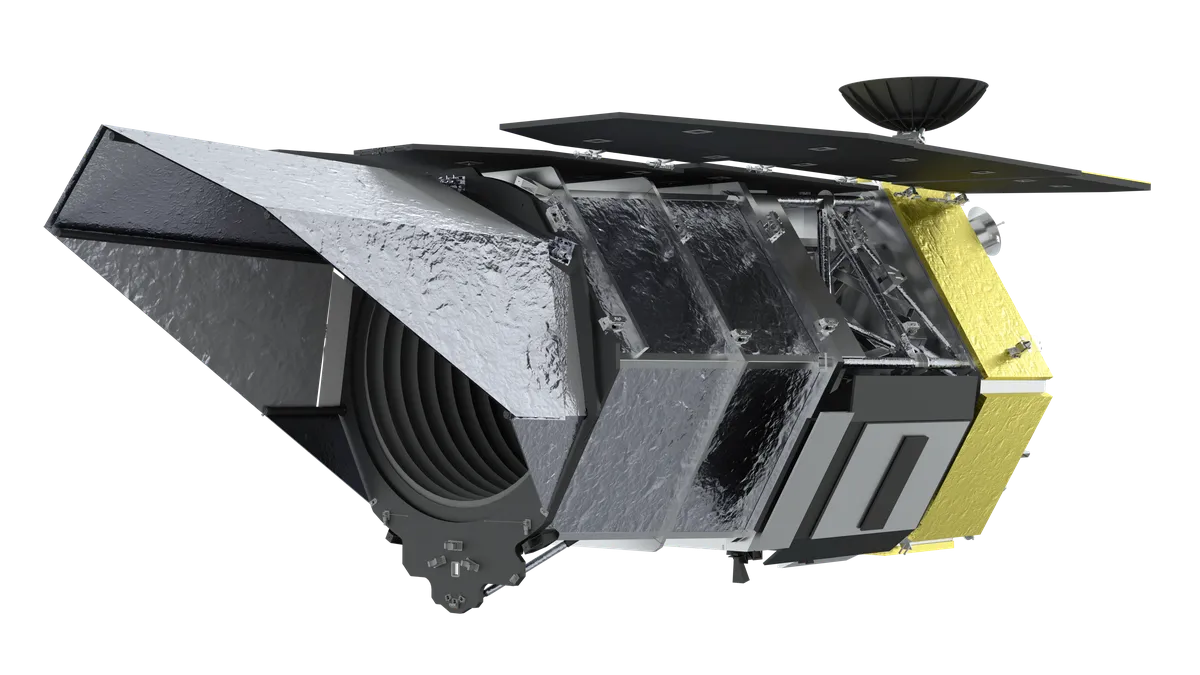
A computer model of the Nancy Grace Roman Telescope.
| Photo Credit: NASA
NASA is preparing to launch its next flagship space observatory — one scientists plan to use to investigate some of the universe’s biggest mysteries, including dark energy and dark matter, while also testing gravity at vast scales and hunting for planets beyond our solar system.
The Nancy Grace Roman Space Telescope is a roughly $4 billion project. At the time of writing, it was planned for a Sunday launch from the NASA Kennedy Space Center in Florida. The observatory will be lofted into orbit aboard a SpaceX Falcon Heavy rocket.
The telescope is named after the late Nancy Grace Roman, NASA’s first chief astronomer. It is a follow-on to the Hubble Space Telescope, launched in 1990, and the James Webb Space Telescope, launched in 2021, and has capabilities that can expand on the knowledge gained by those pioneering observatories, both of which also still operate.
The telescope’s main survey will take more than a year, per Roman’s senior project scientist Julie McEnery.