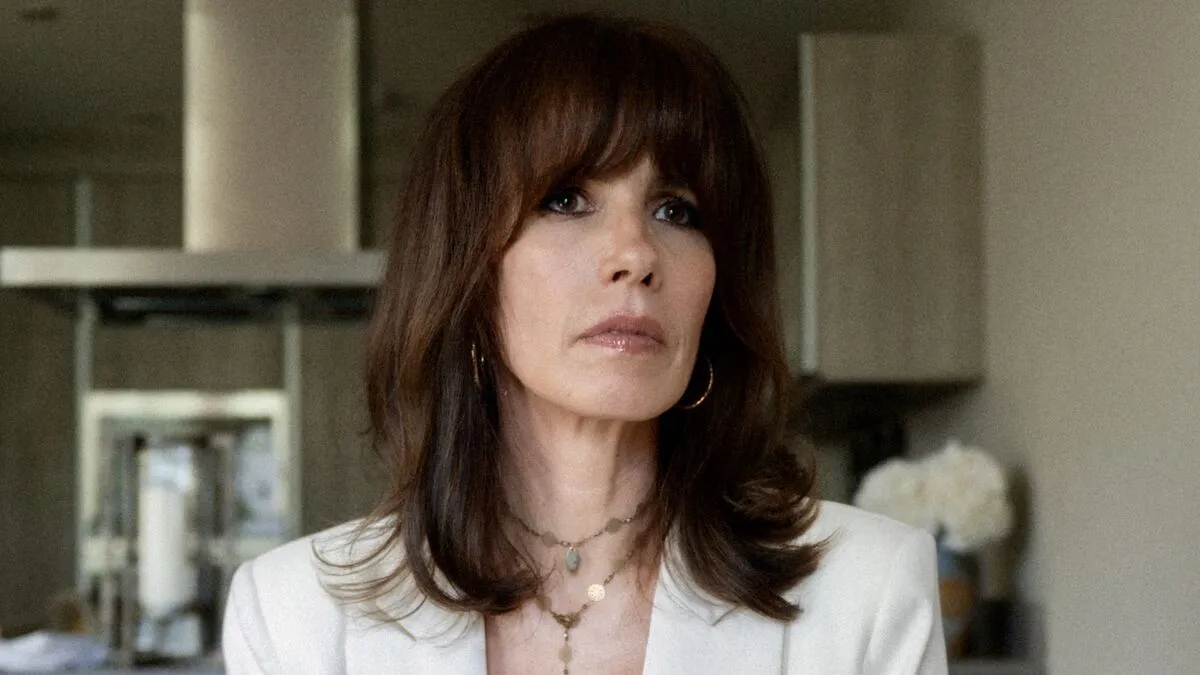
Annmarie O'Connor: 'The fluctuations of chronic illness led me to give up my work as a stylist, but not being stylish.' Picture: Chani Anderson
“You’re doing well, so.” I smile and nod, not sure what I’m approving. She looks me up and down as if I were hiding something. Suspicious. Dissatisfied. As a fashion editor, I am not the typical face of Parkinson’s disease, although it could be argued, “Who is?”
“Lovely speaking to you,” I say, as another book and pen intervene for my attention. I am signing copies of my memoir, Twitch, in Cork. My symptoms are surprisingly well-behaved. No involuntary movements on the right side of my body. No jerking or shaking. No stiffness or pain. The new meds are working. For now, at least. In the meantime, I smile, chat, take photos, and thank strangers for their time. I give them the best of my best. “I’ll probably pay for this tomorrow,” I think to myself, conscious of squandering my limited stamina.
With Parkinson’s, life is measured in minutes, milligrams, and margins of energy. Any deviation from the norm can put the kybosh on proceedings. Every day is a crapshoot.
“You’re doing well, so.” These four words form a loop in my brain. I feel defensive, and I don’t know why.
Part of me wants to over-explain that I spent 15 months trialling drugs, largely in private, despite my very public medical coming-out story. Fifteen months of dizziness, anxiety, and nausea — side effects no one sees when you are too tired to leave your apartment.
Case in point: during my book tour, most events were local or remote with rest built in — except for one. I was asked if I could travel from Cork to Dublin for breakfast TV, sign books across the city, record a podcast, do prime-time radio, then get the train home to do more book signings the next morning.
I could have negotiated the terms. Instead, I said, “Yes” because it was just one day. Because I used to manage crazy schedules. Because I forgot, I now have a standing arrangement with Parkinson’s. And you can’t serve two masters.
Parkinson’s may not collect its debt immediately, but it always sends someone around. Usually later that week. When you think you’ve got away with it. That’s when the exhaustion hits so hard, even thinking hurts. Smiles for the camera and foetal position on the sofa.
As I said, no one sees this. All they see is the managed version of me. The one that gets a fresh blow-dry before pressing the record button on Instagram. The one who wears a gold suit to give a keynote speech about rebuilding my life from the rubble. The one who can perform ‘fine’ when the occasion calls for it. The irony? When the work of coping well is thorough enough to erase evidence of its own necessity, that’s when some folks start to wonder.
She doesn’t look like she has Parkinson’s. How bad is it?
The inclination to rank suffering is a cultural peccadillo: co-signing on pain, visible enough to be undeniable. A bit Irish. Here’s the real problem. There is a difference between looking well and feeling well. One doesn’t always dictate the other, although you’d be forgiven for thinking otherwise. And therein lies the bind. If I look good, I must feel good, which means the disease can’t be that serious. This, in turn, raises a credibility issue and an eyebrow over my needs.
You’d never know you have Parkinson’s, people tell me.
But I do. It’s progressive and will only get worse. Today the incessant twitching in my shoulder has eased. So has the restlessness in my legs. The constant motion is physically tiring. It also draws stares. That’s why I take medication five times a day. It’s also why I like an extra dose of unapologetic glam. It’s good for the soul. If it were equally good for Parkinson’s, I’d be strolling up Maryborough Hill like Diana Vreeland or Iris Apfel. Apart from the wind, rain, and extra cardio, I often wonder what’s stopping me.
For almost two decades, I have advised women on how to dress well. How to walk into a room. How to claim who they are through the language of clothes.