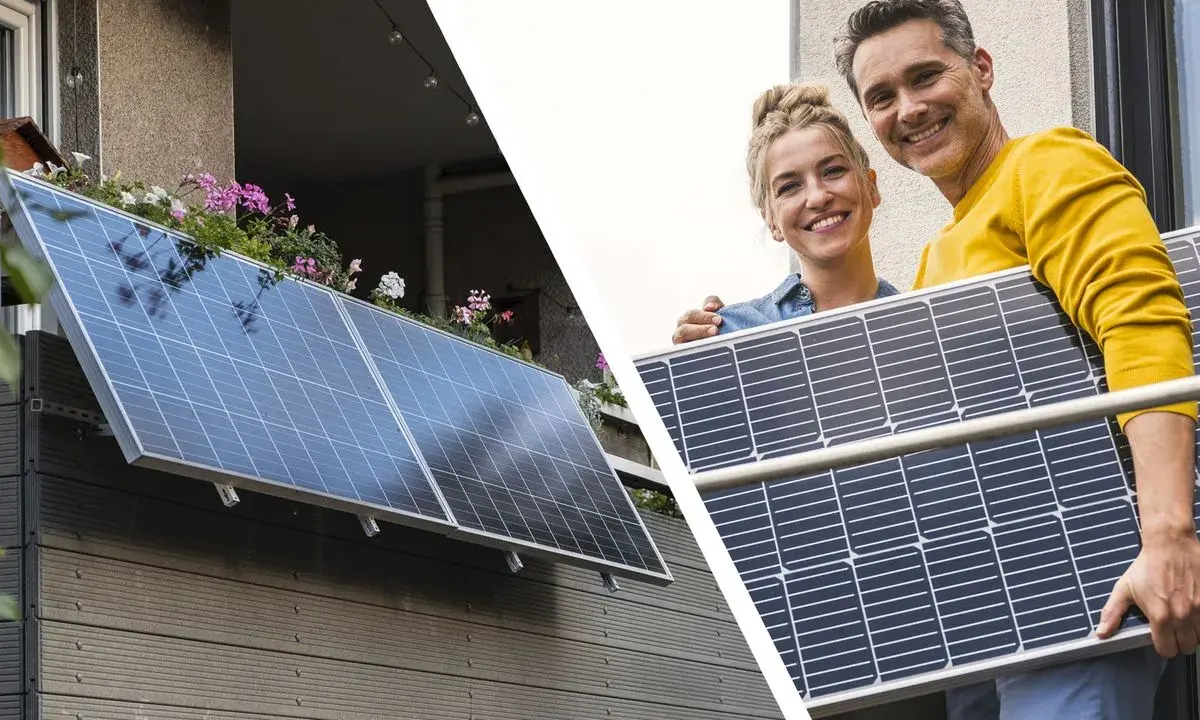
Plug-in solar is finally legal, but it's still early days for savings
When you purchase through links on our site, we may earn an affiliate commission. Here’s how it works.
Plug-in solar is no longer a grey area. Kits under 800VA are now legal to buy and connect to a standard socket; no installer required. The government has been promising this since March. Now it is finally here.
But legal does not mean simple. The market has split into three very different products, sold under one loose banner. Solar-only kits that plug straight into a socket — these are then ones that have just been made legal. Then there are battery-only power stations that store grid electricity for later, which still need professional installation. Lastly, there are solar-plus-battery systems that do both. Each behaves differently. Each saves a different amount. And, crucially, only the first one is actually covered by the new rules.
I started my solar journey about a year ago, initially with batteries and now branching into solar panels. But with the advent of new rules and new products, the market is opening up for those who want to turn a modest investment into a reduction in every electricity bill merely by deploying a few solar panels and connecting them to a wall socket.
To help you decide whether or not to buy a plug-in solar kit, or opt for one of the other two options, I've crunched the numbers below for all three scenarios — and thrown in my personal experiences over the past year.
This question takes inspiration from the classic “how long is a piece of string?”, because there are many factors that impact the answer. These include where you live, the underlying cost of power in that region, the equipment you plan to deploy, and the tariffs you will use with the hardware.
If we consider three basic scenarios: solar only, solar with battery and battery-only, then the amount each requires in investment and the cost benefits vary significantly.
Let's look at each of these and see how much you can spend, how much the return might be, and how that influences the payback period.
Sign up for breaking news, reviews, opinion, top tech deals, and more.
On the solar-only pathway, EcoFlow says its standard kit, two 400W panels and a microinverter, can save you up to £115 a year. That fits the government's estimate that the newly-legalised plug-in solar can save you "up to £110 a year".
So what's the payback period? The EcoFlow panels cost around £299, and the microinverter is about £100, so the payback would be roughly four years. A retail provider, City Plumbing, puts a good 800W kit at £100 to £250 a year, with a four-to six-year payback on hardware costing £600 to £1,000.
Independent estimates land lower and more cautiously. One detailed breakdown puts realistic savings at £40 to £85 a year for an 800W kit, because without battery storage, you only self-consume between 25-40% of what the panels generate. The rest goes nowhere useful, since you have no battery to hold it and, without MCS certification, no export tariff to sell it into either.
That last point matters more than any brochure figure. A solar-only kit under the new rules cannot claim the Smart Export Guarantee. There is no MCS certification path for an 800VA socket device. So every kilowatt hour you don't use the moment it is generated is simply wasted. Real savings depend entirely on how much daytime electricity your home actually uses with the fridge, router, standby devices, the odd load of washing.
A sensible expectation for a solar-only kit is in the £70 to £110 a year ballpark, weighted toward the low end unless your daytime usage is unusually high. Most of that saving comes in the summer months, with much less in winter.