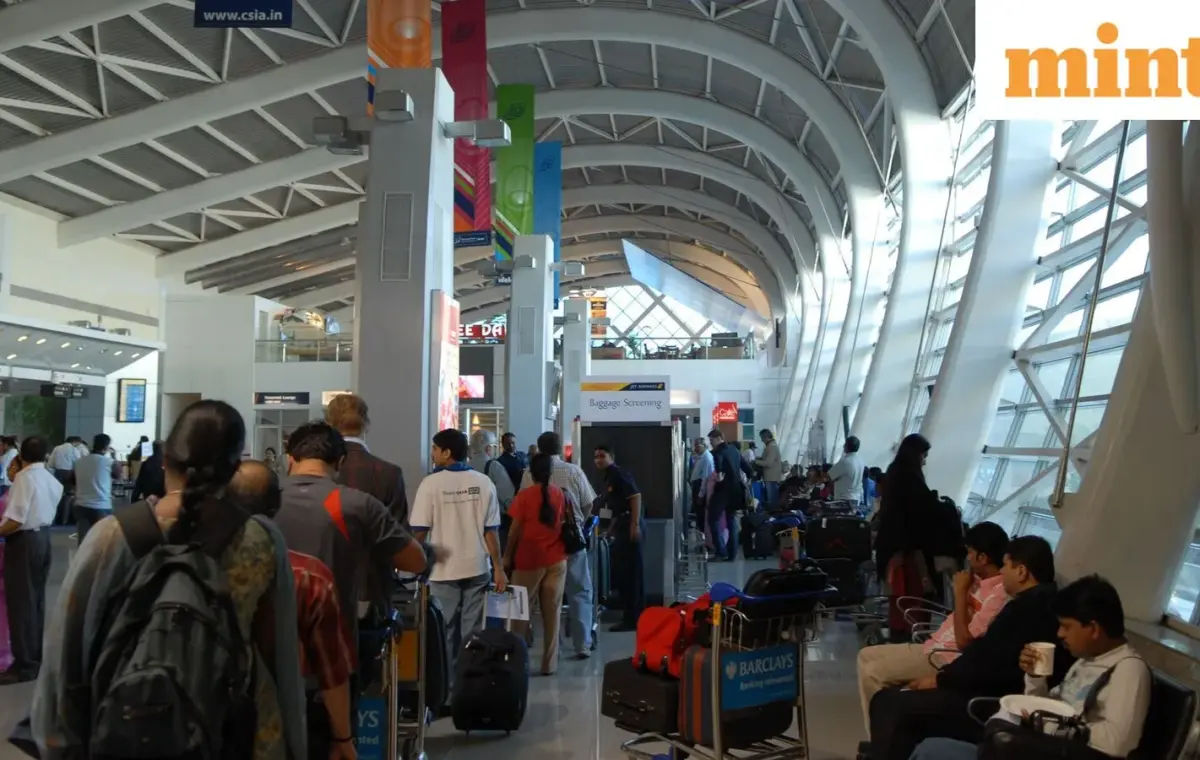
Earlier this month, the Union government proposed to privatize 11 more airports via the public-private partnership (PPP) route. This comes exactly 20 years after Delhi and Mumbai became the first Indian airports to be privatized, followed by another lot of six airports in 2020-21.
The experience of these older airports shows that the PPP route has benefited all stakeholders — the government, private airport operators and consumers. While the 11 airports to be offered next are significantly smaller than the previous lot in terms of passenger traffic, operational scale and future possibilities, expectations from this exercise will be similar: to unlock value in airports currently owned and operated by the government.
The Airports Authority of India (AAI) is the government organization that owns and operates 122 airports in India. It also previously managed the eight airports privatized so far. Besides AAI, the airport sector in India has two large private operators—the Adani Group (which operates 8 airports, including Mumbai) and the GMR Group (8 airports, including Delhi). They are all making money at the operational level.
Unlike GMR Aero, AAI is also profitable at a net level. In 2024-25, it posted a net profit of ₹7,233 crore on revenues of ₹20,648 crore — a net margin of 35%.
It would appear that AAI is generating adequate surpluses to modernize and expand its airports by itself. However, the business of airports is such that even ₹5,568 crore—AAI’s capital expenditure in 2024-25—can’t support the sector’s large capital needs. For context, the first phase of the new Noida airport reportedly cost ₹11,200 crore.
The other reason to get the private sector involved is the face lift it can provide to these airports. Delhi and Mumbai are good examples of the transformation of airports and all services around them. Even when AAI hands out these airports in the PPP mode, it remains a stakeholder and a beneficiary. In Delhi and Mumbai, which were awarded on effectively a 60-year lease, AAI has a 26% stake and receives a share of revenues annually.
For the six airports handed out in 2020-21 on a 50-year lease (Ahmedabad, Guwahati, Jaipur, Lucknow, Mangaluru and Thiruvananthapuram), AAI receives a fee per passenger. For the next proposed lot of 11 airports, the government is looking at a 50-year agreement, again with AAI receiving a fee per passenger. It was in 2012-13 that such income from airports operated by private players on a PPP basis crossed 30% of AAI’s income. This figure started falling in 2017-18 as agreements were redrawn, following the disruptions from the covid pandemic. This share is now back above 30% again.
In one sense, the PPP arrangement has its benefits. The private sector brings in the investment to modernize and expand the airport and tap other commercial possibilities around it. That improvement in scale, upkeep and services leads to more flights and passengers. That translates to higher revenues for the private operator—and, by extension, for AAI.
Broadly, an airport’s revenues can be placed in two categories: aeronautical and non-aeronautical. Aero sources principally consist of landing and parking charges paid by airlines, passenger service fees and user development fees. Non-aero sources are principally income from giving space to retail outlets, taxi services, vehicle parking, ground handling and cargo handling. A third category is commercial development of land.
Private operators have shown better prospects than the government operator at tapping non-aero revenue streams: in 2024-25, 54% of GMR Aero’s revenues came from non-aero sources, against only 9% for AAI.
The buoyancy in non-aero revenues is one reason why GMR Aero stock has delivered a compounded annual return of about 30% in the past five years, against about 7% by the BSE Sensex. This is also the period when the aviation sector rebounded from the shutdown of the covid pandemic. But the recovery has been gradual, and the six airports that were privatised in 2020-21—all bagged by the Adani Group—got caught up in the pandemic crosshairs.
Before the pandemic, Indian aviation was buzzing. In the three-year period from 2015-16 to 2018-19, total passenger traffic increased at a compound annual growth rate (CAGR) of 15.5%. These six airports grew at 19%. Post-covid, most crossed 2018-19 (pre-covid) passenger levels only in 2023-24 or 2024-25. Thus, in the six-year period to 2024-25, they all show a significant drop in growth rates. This is also the case with the proposed set of 11 airports, whose CAGR in passengers plunged from 23.6% to 4.4% over the same period.
The 11 airports are proposed to be offered as five bundles, combining a mid-sized/profitable airport with a smaller/loss-making one: Tiruchirappalli and Tirupati; Bhubaneswar and Hubballi; Amritsar and Kangra-Gaggal; Varanasi, Gaya and Kushinagar; and Raipur and Aurangabad.
Further, a cap is proposed on how many bundles an operator can get. These 11 airports handled 19.4 million passengers in 2024-25. That’s about half the 39.3 million handled in 2024-25 by the 6 airports privatized previously. This drop-off also shows AAI’s long tail. AAI operates 122 airports. Only 32 were profitable in 2024-25, including four from the lot of 11. Three of them are also among the 10 biggest by revenues in AAI’s current portfolio: Bhubaneswar, Amritsar and Varanasi.
Among airports still with AAI, Kolkata and Chennai are the largest. Last week, the government of Tamil Nadu scrapped the chosen site of Chennai’s second airport, turning the focus back to the city’s AAI airport to manage growth. For all the upsides of the PPP route, its runway is still long.