Why time loops can be endlessly compelling
When you purchase through links on our site, we may earn an affiliate commission. Here’s how it works.
Recently I’ve been playing Deathloop, Twelve Minutes and The Forgotten City: three time loop games all released in 2021.
Every gamer has a backlog — and that’s no different for us at TechRadar Gaming. From the Backlog is a series about overdue first-plays, revisiting classics, returning to online experiences, or rediscovering and appreciating established favorites in new ways. Read the full series here.
That year produced a bumper crop of time loop games, with games released one after another in the span of three months. But while I’d first experienced — and since replayed — Twelve Minutes when it was first released in August 2021, The Forgotten City and Deathloop had been stuck in my backlog for a while, their critical acclaim placing them high on my priority list until I finally made time for them.
Time loops fascinate me because, in a way, the device is endemic to videogames. If you can’t get past a certain segment in a game, you would play through it over and over again, the repetitions of these game loops a facsimile of these temporal cycles. The key difference, at least in a time loop game, is the character’s growing knowledge of their circumstances, as they are driven to figure out why this seemingly inescapable reality is happening to them.
As such, time loop games become a nifty narrative puzzle, with new details fed to them in every cycle, while introducing wrinkles in gameplay that transform a typical game loop, be it exploration or point-and-click, into invigorating, investigative work.
What I’ve learned playing these games is that time loops are also a way to invite introspection. While Twelve Minutes is a stylishly intimate nightmare of Freudian proportions, The Forgotten City reckons with the concept of immortality and morality, set in the days of the Roman Empire.
Then there’s Deathloop, in which the very people who stay on Blackreef Island wield the time loop anomaly as a device to be abused. The games are all remarkably evocative from the very first loop, although some are eventually ensnared by the repetitive, sometimes verbose trappings of this narrative device.
And for these three games, the loops have unravelled the mysteries at their core in vastly divergent ways.
Sign up for breaking news, reviews, opinion, top tech deals, and more.
Let’s start with Twelve Minutes, a star-studded affair that features the voice talents of Hollywood heavyweights Daisy Ridley, James McAvoy and Willem Dafoe.
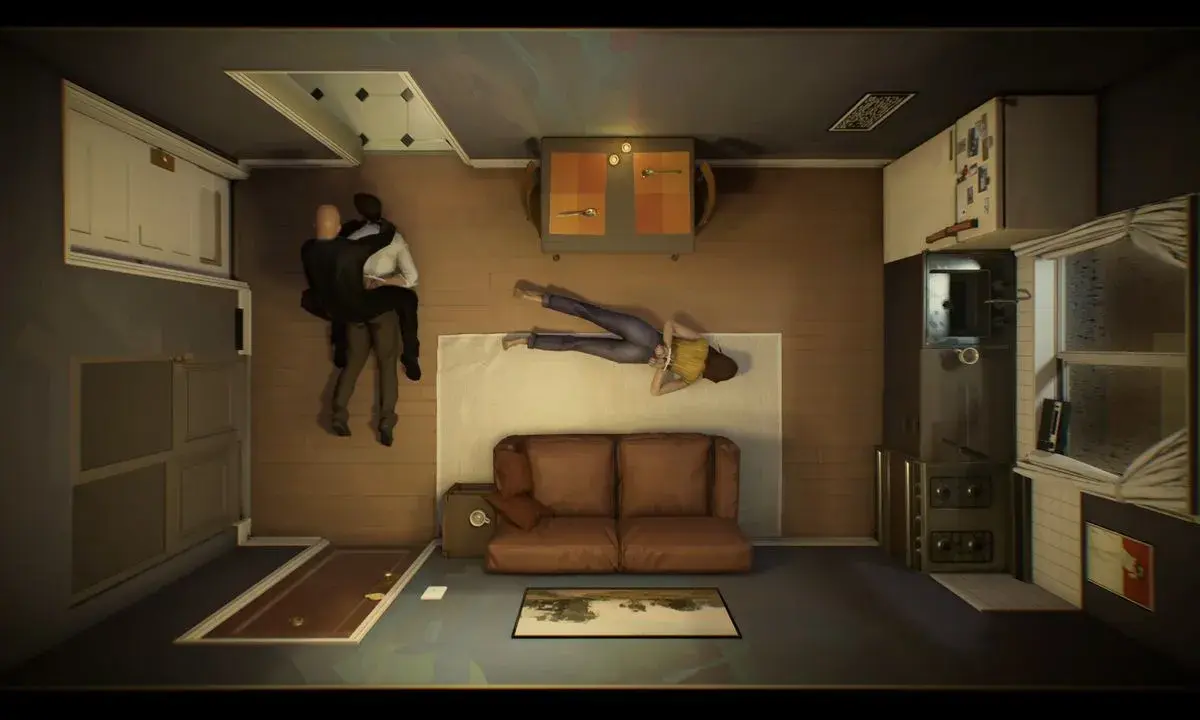
A top-down point-and-click game, it begins with you arriving home after work and settling down for dinner with your wife. Some minutes later, a cop barges in to interrogate both of you, resulting in a violent scuffle that you would eventually pass out from. The cycle restarts, and you’re returning home from work once again.
It’s an extremely gripping start, and changing your circumstances means tinkering with objects in the vicinity, from a hidden, unopened present to even fiddling around with a light switch. And as the cycles inevitably continue, you’ll see patterns emerge, like your wife reading a book, or her anticipation as she waits to break an exciting piece of news. In a world where the perimeters of time have disintegrated, these become routines that you simply must disrupt in order to glean more insights.
The unfortunate reality, however, is the sheer violence it inspires. Twelve Minutes is ultimately bogged down by these cycles of brutality, with the consequences-free nature of these cycles meaning you can even stab your own wife just to see what happens. At the same time, these routines soon become dreary and tedious to relive over and over again.