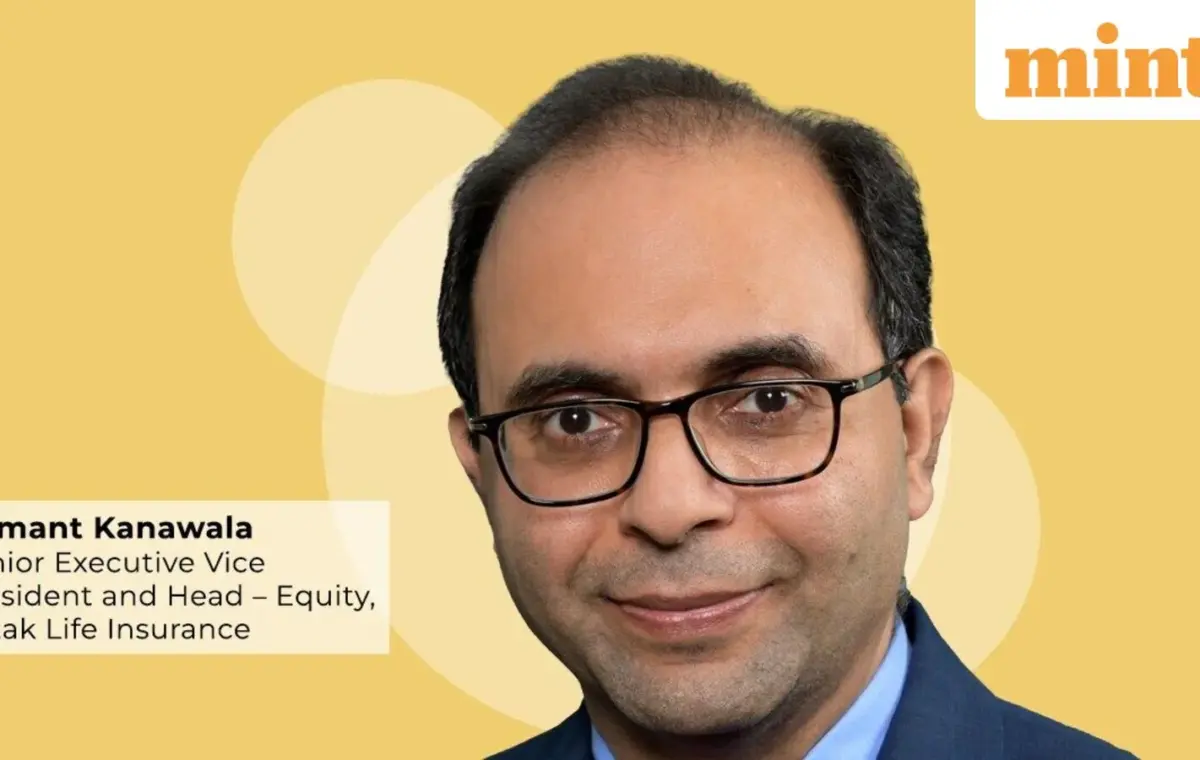
Expert view: Hemant Kanawala, senior executive vice president and head of equity at Kotak Life Insurance, sees selective value in the Indian stock market, as valuations remain full-to-rich across large parts of the market. In an interview with Mint, he expects moderate positive returns over the remainder of 2026 after the West Asia conflict normalises. In the near term, he expects the market to remain choppy and event- driven, with a weak monsoon and elevated crude oil prices as the key risks. Edited excerpts:
Yes, there's selective value. On an aggregate basis, valuations are reasonable – the Nifty trades near 19.7 times FY27E earnings, broadly its long-term average, helped by de-rating in banks and IT services.
But the picture is uneven: consumption and investment stocks remain full-to-rich, so value is concentrated rather than broad-based.
With much bad news priced in and earnings improving, we expect moderate positive returns over the remainder of the year once the West Asia conflict normalises.
The near-term path remains choppy and event- driven, with the monsoon and crude as the key risks.
The next leg will be earnings-led rather than valuation-driven. Corporate profits are set to grow strongly – Nifty earnings nearly 17-18% in FY27 after a muted FY26 – with recovery broadening across sectors, reducing the risk of large downgrades.
A durable end to the West Asia conflict and softer crude would ease inflation and support margins.
Domestically, resilient consumption (aided by tax and rate cuts), a gradual private capex revival, strong credit growth and improving external flows via FCNR and ECB measures provide support.
Steady domestic retail flows remain a structural anchor beneath the recovery.
Several risks warrant caution. First, a prolonged West Asia conflict could push crude above $100, widening the current account deficit, stoking inflation toward 6%, and prompting rate hikes – a materially adverse scenario for the economy.
Second, a deficient monsoon could lift food inflation.
Third, valuations remain full-to-rich across large parts of the market, particularly in consumption and investment stocks, leaving room for derating.
Finally, elevated primary supply – IPOs, promoter and PE selling – could absorb liquidity.
Positioning is unusually light after an extended selling phase – foreigners were net sellers of nearly $25 billion calendar year till date, and a majority of emerging-market funds are underweight India, at – 0.2ppt versus benchmark, well below the 10-year average.
Flows have begun improving at the margin – roughly $2 billion of equity in July, alongside nearly $9 billion of debt inflows after tax and access reforms, aided by currency stability.