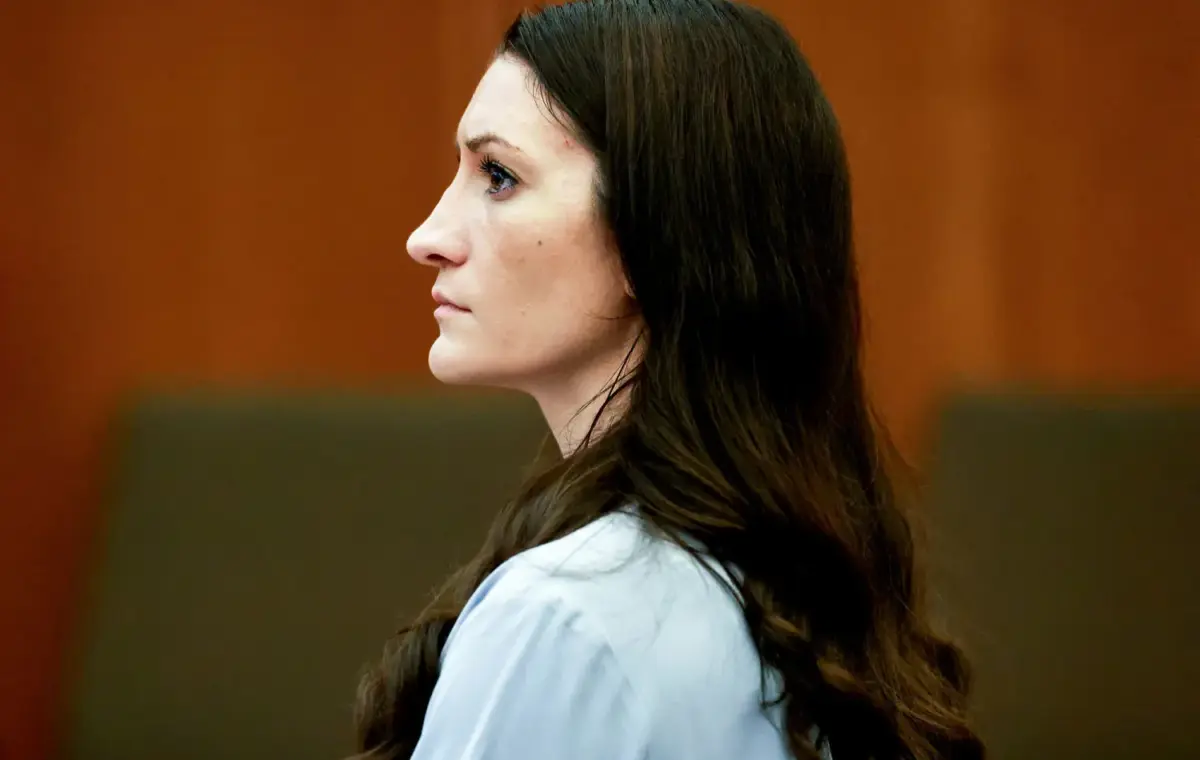
In the months before Lindsay Clancy killed her three children and tried to take her own life, she was desperate for help — she saw psychiatrists, called a suicide hotline, went to the emergency room and was turned away from inpatient treatment. She was put on 13 medications over four months as providers sought to treat her ongoing symptoms and adverse reactions to the medications.
Clancy, 36, is accused of murdering her three children — Cora, 5; Dawson, 3; and Callan, 8 months — on Jan. 24, 2023, before she threw herself out her bedroom window in a suicide attempt.
Prosecutors spent nearly six weeks presenting their case to jurors in the murder trial. They called 70 witnesses in an attempt to show that the mother planned the deaths, driving her husband from home so she could carry out the acts.
Her defense attorneys have said that Clancy was in the grips of postpartum psychosis, a rare condition that can alter new mothers’ sense of reality and is considered a psychiatric emergency. Her condition, they told jurors, compelled her to act on the voices in her head that were telling her to kill her three children and herself. For months, she had been seeking help from doctors and medical professionals.
The prosecution and defense made their closing arguments Thursday, and the jury began deliberating that afternoon.
The trial has raised questions about the type of care Clancy received. Clancy’s medical providers have said they adjusted her treatment as needed and based on her responses to the medications she was prescribed. At times, the medical providers testified, they did not have full access to her medical record and did not coordinate with one another. It was also unclear when Clancy stopped taking medications and began to take new ones.
Dr. Veerle Bergink, the director of Mount Sinai’s Women’s Mental Health Center, told NBC News that testimony about Clancy’s providers shows that “during multiple occasions, the diagnosis was missed and she did not get the right treatment.” Bergink, who specializes in mental health during pregnancy and postpartum, said Clancy’s adverse reaction to the antidepressants she was taking could have been “a major clue” that her diagnosis went beyond postpartum depression and that she needed different medication for postpartum psychosis.
Dr. Tracy Moran Vozar, a psychologist and perinatal mental health expert, said Clancy’s case exemplifies the systemic issues and lack of communication across the healthcare system, especially when it comes to patients with serious mental illness who see multiple providers across different systems. Neither doctor personally treated Clancy.
“It’s very tragic, of course, for her, her family, and everything that happened,” Bergink said. “But it’s a tragedy for doctors, as well.”
Court testimony and documents from the trial provide a timeline of the care Clancy sought and received in the months before the killings.
On Sept. 15, 2022, Clancy first met with Dr. Jennifer Tufts, a psychiatrist at Aster Mental Health, more than three months after her youngest child, Callan, was born. Tufts treated Clancy through January 2023. Clancy reported she was experiencing anxiety attacks, depressed mood, being unable to feel pleasure, guilt, decreased appetite, racing thoughts and other symptoms, Tufts testified in court. She said Clancy responded “no” to questions about whether she was hearing voices or having thoughts about harming herself or others.
Tufts diagnosed Clancy with generalized anxiety disorder and an adjustment disorder with depressed mood, which is when someone is reacting or struggling with a stressful change more intensely than expected.
She also prescribed Clancy a standard dose of the antidepressant sertraline, known by the brand name Zoloft, at a dose of 25 milligrams, then increased to 50 mg. Tufts testified that Clancy had previously taken Zoloft for about a week after the birth of her second child, according to NBC Boston.
Tufts testified that in October, Clancy felt “awful” after her dose of Zoloft was increased and that she was feeling more depressed, “crying all day” and having trouble eating and sleeping, among other symptoms, according to NBC Boston.
“Anxiety was really bad even before med, now hard to differentiate. Overnight racing thoughts, paranoid of getting suicidal thoughts, something bad happening. Doesn’t want to be alone,” Tufts said, reading from her records, according to NBC Boston. Tufts said she was “very concerned” about Clancy at this point. She told Clancy to stop taking the Zoloft.