Find this story in your account’s ‘Saved for Later’ section.
Discussing the metatextual dimensions of Coyote vs. Acme is unavoidable. The Looney Tunes animation–live action hybrid film is an inspired David-and-Goliath tale about the overreach and cruelty of corporations in the modern age, and its journey to release is a real-life corollary. Warner Bros. shelved the film in November 2023 to garner a tax write-off before Ketchup Entertainment bought it for roughly $50 million, a stunning reminder of the dismal state of Hollywood with its endless mergers and disregard for audience and artistry alike.
Coyote vs. Acme, directed by Dave Green and written by Samy Burch, didn’t need to be a great or even good film to deserve release — especially by modern Hollywood standards and the intellectually dim, barely entertaining drudgery that passes for work worth seeing at the multiplex today. The film is genuinely fun and funny, the best Looney Tunes–related property in well over a decade; it is astoundingly embarrassing that Warner Bros. and its studio head, David Zaslav, fumbled it. These real-world resonances give the story of Coyote vs. Acme heft, but they aren’t why the film has worth. It is the way the movie reckons with corporate malfeasance with humor and surprisingly heartfelt emotion that matters.
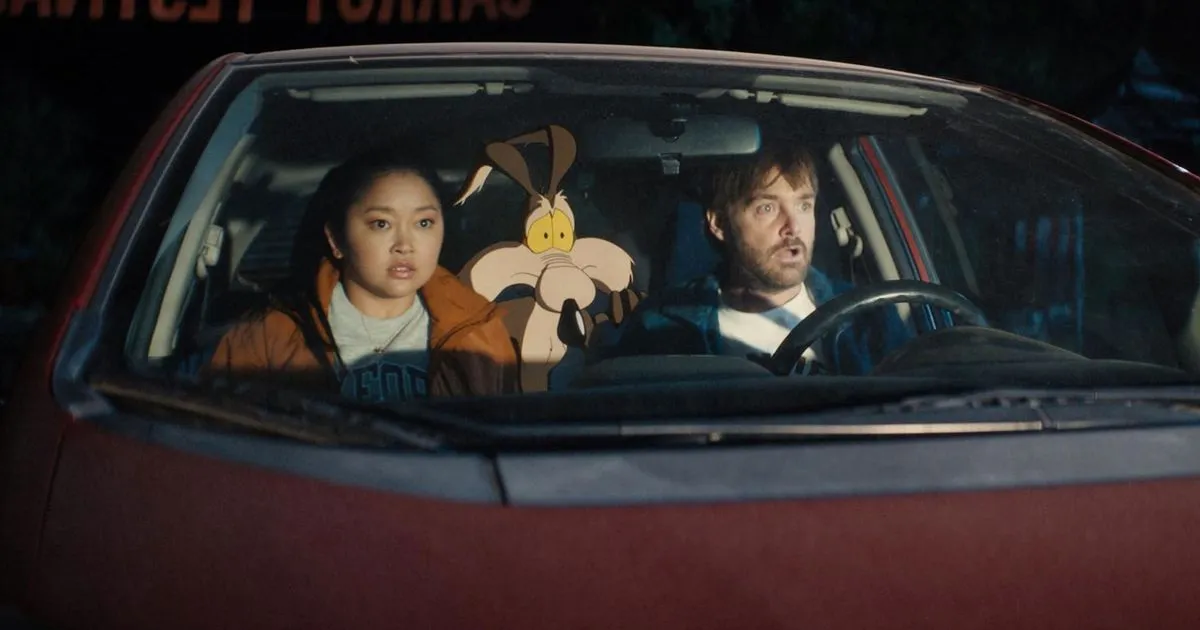
The most important Looney Tunes in the world of the film are Wile E. Coyote and his chipper nemesis, the Road Runner. (Most of the cartoon voice work was provided by Eric Bauza and Candi Milo.) A swath of the film’s early scenes follow Coyote’s failed efforts to capture and devour the Road Runner with a nimble alacrity, true to Looney Tunes’ interest in physical humor above all else. Rocket-powered skates, magnets, metal pellets disguised as birdseed, torpedoes — nothing stands in the way of the Road Runner’s survival. Each of Coyote’s dastardly plans rely on equipment from the powerful conglomerate Acme. After another painful failed attempt on the Road Runner’s life, Coyote sees a television ad for the run-down Avery, Jones & Maltese personal-injury law firm, led by the downtrodden Kevin Avery (Will Forte). He revamps his plans, heading to their offices in Albuquerque, New Mexico, to sue Acme for the injurious ruin its products have rained upon his life. But Coyote has hitched his hopes for the mammoth case upon a man who could only be called a coward.
The psychologies of each of Coyote vs. Acme’s characters feed into the film’s blunt interest in an era when corporations rule our lives, from what we buy to what art we consume. Kevin Avery is a product of these strange times, and it has made him craven: He believes there’s no reason to fight forces like Acme; all we can do is bend to them. When Coyote arrives at Kevin’s office, the man wants to aim for only a small settlement for Acme’s faulty rocket shoes despite his client’s wealth of evidence of other product failures. Coyote first hoodwinks and then forces Kevin into his lawsuit plans, taking Acme to task in a way the corporation, confident in its imperviousness, finds laughable. For most of the film’s run time, the case is itself a joke to every newscaster and commenter because of how notable a failure Kevin happens to be; he’s the kind of lawyer who advertises on scummy billboards and lives in a tired-looking motel. But there is one person at the firm whose attitude diametrically opposes Kevin’s dedication to skating by on the bare minimum: Kevin’s intern and niece, Paige (Lana Condor), who is fresh out of law school. Paige is energetic, determined, and inquisitive where Kevin is defeatist, sad, and zhlubby. She still sees the worth in trying to help people, even if she ultimately loses. Kevin’s motivations are less high-minded. “Our job is not to win this case. It is to not look like fools,” he advises.
Philosophical discussions aside, the jokes lend the film quite a punch: cartoon bombs thrown through windows, the dexterous physicality of the silent Coyote, courtroom drawings depicting chaos that follow Kevin around like a plague. Bugs Bunny appears as a Deep Throat–styled whistleblower, a highlight in his brief scenes. He launches the film into the history of Dr. Peter Lorre (inspired by the classic Hollywood star of the same name), a quiet but determined scientist who was an inventor for Acme’s cartoon production wing and tried to stop the company in the early 1990s. His story holds the truth behind Acme’s cartoon-focused products and their link to Coyote’s run of losses, which may in fact be by design. The human actors thread the film’s tonal needle properly as well. As Buddy Crane, a buffoonish, overconfident opposing counsel who works in house for Acme, John Cena relishes his role just as much as Buddy relishes laughing at Kevin. Like the other performers, he plays his character straight, never leaning too hard on the sheer absurdity of living in a world alongside cartoons. To them, cartoons are just a part of life, and that incongruity generates much of the film’s humor.
Coyote vs. Acme is smart enough to realize both our world and that of the Looney Tunes aren’t kind to underdogs and sometimes the good guys don’t win. As one character notes, “These companies think they can do whatever they want and get away with it — because they do.” The film can get didactic, but that impulse is balanced by an unexpected turn in the relationship between Wile E. Coyote and the Road Runner. What Coyote sees as a rivalry, the Road Runner considers more a friendship, which produces great impact when he finally appears in one of the many court scenes. Such sweetness, which seeps into Kevin’s relationship with his belaboured client as well, almost left me teary-eyed.
Comparing almost any hybrid live-action and animated film with the lightning luck of 1988’s Who Framed Roger Rabbit feels unfair. But here it is necessary for a complaint I have about Coyote vs. Acme. That Robert Zemeckis film will never be duplicated or topped, but there’s a difference between these films worth teasing out. Coyote vs. Acme is so attuned to its main plot, it’s hard to glean much about the wider world around its characters, unlike Roger Rabbit, which gives clear examples of how its fictional society views cartoons. Bob Hoskins’s gruff detective, Eddie Valiant, sees them as a sometimes-dangerous nuisance, while conniving film-studio power players see them as moneymakers, and the rest of humanity sees them as shades in between. In Coyote vs Acme, I was left wondering how people regularly interact with cartoons on an emotional level, rather than just professionally. Are the social lives of cartoons and people completely severed? Does everyone just see cartoons as heightened versions of regular people?
Still, Coyote vs. Acme does what it needs to do and does it mostly well. It’s fleet, funny, and self-aware without being smug. It’s a warmhearted, humorous take on a legal thriller more than anything else. At one point early in the film, Kevin is at the Acme corporate offices. In the background, an Acme ad plays: “We’re a company of family values that values its family … of companies.” This casually deployed joke highlights the film’s greatest strength: looking the modern hell of corporate power in the face and sticking a finger in its eye out of sheer defiance. More filmmakers and their works should.
By submitting your email, you agree to our Terms and Privacy Notice and to receive email correspondence from us.