Some of the world’s most important rivers are drying up. The Colorado River supplies water and electricity to millions of people in the Southwest U.S. but is afflicted by a decadeslong drought, while blistering European heat is taking a toll on the Danube and other key waterways on the continent. And adjusting to these environmental changes will be an upstream battle for governments and communities.
Colorado: ‘Legal and political battles’
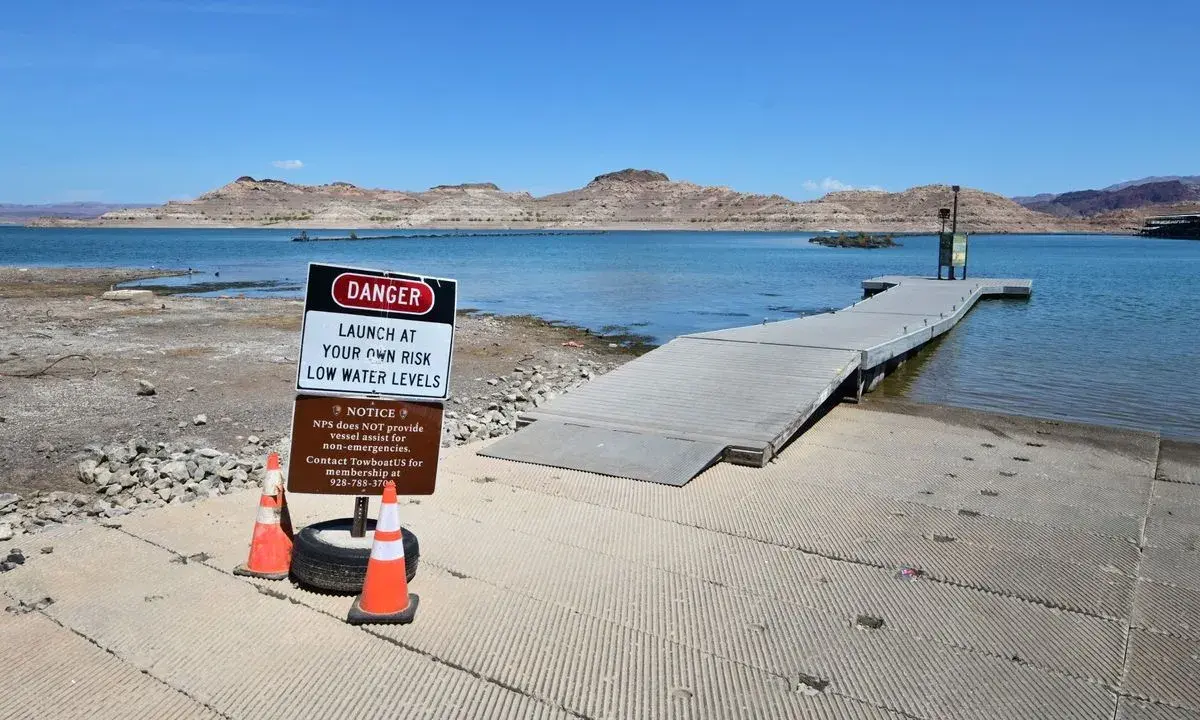
Record-low water levels at reservoirs fed by the Colorado River have put the region in “uncharted territory,” Utah State University’s Jack Schmidt said to CNN. Lakes Mead and Powell have been “shrinking for 20 years” because of the toll that climate change and overuse have taken on the river, which supplies water to 40 million people and hydropower electricity to 500,000 households. Big cities like Phoenix and Tucson “have taken steps to prepare” for the crisis, but procuring alternative water supplies “might be less feasible” for Indigenous tribes and small towns along the river.
Dividing the remaining water will require “legal and political battles” that are “not remotely close to being resolved,” said the Arizona Daily Star. Cities, farms and businesses along the Colorado say reducing water use is “more urgent than ever,” but the possible loss of Hoover Dam-produced power supplies could raise electricity costs in the region “to the point of being unaffordable.” One hope: The promise that the “biggest El Niño season on record” might replenish the river.
The crisis adds urgency to a federal proposal to require Arizona, California and Nevada to significantly reduce the amount of water they take from the Colorado, said The Associated Press. That would result in a “lot of potential devastating impacts” to farms and other river users, Arizona water official Tom Buschatzke said to the AP. Nevada this week sued to block the plan, said The Hill.
Europe: Altering the ‘old map of power’
The Danube recently measured “just 9 inches deep” in Budapest, Ben Coates said at The New York Times. Italy’s Po River and the Rhine in Switzerland are also in peril. That has nearly halted the “transport of chemicals, oil products and other goods” in Europe, while also forcing Romania to shut down a river-cooled nuclear power plant. The major rivers have served as “crucibles of the continent’s industrial power,” but the evaporation of those rivers could “alter the old map of Europe’s power and wealth.”
The “growing disruption” to commerce has sparked calls to dig deeper channels in the bottlenecked part of the Rhine, said Radio France Internationale. But experts are warning that making rivers deeper “cannot create more water and could make shortages worse” by disrupting sensitive ecosystems. “That is what we call maladaptation,” hydrologist Thibault Datry said to the outlet.
There is also talk of “reconnecting floodplains, protecting wetlands and restoring peatlands” to help rivers “retain more water and improve resilience” during dry periods, said Deutsche Welle. But those efforts may well be “little more than a drop in a fast-flowing river” without decisive moves to reduce greenhouse gasses and mitigate climate change.