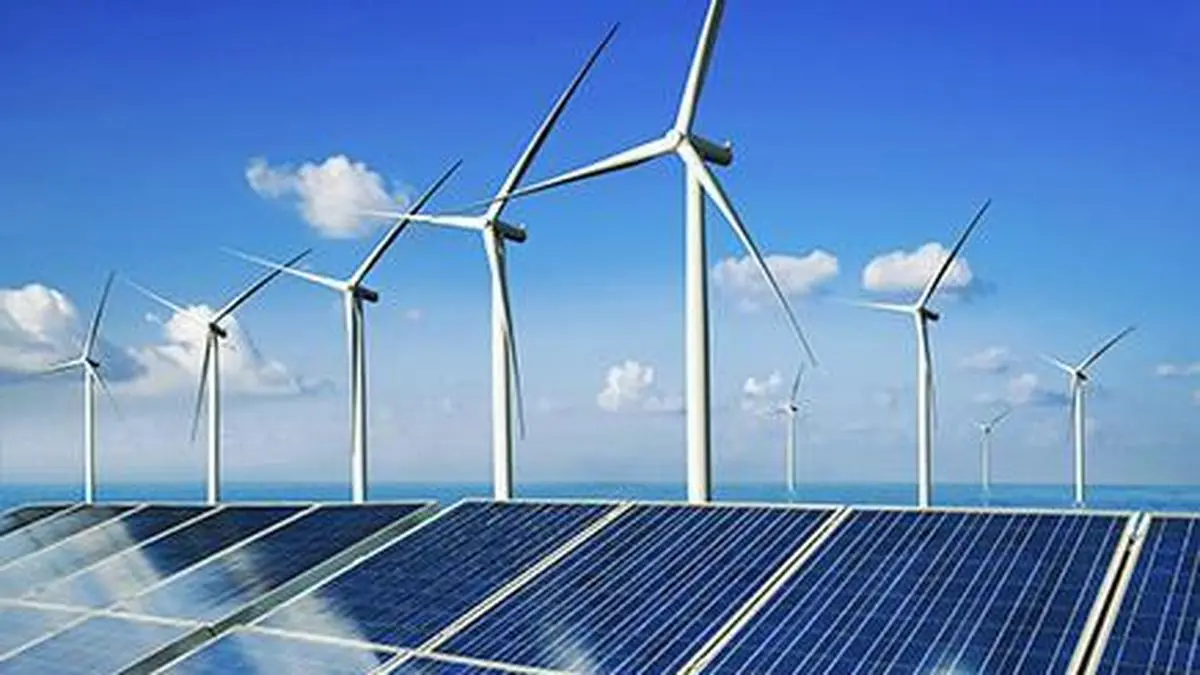
The share of non-fossil fuel sources — RES, Hydro and Nuclear power — rose to 33.14% last month from 30% in June 2026 and 34.2% in July 2025
| Photo Credit:
Blue Planet Studio
In a significant development that further strengthens India’s green energy push, renewables accounted for a record 20 per cent or one-fifth of the country’s cumulative power generation during July 2026.
The timing of this feat also matters considering India’s power demand surged by almost 11 per cent Y-o-Y last month to roughly 171 billion units (BU) — the highest on record for any month. For comparison, in July 2025, power demand grew a mere 2.6 per cent.
July also witnessed a peak power demand of 270 GW, only the second-highest ever on record. Crisil Intelligence said this is around 22 per cent higher than the peak of 221 GW seen in the same month last year.
Another interesting development was that even as the country’s roughly 224 gigawatt (GW) of thermal power capacity burned more coal during July to cater to the rising demand for cooling, the share of coal in the generation mix slipped to a 10-month low.
According to the latest Coal Ministry data, the share of renewable energy sources (RES) hit 19.94 per cent in India’s cumulative power generation mix in July 2026, which is an all-time monthly high. This is against 19.02 per cent in June 2026 and 16.93 per cent in July 2025. RES includes solar, wind, biomass and others.
While the share of coal-fired power generation slipped to 64.31 per cent last month, compared to 67.34 per cent in June and 63 per cent in July 2025.
The share of hydro power generation rose to 10.23 per cent in July 2026 from 7.86 per cent in June 2026, but was lower than the 14.52 per cent share during July 2025.
The share of non-fossil fuel sources — RES, Hydro and Nuclear power — rose to 33.14 per cent last month from 30 per cent in June 2026 and 34.2 per cent in July 2025. The share of non-fossil fuel sources hit a 10-month high in July 2026.
According to Crisil Intelligence, power generation increased by around 10 per cent Y-o-Y to 182 BU during July 2026. Except gas and hydro, all major fuels saw an on-year increase in power generation.
Renewable energy (RE) generation increased around 10 per cent Y-o-Y in July, mainly due to a rise in capacity addition. India added 13.2 GW of RE capacity (including small hydro) in Q1 FY27, it added.
While coal-based generation increased 15 per cent Y-o-Y, its share in total generation was at 64 per cent this July, against 62 per cent in the same month last calendar year.
Hydropower generation declined around 14 per cent Y-o-Y during the month, primarily because of weak rainfall. The energy content of 31 reservoir-based hydropower projects stood at roughly 14 BU as of July 31, significantly lower than the full-reservoir capacity potential of about 34 BU, Crisil Intelligence pointed out.
In the same period last year, the energy content was around 22 BU. The lower reservoir storage level may also have contributed to the decline in hydropower generation.
For the April-July period, power demand increased around 9.1 per cent on-year this fiscal, against -0.5 per cent in the same period in the last financial year.
Copyright© 2026, THG PUBLISHING PVT LTD. or its affiliated companies. All rights reserved.
Comments have to be in English, and in full sentences. They cannot be abusive or personal. Please abide by our community guidelines for posting your comments.
We have migrated to a new commenting platform. If you are already a registered user of TheHindu Businessline and logged in, you may continue to engage with our articles. If you do not have an account please register and login to post comments. Users can access their older comments by logging into their accounts on Vuukle.
Source: Read the original article on www.thehindubusinessline.com