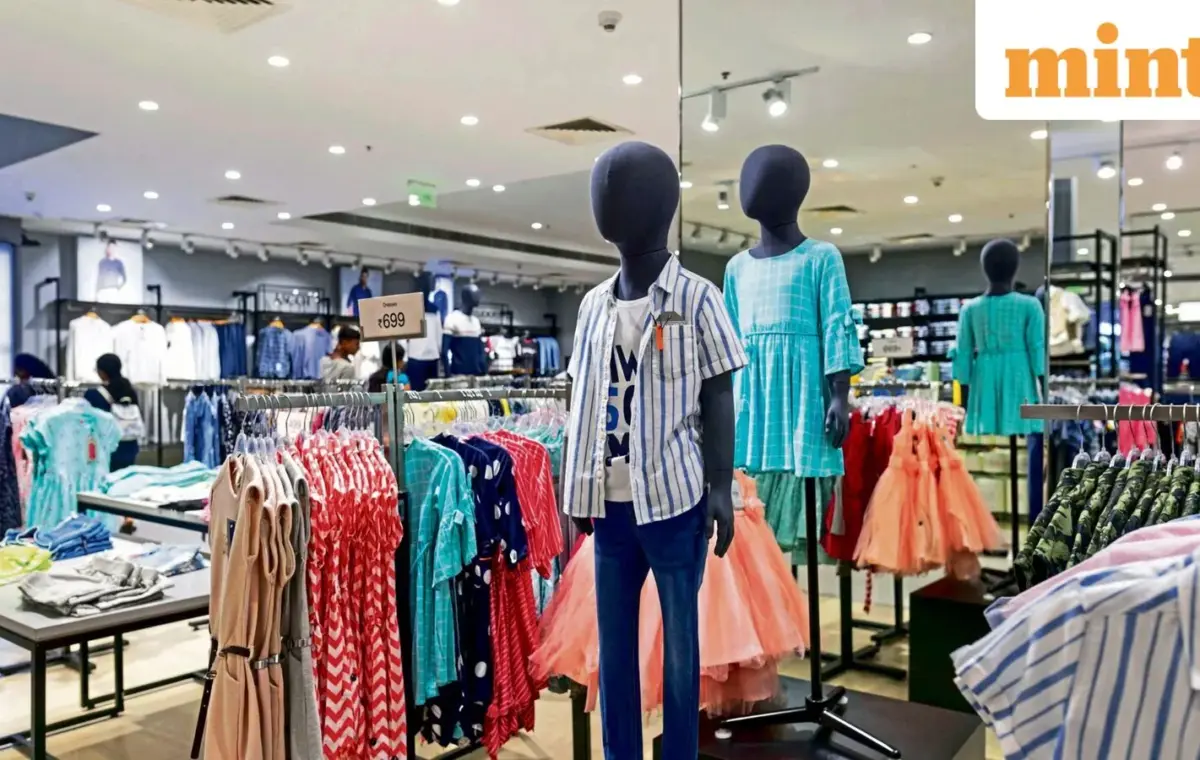
Bengaluru: Tata Group's Trent Ltd is winding down its Utsa stores after the affordable ethnicwear format failed to generate sufficient sales and profitability to justify a standalone store chain, according to four people familiar with the matter. From a peak of over 20 stores about two years ago, the count is already down to four, with shutters on another one coming up soon.
The brand was initially a sub-brand within Westside’s ethnicwear portfolio, offering affordable kurtas, kurta sets, salwar suits and dresses, largely in the ₹1,000– ₹3,000 price range.
“The company decided to launch standalone Utsa formats after seeing huge demand for the label across its Westside stores and also an attempt to capture the broader ethnicwear market share,” said one of the people mentioned above. The first standalone store was opened in Pune in 2019.
There are currently four operational standalone Utsa stores: in Ahmedabad, Bengaluru, Hyderabad and Thiruvananthapuram. The one in Jubilee Hills, Hyderabad is set to shut down by 15 September, according to one of the above people familiar with the matter. Mint could not independently verify whether the remaining three stores will also be shut down.
Trent did not respond to Mint’s emailed queries.
The company has never formally disclosed the number of Utsa stores in its reports. However, according to a 27 June 2025 analyst report by HDFC Securities, Utsa had 22 stores across 12 cities in FY24, up from 17 stores across five cities in FY23. The network subsequently declined to 20 stores across 13 cities in FY25. The average Utsa store size was estimated at 2,000–3,000 sq. ft.
“Utsa wasn’t generating enough sales to justify a standalone store chain, and its store-level profitability wasn’t strong enough. There was also a degree of overlap with Westside, which offered customers much greater variety under one roof. The company was not very happy with Utsa as a brand or a store, and the decision was to draw it down,” said two of the above people.
Some Utsa stores are now being replaced by Burnt Toast, a youth-focused lifestyle brand, stores at some of these locations, according to two of the people mentioned above. Details on these numbers or their locations were not given.
The pullback comes despite the size of the opportunity. Women's wear accounted for about 40% of India’s ₹5.8 trillion apparel market in FY24, with ethnicwear making up 60–65%, according to a CRISIL MI&A report. The women’s ethnicwear market is expected to reach ₹3.6–3.7 trillion by FY29, growing at 9-10% annually.
That makes the segment an attractive battleground for organized retailers, particularly ahead of the festive and wedding season, when ethnic and occasion wear typically sees a seasonal uplift in demand. Trent, however, is facing competition across price points from established players, including Aditya Birla Fashion and Retail’s W, Aurelia and Jaypore, as well as Reliance Retail’s ethnicwear offerings and digitally-driven brands such as Libas. Aditya Birla Fashion says its ethnic portfolio generated over ₹2,200 crore in annual revenue in FY26 and added more than 80 stores during the year. Libas, meanwhile, has expanded to more than 50 stores across 15-plus cities, besides its online business.
“Utsa had no clear moat," said Sandeep Abhange, research analyst, consumer & midcaps at LKP Securities. “Westside already covered the same customer, price point and category, leaving little incremental market and risking cannibalization… Its sales per square feet were not enough to cover rentals, while the narrow basket limited frequency. It was the wrong format for the right opportunity.”
He said new Utsa racks are also not being spotted at Trent stores; "what remains is largely sale inventory”.
Trent has, however, not entirely abandoned the ethnicwear opportunity. It launched the Samoh brand in 2023 as a more premium, elevated occasion-wear proposition, positioned above its mass and affordable fashion formats. Samoh’s current assortment includes kurtas and sets priced at around ₹2,000– ₹7,000, while the brand describes itself as catering to customers seeking sophistication and luxury in occasion wear.
Trent's Utsa pullback is a reminder of the hit-and-miss nature of Trent’s strategy of incubating multiple retail concepts as it builds what it describes as a “house of brands”. Chairman Noel Tata has set an ambitious target for Trent, saying in 2023 that he saw the company becoming 10 times its then size, a goal he reiterated in June 2026. For context, Trent's consolidated revenue has grown 2.4 times, from ₹8,242 crore in FY23 to ₹20,074 crore in FY26.
Trent’s experimentation with smaller formats goes back well before Utsa.