Account subscription benefits alongside Premium Stories, Editorials,
Opinions and more. Unlock these with Subscription
The View From India
Looking at World Affairs from the Indian perspective.
First Day First Show
News and reviews from the world of cinema and streaming.
Today's Cache
Your download of the top 5 technology stories of the day.
Science For All
The weekly newsletter from science writers takes the jargon out of science and puts the fun in!
Data Point
Decoding the headlines with facts, figures, and numbers
THEdge
At the cutting edge of education and careers
Health Matters
Ramya Kannan writes to you on getting to good health, and staying there
Gender Agenda
Stories from beyond the binary.
The Hindu On Books
Books of the week, reviews, excerpts, new titles and features.
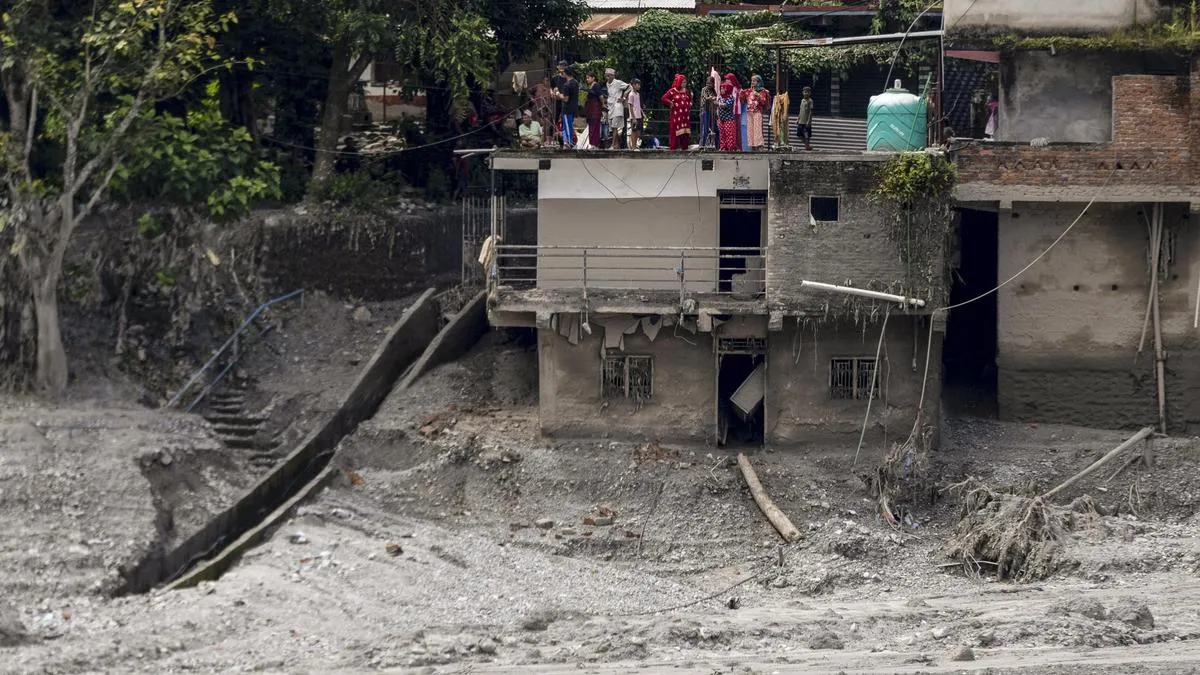
People gather on the roof of a precarious house after flash floods, at the Devighat in Bidur, Nuwakot, Nepal, Aug. 27.
| Photo Credit: PTI
The story so far: A devastating flash flood in the Bhote Koshi–Trishuli river system has killed at least 389 people in Nepal and three in Tibet, while more than 1,400 people are reported missing. Hundreds of people have been displaced in affected districts including Rasuwa, Nuwakot, Dhading, Gorkha and Chitwan No deaths have been reported in India so far, but 288 Indian nationals in Nepal remain uncontactable, with 84 Indians rescued and authorities in Bihar and Uttar Pradesh monitoring downstream flood risks. Roads, bridges, homes and hydropower infrastructure have been destroyed, and search, rescue and relief operations are under way.
The evidence now points to a large collapse of ice and rock high in the Himalayas near Langtang Lirung, rather than heavy rainfall. A mass of glacier ice, rock and debris appears to have detached at about 5,200 metres and fallen roughly 1,200 metres into the Lhende Khola system by momentum, gathering more rock, sediment, ice and water and morphing into a fast-moving debris flow. The rubble temporarily blocked the river and the resulting surge then travelled downstream through the Bhote Koshi and Trishuli systems, affecting communities nearly 100 km away.
ALSO WATCH Before & after: Satellite images reveal Nepal flood devastation
Seismological instruments detected a strong ground signal at about 8.37 a.m. on August 26. It was initially interpreted as an earthquake of roughly magnitude 4.4. Because the flood followed almost immediately, the natural explanation was that an earthquake had shaken loose a landslide or glacier, which then blocked the river.