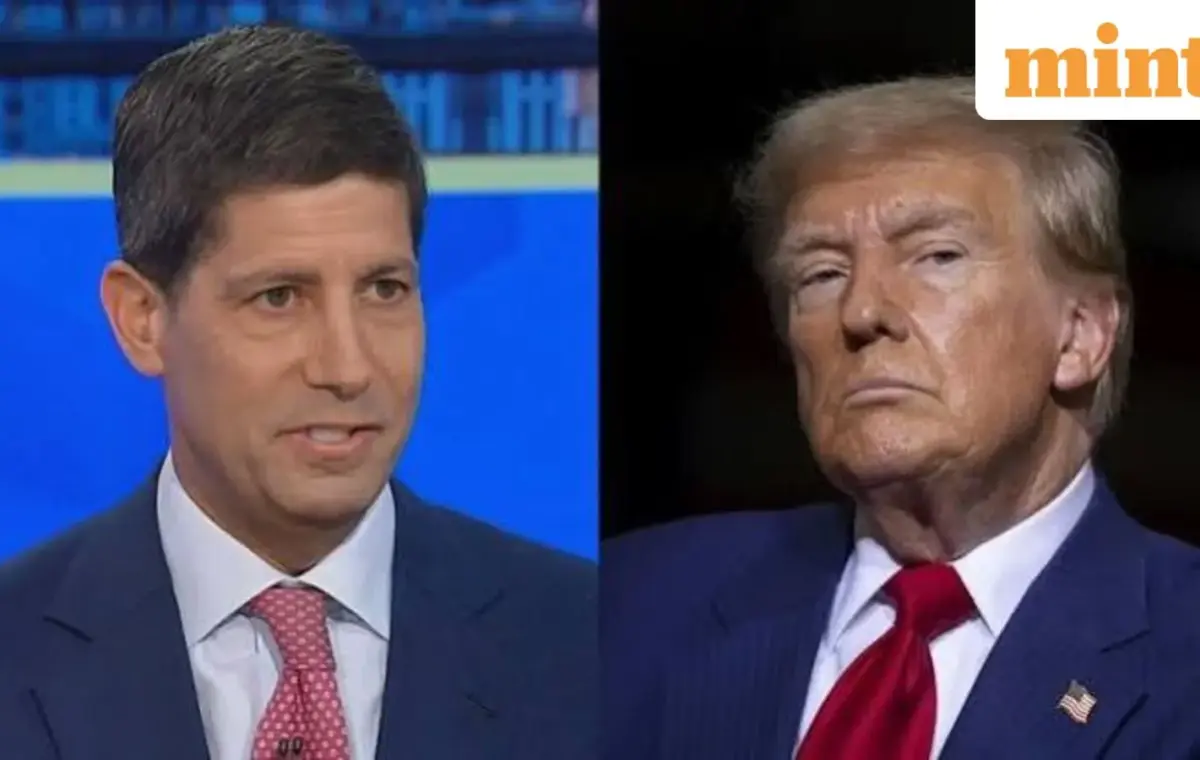
New Federal Reserve Chair Kevin Warsh has taken a notably different approach to central bank communication, offering far fewer comments than his predecessors on the state of the economy and the outlook for inflation.
However, the shift has not received an enthusiastic response from many economists and Wall Street investors, who have raised concerns about the Fed’s reduced communication.
Warsh will have a key opportunity to respond to those concerns on Friday when he delivers a speech in Jackson Hole, Wyoming, at the Federal Reserve’s annual economic symposium.
Economists and Wall Street analysts are looking for a clearer indication of how Kevin Warsh intends to deal with inflation that remains above the Federal Reserve’s 2% target, according to AP. At his 29 July press conference, Warsh avoided directly answering repeated questions about whether he would raise interest rates if inflation remained elevated, leaving investors uncertain about his approach.
Warsh has maintained that he does not want to offer “forward guidance” on whether the Fed will raise, cut or hold rates at future meetings. He argues that such commitments could reduce the central bank’s flexibility and make financial markets overly reliant on its signals.
However, some economists believe Warsh can explain his broader policy thinking without committing to a specific future rate decision.
“What he needs to do is to clarify the conceptual framework he’ll bring to directing monetary policy,” David Wilcox, a senior fellow at the Peterson Institute for International Economics, said. “He’s refused to provide even that amount of illumination."
Markets are also likely to look for clues about how Warsh assesses “underlying inflation” and what indicators he considers most important.
During his previous press conference, Warsh said that “any central banker … is more inclined" to raise rates “when he or she sees underlying inflation moving higher," a comment some economists viewed as broadly consistent with what they wanted to hear.
However, he did not explain whether he believes underlying inflation is currently accelerating or precisely how he measures it. When questioned about the inflation gauge he would use to determine whether prices are aligned with the 2% target, he pointed to the Fed’s preferred measure, the personal consumption expenditures price index, while indicating that this approach could change next year following recommendations from task forces examining inflation and data.
Warsh may also be pressed on whether interest rate increases would be his main response if inflation remains stubbornly high.
Asked previously whether he would back higher rates to address persistent inflation, Warsh said they “could well be part of that solution”, while adding, “I wouldn't say it's in isolation.”
Some Fed watchers interpreted those remarks as suggesting that Warsh could consider alternatives to interest-rate changes, including reducing the central bank’s large holdings of Treasury securities. Selling those bonds could increase longer-term borrowing costs, although the impact would occur over a longer period.
Warsh’s speech comes amid heightened scrutiny over the Federal Reserve’s independence, particularly because President Donald Trump has repeatedly pushed for lower interest rates.
Although Trump continues to support Warsh, whom he appointed and who assumed office on 22 May, the president has criticised other Fed officials for favouring higher rates. Trump has also renewed his attempt to remove Fed Governor Lisa Cook, whose replacement could give him a majority on the Fed’s seven-member board.