This is read by an automated voice. Please report any issues or inconsistencies here.
See more from the L.A. Times in Google Search. Set us as preferred
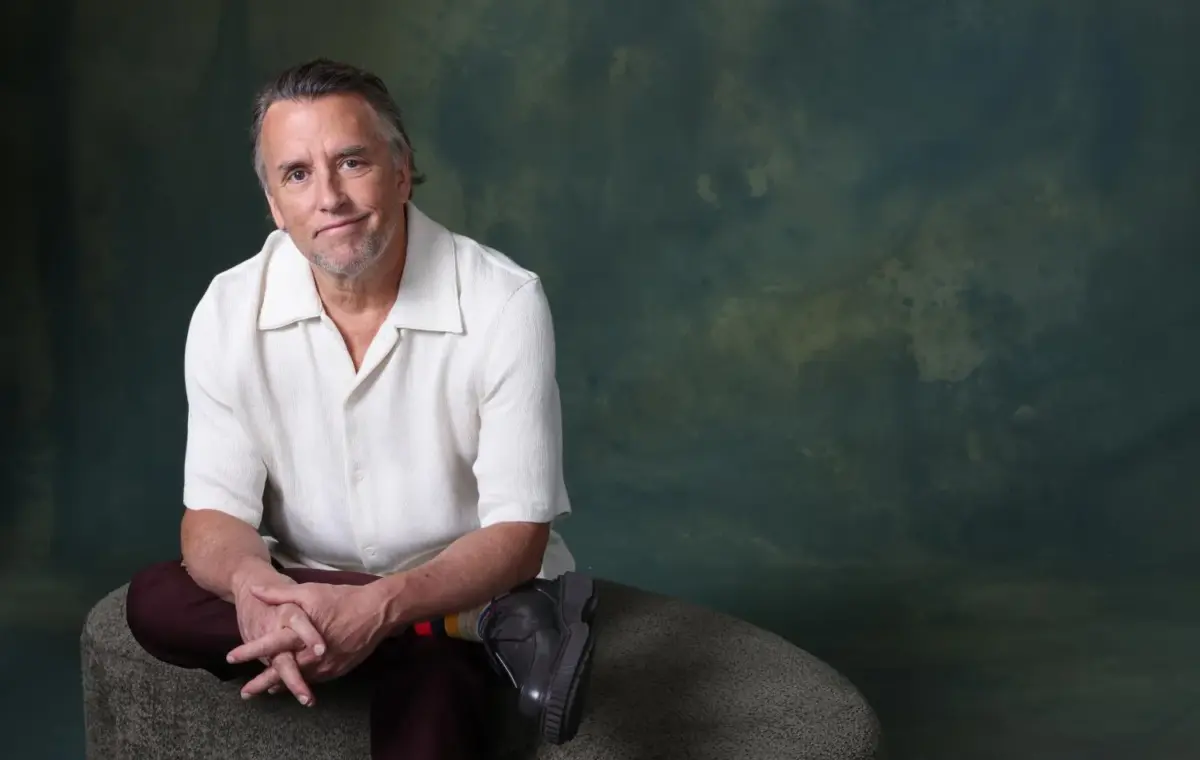
Prolific and versatile, Richard Linklater has been one of the most joyously unpredictable filmmakers for more than 35 years. From the rambling philosophizing of 1990’s “Slacker,” one of the key films of the American independent film movement, to titles such as the high-school hangout of “Dazed and Confused,” the achingly romantic “Before” trilogy and more recent idiosyncratic projects like “Hit Man,” “Blue Moon” and “Nouvelle Vague,” he has crafted relatable characters with a sympathetic eye. All of his films brim with the stuff of life.
“Boyhood” might be the most emblematic of Linklater’s works: emotionally direct and heartfelt but made in an unusual, unprecedented way. Shot over 12 years with the same set of principal actors, the 2014 film features young Ellar Coltrane and Lorelei Linklater (the filmmaker’s daughter), who grow up before the viewers’ eyes. Their parents, Patricia Arquette (who won an Oscar for her performance) and Ethan Hawke gain a wisdom and grace with the passing of time. The film’s greatest special effect indeed becomes time itself, as the cast ages and grows across the course of the story.
Recently, the film had a 12th-anniversary screening in Austin, Texas, with the filmmaker, Coltrane, Hawke and Arquette all present. Here in L.A., the American Cinematheque is giving Linklater a tribute this weekend with screenings of “Boyhood” and 2001’s animated “Waking Life” at the Aero and 1993’s “Dazed and Confused” at the Directors Village in Westwood, all with the filmmaker in person. “Boyhood” is also getting a theatrical release in select art house theaters around the country, including the Alamo Drafthouse chain on Sept. 7.
From his farm outside Bastrop, Texas, Linklater, 66, recently got on a video call to reflect on the time-consuming yet rewarding project that now stretches back nearly 25 years.
You seem like someone who’s focused on looking forward and what comes next. So when it comes to rereleases and reunions, like with “Boyhood” or “Dazed and Confused,” what is it like being asked to look back?
It’s really the only time I do. And I’m kind of grateful because I don’t look back. What resonates with me in my mind is the experience of making the movie more than the movie itself — all the people you worked with and the cast and all those good feelings. So it’s fun to be back with the people you went through that journey with. That seems about right to check it out. But if you go in my office, you won’t find a poster. There are no reminders of anything I’ve done. I just want to be always thinking forward. We had this screening here in Austin of “Boyhood,” and it was intense. I had never quite experienced something like that.
The conceit of the movie, that you took 12 years to make it, became largely what the movie was about: time and growth and what happens to people as they get older. Was that always the impulse?
It was always on a grid to me. We’re on the educational grid: What’s your life, from first grade to 12th grade? 12 years, they own you, that system. You’re in the public education school system. And at the end of that is some adult freedom. You can go to college, you can get a job, you can do whatever you’re going to do. But for now, we got you. So I just call it the maturation process of being an American kid growing up. That’s what I was trying to capture. And that’s what I couldn’t do in a regular film.
It wasn’t like: Oh, we’ll see him at age six and then again at 12 and then again at 18. It was like, no, I want to capture all of it. But you can’t ask a seven-year-old, “OK, now you’re 12 in this scene and you got a girlfriend.” There’s this huge physical limitation. So that’s what made me think I couldn’t make the movie and that’s what facilitated this idea. It was good news and bad news. I could tell my story of those years, but it was going to take 12 years.
And you’re doing this process again with “Merrily We Roll Along,” an adaptation of the Stephen Sondheim musical that covers 20 years.
Tempting fate probably more on the actuarial table. I’ve got to say, it’s really different, but what we learned from “Boyhood” really informs it, for sure. I know what to expect on a lot of practical levels. “Merrily” is an adaptation — we know the story, we have the music. It has a firmer spine. We’re using the same properties but I’m not confused as to what certain things will be about. It’s got a stronger roadmap. We’re definitely adapting it, but it’s just different.
In making “Boyhood,” watching the kids grow up is more obvious, but with Ethan and Patricia, you’re watching them physically change, but also grow as actors in that time too. Their final scenes, full of reflections and regrets — they probably couldn’t have done them quite the same 12 years earlier.
Absolutely not. That’s why when people [say], “Well, why don’t you just age them?” it’s like, “No, you’re missing the point.” That’s superficial. The point is a performer actually having lived those years and earned those feelings and every year we can look at each other and go, “Oh, let’s take it from where we are right now.” “Boyhood” wasn’t really our first title. We were calling the movie “12 Years” for a long time and it definitely is the perspective of Mason Jr. that’s the primary perspective of the movie. But I always thought of it as kind of a portrait of parenthood, bumbling through parenting. It could have been called “Parenthood,” but that title was taken. There was a funny moment when Ethan was watching it, let’s say year eight or 10, I might show him sections of the thing. And he was looking at it going, “Wow, they’re growing up — we’re aging.”