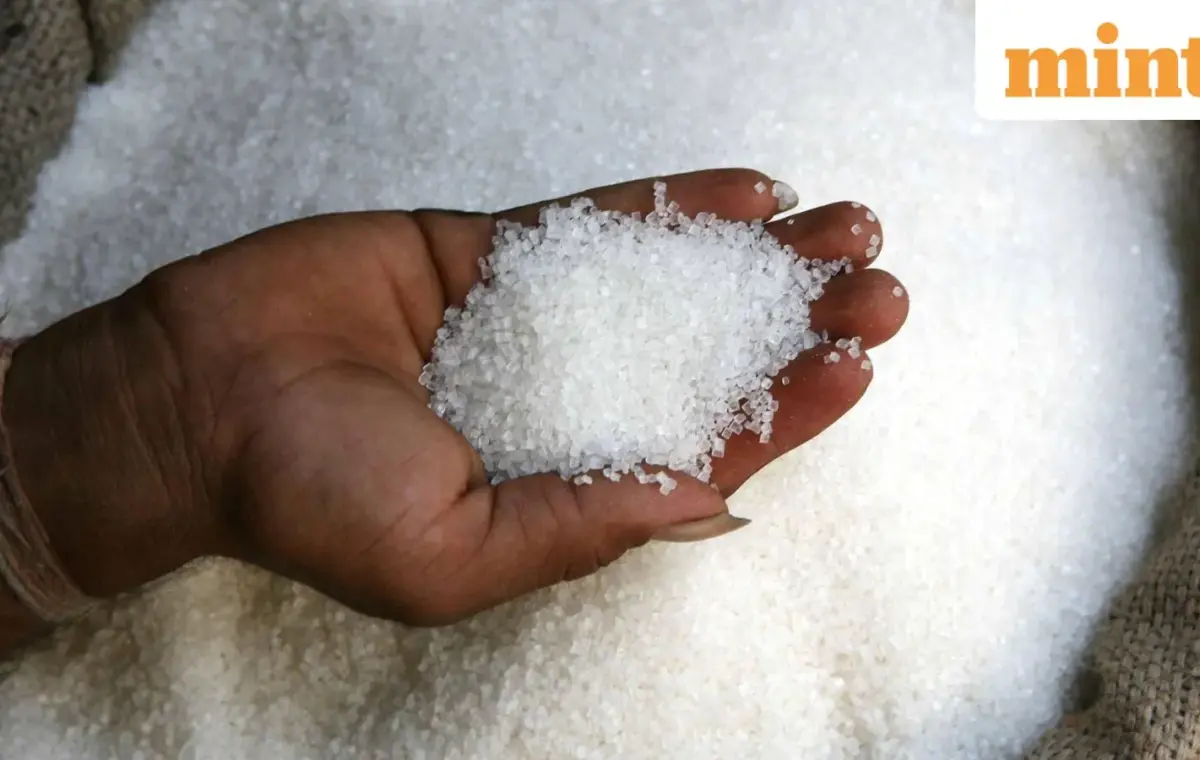
Retail sugar prices have surged unusually fast, rising from ₹49 per kg a month ago to ₹65 per kg on 26 August. Prices are about 41% higher than a year ago, according to data from the consumer affairs department.
The spike comes just ahead of the festive season, when sugar consumption typically rises. Is it a result of lower production or diversion of sugar to ethanol? Mint explains the factors at play and what consumers can expect in the coming months.
Sugar production fell in consecutive years in the 2023-24 and 2024-25 seasons due to a drop in yields and adverse weather. A sugar season runs from October of one year to September of the next, in line with cane harvesting and crushing timelines. Last year, the crop was damaged by red rot, a fungal disease, in Uttar Pradesh and excess rains in Maharashtra, resulting in lower-than-expected production.
As per a note from Crisil Intelligence (25 August), sugar production fell from 32 million tonnes (mt) in 2023-24 to 26 mt the next year, and improved to 28 mt in the ongoing sugar season (2025-26). Considering the fact that annual domestic consumption of sugar hovers between 28 mt and 29 mt, the shortfall led to a spike in prices. This was fuelled by speculative purchases by large buyers. In addition, the mills diverted more sugar to make ethanol, which lowered availability for direct consumption.
As per Crisil's analysis, over the past five years, increasing quantities of sugar have been used to produce ethanol. The quantity diverted shot up from a meagre 0.8 mt in sugar season 2019-20 to over 3 mt by 2025-26, or a near four-fold increase. This tightened supplies amid a production shortfall, which, in addition to the rising cost of sugarcane due to higher support prices to farmers, led to the current spike.
The sugar industry lobby, however, believes otherwise. Nearly three-quarters of the ethanol is now produced using grains like maize and surplus rice, with just 25% coming from sugar-based sources. Further, the ethanol blending programme has strengthened the financial position of sugar mills, thereby allowing mills to make timely payments to cane farmers, the Indian Sugar and Bio-energy Manufacturers’ Association (ISMA) argued in a statement on 24 August.
A less-spoken-of factor is inaccurate sugarcane production estimates. When the industry overestimates production at the beginning of a season, it erroneously makes room for higher diversion of sugar to make ethanol, as well as for exports. For instance, India allowed the export of about 0.7 mt of sugar before announcing a ban in May. Then, following the recent price spike, it allowed duty-free imports of up to 1 million tonnes of raw sugar (announced on 20 August).
Sugar-based and grain-based ethanol makers have been urging the government to increase the blending percentage in petrol from the current 20% (E20) levels, without taking into account how this may impact retail prices of sugar as well as corn, which is a critical input for the poultry industry. A reckless biofuel push can lead to higher food prices, more so during a production shortfall.
In addition to allowing duty-free imports of 1 mt, the government has imposed stock limits on large buyers. September onward, bulk consumers are not allowed to hold stocks for more than 15 days of consumption. The government has also advised states and sugar mills to advance crushing of cane in October to improve the domestic supply. The government is undertaking physical verification of stocks and enforcing regular disclosures by traders and large buyers to stop hoarding and panic buying. These measures are expected to cool prices.
Hoarding and advance stocking by some traders pushed large bulk buyers to build inventories of 1.5–2 months’ requirement, temporarily taking significant quantities of sugar out of the market and creating an artificial perception of tight availability despite adequate supplies, ISMA said earlier this week.
The crop sector is currently dealing with a strengthening El Nino in the Pacific and deficit rains in parts of the country. The industry is yet to release a production estimate for the 2026-27 season, which begins in October. Crisil expects sugar production at 28.8 mt, slightly higher than 28.1 mt in the previous season. Data from the farm ministry showed a marginally lower cane planting area (5.84 million hectare) in the ongoing kharif season, as on 21 August. But the planting area is higher than the previous five-year average (5.42 million hectares).
How prices move in the coming months will depend on actual production in the 2026-27 season and the impact of El Niño and adverse weather events on the current crop. An accurate early estimate will aid proper planning, particularly how much sugar to divert to produce ethanol.
Sayantan is a National Editor at Mint. As a part of its Long Story team, he writes on food and nutrition, agriculture, rural economy and climate change. His work is a blend of ground reportage and analysis where he unpacks news and trends from India’s hinterlands.<br><br>He also co-authors a fortnightly newsletter ‘Climate Change and You’ with a belief that how different sectors of the economy, and we as a species, shape and are shaped by the unfolding climate crisis, is a defining story of our times.<br><br>Before joining Mint in 2014, Sayantan worked as a correspondent and photographer with Down to Earth, an environment fortnightly, covering eastern Indian states. There he wrote on mining, environment, forests, tribes and farming. He’s been a journalist for 17+ years, most of it at Mint where he learnt how to tell human interest stories dispassionately.<br><br>Before joining journalism, Sayantan worked as a researcher at multiple think-tanks and at a non-profit, specializing in rural development and finance. Sayantan holds a Master’s and M.Phil. in Economics from Jawaharlal Nehru University, New Delhi.<br><br>If you have a comment or a tip to share, he’s all ears at sayantan.bera@livemint.com.
Catch all the Industry News, Banking News and Updates on Live Mint. Download The Mint News App to get Daily Market Updates.