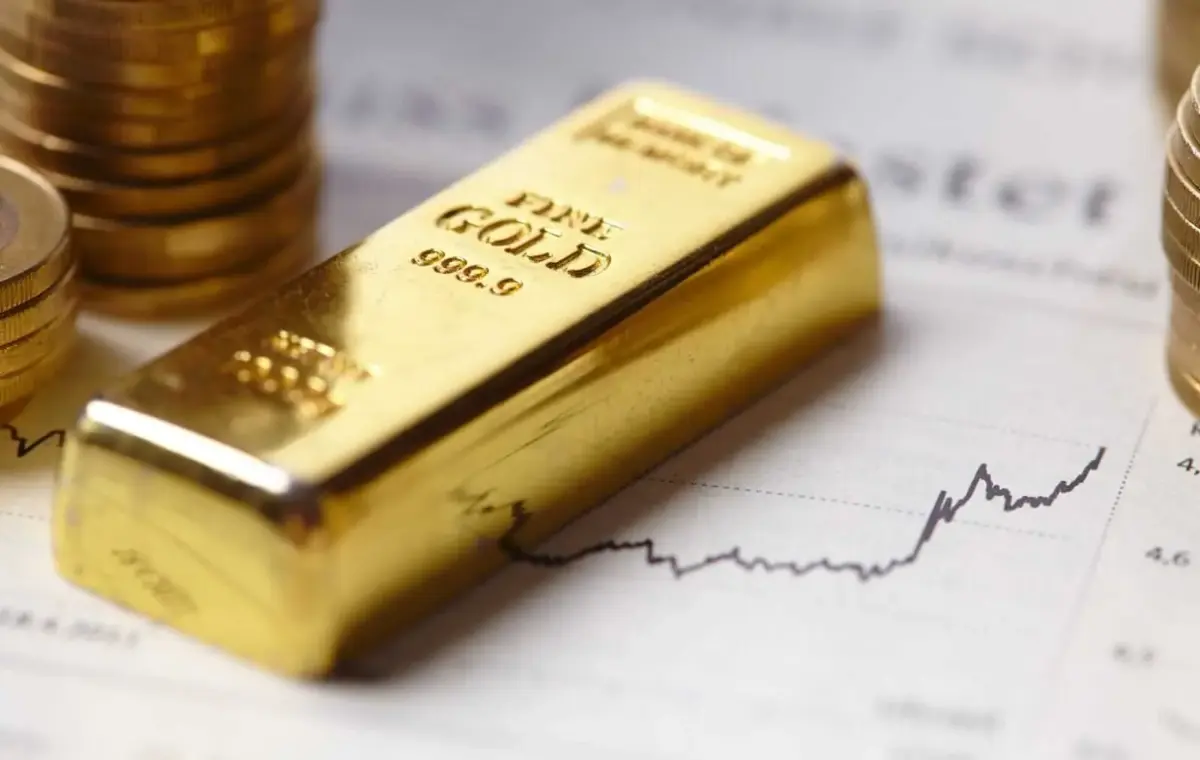
Gold (GCZ26) has had quite the year in 2026 so far. As we near the end of August, the yellow metal has moved through its share of twists and turns, but the broader trend remains firmly upward. Spot gold is now holding around the $4,700-an-ounce mark after gaining over 17% in August alone so far, making it the metal's best month so far this year, apart from January's 13% jump. Softer U.S. economic data, fading expectations for another Federal Reserve rate hike, a weaker dollar (DXY00) and renewed demand from investors and central banks have all helped push prices higher.
But how far can gold go from here? Morgan Stanley believes there could be considerably more room to run. The bank sees gold breaking above $5,000 an ounce in 2027, although it expects the journey to be anything but smooth.
Dollar Moves Higher as US Ramps Up Pressure on Iran
Can We Really 'Grow Our Way Out Of' $40 Trillion in National Debt? Why One Economist Says 'The US Has No Chance.'
So, what is driving that bullish outlook, and what could still stand in gold's way?
The yellow metal's journey in 2026 has been a classic case of two steps forward, one step back. Gold started the year with a powerful rally, with prices jumping 13% in January and eventually climbing to around $5,600 an ounce. But after that spectacular run, the metal hit a rough patch.
Investors started locking in profits, while a stronger U.S. dollar and attractive yields elsewhere made gold, which pays no interest, a little less appealing. Then came another problem – rising energy prices and renewed inflation fears linked to conflicts in West Asia. Markets began expecting the Federal Reserve to keep rates higher for longer, adding further pressure on the non-yielding bullion.
However, August has brought the bulls back into the picture. Gold opened the month around $4,000 an ounce before climbing toward $4,500. The key trigger was a string of softer U.S. economic readings that reduced expectations for another Fed rate hike. Since gold does not pay interest, lower-rate expectations generally make the metal more attractive. A weaker dollar added another tailwind.
Then came an unexpected boost from the U.S. Treasury. Its decision to expand long-term bond buybacks pushed Treasury yields lower and weakened the dollar, helping gold surge 2.82% on Aug. 19 and briefly cross $4,500. In fact, fast forward to today, gold has crossed $4,700 as of today.
Still, gold has not had a completely smooth ride. Profit-taking has repeatedly triggered short-term dips, while concerns about sticky inflation, elevated oil prices, and the possibility of higher yields continue to keep investors cautious.
Gold has already done something Morgan Stanley wasn't expecting it to do this soon. The bank had set a fourth-quarter target of $4,450 an ounce, but the metal reached that level ahead of schedule. And rather than taking that as a sign that the rally has run its course, Morgan Stanley now sees a path for gold to move above $5,000 an ounce in 2027, while warning that the ride could be bumpy.
So, what is keeping the bank bullish? For starters, the shift in expectations around the Federal Reserve's policy. As expectations for another rate hike have faded, investors have started returning to gold ETFs. According to Morgan Stanley, Gold ETFs added 70 metric tons in July and August, reversing the 93 tons of outflows seen in May and June. The bank's economists also expect the Fed to remain on hold through the rest of 2026.
Then there is central-bank demand. China has added 60 tons of gold so far this year, its biggest addition since 2023, while Poland bought 82 tons, taking its holdings to 632 tons and closer to its 700-ton target.
What is particularly interesting is that gold has remained strong even as long-term real yields stayed elevated. Morgan Stanley believes the metal is increasingly reflecting concerns about U.S. fiscal health rather than simply reacting to yields.
Gold's next leg higher may not come from one big catalyst. Instead, it could be the culmination of several forces pushing in the same direction.