Account subscription benefits alongside Premium Stories, Editorials,
Opinions and more. Unlock these with Subscription
The View From India
Looking at World Affairs from the Indian perspective.
First Day First Show
News and reviews from the world of cinema and streaming.
Today's Cache
Your download of the top 5 technology stories of the day.
Science For All
The weekly newsletter from science writers takes the jargon out of science and puts the fun in!
Data Point
Decoding the headlines with facts, figures, and numbers
THEdge
At the cutting edge of education and careers
Health Matters
Ramya Kannan writes to you on getting to good health, and staying there
Gender Agenda
Stories from beyond the binary.
The Hindu On Books
Books of the week, reviews, excerpts, new titles and features.
Updated – August 26, 2026 03:20 pm IST – NEW DELHI
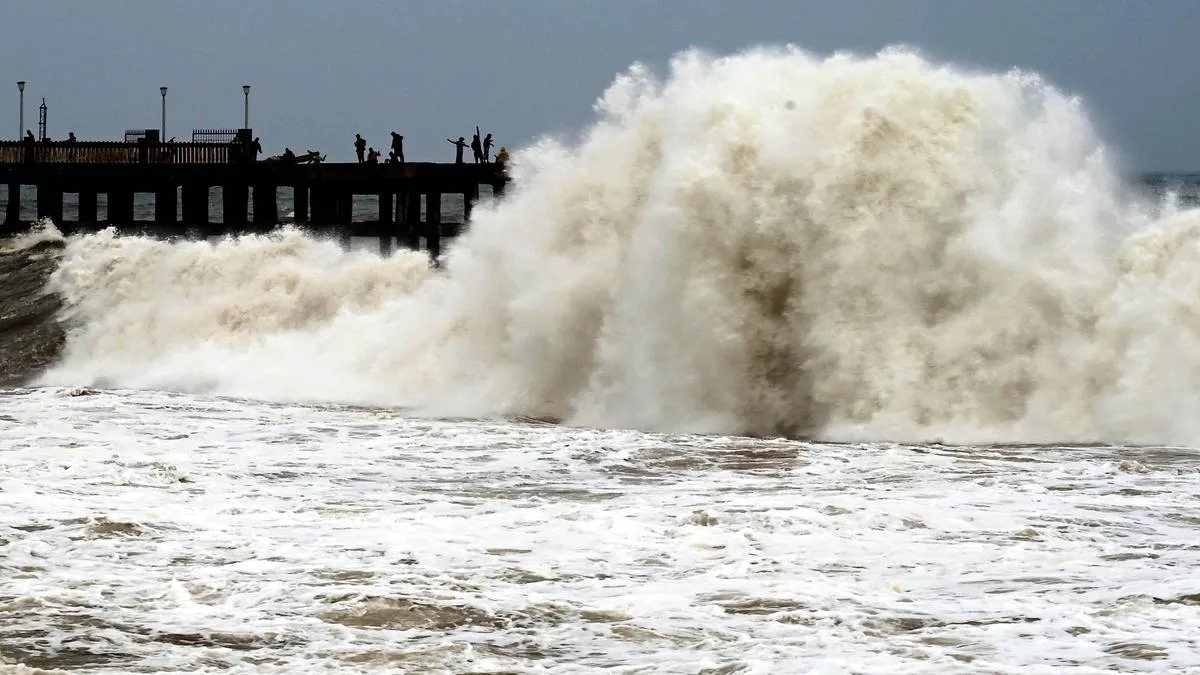
Tropical cyclones that originate near the Equator, while being devastating, have been unusually subdued in recent decades.
| Photo Credit: S. Mahinsha
Tropical cyclones that originate near the Equator, while being devastating, have been unusually subdued in recent decades. The last major cyclone of this kind in the Indian neighbourhood was the 2017 Cyclone Okchi which devastated Kerala, Tamil Nadu and Sri Lanka. However, a combination of global warming and a cyclical event called the Pacific Decadal Oscillation (PDO) that repeats every 20-30 years, could make such cyclones more frequent in the coming years, a study published on Monday in the journal Nature Communications said.
The number of such equatorial-origin cyclones was 43% fewer in 1981-2010 compared with 1951-1980, and this was because the PDO was in a ‘warmer’ or positive phase. A warming of the Central Equatorial Pacific, called an El Nino, frequently corresponds to reduced rainfall over India whereas cooler-than-normal temperatures, or a La Nina, is linked to excessive rainfall. This pattern collectively called the El Nino Southern Oscillation (ENSO) phenomenon, repeats in the Pacific over two-seven years. However, the PDO isn’t an annual occurrence and, on average, corresponds to a warmer than average Western Pacific Ocean and relatively cooler Eastern Pacific, though this plays out over much longer time scales. However, unlike an ENSO, whose stage can be determined any year, a ‘positive’ or ‘warmer phase’ of a PDO can be known only after several years of measuring ocean temperatures and their interaction with the atmosphere.
In 2019, the PDO entered a cooler, negative phase and if it remains so, could mean more tropical cyclones in the post-monsoon months that originate near the equator, R.S. Ajayamohan, meteorologist at the Abu Dhabi Polytechnic, United Arab Emirates, and among the authors of the study, told The Hindu. “It’s usually rare for cyclones to form near the Equator but when the waters are warm, they can gain more moisture and rise in intensity,” Dr. Ajayamohan said.