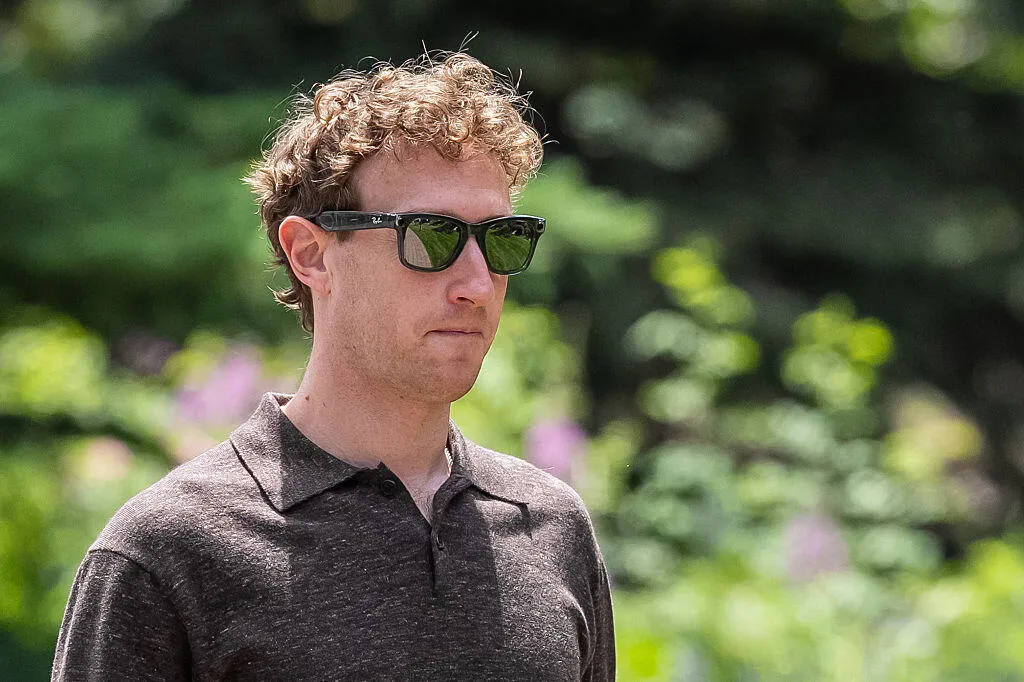
CEO Mark Zuckerberg and Meta will avoid what likely would've been a disastrous, high-stakes trial.
Instagram and Facebook’s parent company, Meta, has struck a deal with the US states currently suing the tech giant for intentionally designing its social media platforms to be addictive and harmful to children and teens. If approved by the court, CEO Mark Zuckerberg and the company will avoid a high-stakes trial, whose consequences could have significantly affected how the tech industry operates. Meta says it will pay approximately $18 billion.
Reuters first reported the settlement on Wednesday. According to court filings, Meta could pay up to $16.68 billion to states and territories in the agreement. In a blog post, Meta said it will initially pay over $12 billion to participating states, in annual payments over a 10-year period, to fund child safety initiatives. If Snap, TikTok and YouTube join the agreement, Meta will pay an additional $5.3 billion, bringing the company’s total up to $18 billion. Meta said it expects to pay $10 billion in legal expenses in the third quarter.
“Today, we have secured a settlement with Meta that will make social media less dangerous for our kids and make a world of difference for children and their families,” California Attorney General Rob Bonta, who helped lead the case, said in a statement Wednesday. The proposed agreement brings 47 states, the District of Columbia and US territories into the deal, not just the attorneys general who were party to the original lawsuit.
The settlement is ultimately less than 10% of Meta’s 2025 annual revenue ($201 billion), and it’s significantly less than the potential $200 billion penalty the states said would be likely during the early stages of the trial. It’s the proposed platform changes that will likely have the biggest impact on Meta.
Under the new rules, Meta will enforce default daily usage limits, including blocks during school hours and at nighttime. Stronger parental controls, more rigorous age-verification tech and limiting access to “extreme” beauty filters are also part of the deal. Teens won’t be able to see the total number of likes on their posts, either. They will also be able to turn off autoplay on videos, like Instagram Reels, and opt into a nonalgorithmic feed. All of these features are popular recommendations that have been made for years by psychologists, tech experts and child-safety advocates. Some are already part of Instagram’s teen accounts, which were rolled out in 2024.
“This is a historic settlement that will have a lasting impact, but we cannot truly protect all children and teens until these protections are required on every platform and are permanent – that’s something only Congress can do,” Sacha Haworth, executive director of The Tech Oversight Project, said in a statement.
In a blog post, Meta calls on TikTok and YouTube to join its efforts. “While this is an important step, the fact is that teens move fluidly between dozens of apps a day. All platforms should empower parents and support teens by putting the same measures in place, because we know that when teens are restricted on one app, they simply move to another,” the company wrote. Meta did not immediately respond to a request for additional comment.
Not every state is party to the agreement, notably Florida. James Uthmeier, Florida’s attorney general, told CNET: “The payouts to the states are peanuts compared to the profound harms Meta’s profit-driven addictive features have inflicted on our children. This agreement is nothing more than a slap on the wrist for a trillion-dollar corporation that has already paid more to its lawyers than it will pay the states. We’ll see them at trial.”
We rejected Meta’s weak payoff attempt.Meta knows about the damage they caused, and we will hold them accountable in Florida. pic.twitter.com/40htzE0vHQ
New Mexico is also not part of the deal, nor is Texas. However, Texas Attorney General Ken Paxton announced on Wednesday that Meta will pay over $1 billion to remediate child safety concerns. Texas is taking TikTok to court later this year for similar reasons.
Social media giants like Meta and Google-owned YouTube have been under intense scrutiny in recent years for how well (or poorly) they protect their youngest users. In two separate landmark cases preceding this one, Meta was ordered to pay $375 million to the state of New Mexico after a jury ruled the company enabled child exploitation online. Soon after, a Los Angeles court ordered Meta and Google to pay a combined $3 million in damages for similar claims.
Source: Read the original article on www.cnet.com
Additional coverage from www.bbc.co.uk:
Social media giant Meta has reached a settlement with US states and territories to resolve a court case related to child safety on Facebook and Instagram.
The tech company says it will pay a maximum of $18bn (£13.3bn) to 48 states, plus the District of Columbia and three US territories.
The settlement requires Meta to introduce certain rules for teenage users, including daily limits and night-time blocks.
Meta denied wrongdoing in agreeing to settle.
It was alleged the company had violated numerous federal and state privacy laws for children.
The states suing Meta claimed it used its platforms "to entice, engage, and ultimately ensnare youth and teens," and ignored the damage they did to the "mental and physical wellbeing of America's youth".
After the settlement was announced, District of Columbia Attorney General Brian Schwalb called it a "monumental public health victory".
He added: "The safety features Meta is required to install will fundamentally and immediately change how young people use Instagram and Facebook."
Safety features Meta will need to introduce include limiting access for children during school hours, stronger parental controls and robust age verification for underage users.
"Today, we are announcing an agreement with a bipartisan group of 52 attorneys general across US states, territories, and the District of Columbia, building on our longstanding efforts to empower parents and support teens," Meta said in a statement.
"The agreement includes a payment of approximately $18 billion, which can be used to fund youth online safety initiatives, among other state priorities.
"The payment will be distributed in annual instalments over a 10-year period."
But the company said TikTok and YouTube should also implement the same safety features for their younger users.
"Our new Time Limit commitments, Night Mode features and usage limits during school hours set the right path forward for our whole industry, but this framework will only work if all our peers join us," Meta's chief legal officer CJ Mahoney said.
YouTube and TikTok have been contacted for comment.
🟢 PROS / ADVANTAGES
- Stronger parental controls, more rigorous age-verification tech and limiting access to “extreme” beauty filters are also part of the deal.
🔴 CONS / RISKS
- However, Texas Attorney General Ken Paxton announced on Wednesday that Meta will pay over $1 billion to remediate child safety concerns.