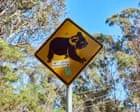
The Albanese government approved a proposal allowing the park to create carbon credits worth hundreds of millions of dollars, sparking a schism among environmentalists
What qualifies as a win in environmental campaigning?
Is it when a huge forest area that is home to a stack of threatened species, including koalas, and has been the focus of years and years of campaigning, is protected from logging?
Or does it depend on how the battle is won – for example, if it lets companies claim that the forest is helping cut their pollution?
It sounds like the start of a philosophical debate, but isn’t. It’s at the heart of a dispute dividing environment and climate activists, and is being weighed by the Greens ahead of a vote in the Senate next month.
In blunt terms, the minor party is considering whether to make an extraordinary call: to support a Nationals motion to strike down a Labor plan that would create a long-discussed great koala national park in northern New South Wales, and significantly reduce native forest logging in the state.
The vote was scheduled for last week but – in a sign of how vexed the issue has become – has been delayed until next month after the Greens asked the Nationals for more time to reach a consensus position.
In terms of a national political debate, the issue hasn’t had much of a look-in yet. But the ramifications could be substantial.
The story starts with a grassroots campaign to create a large park around Coffs Harbour to protect forests and more than a hundred threatened species, including koalas, gliders and glossy black cockatoos. That campaign is backed by a range of local campaigners and First Nations leaders.
NSW Labor signed up as a supporter more than a decade ago while in opposition. Under the premier, Chris Minns, it wasn’t until September 2025 that it announced it would add 176,000 hectares of state forest – an area more than twice the size of Canberra – to existing protected areas to create a 476,000 hectare reserve. It is said to protect about 12,000 koalas, water catchments and carbon stores.
The final confirmation that the park would go ahead didn’t come until June, when the Albanese government approved a NSW proposal that allows it to use the park to create carbon credits worth hundreds of millions of dollars.
Carbon credits remain opaque to most people, but they are the centre of the Australian government’s climate change policy. We need to explain why (bear with me here).
Each credit is said to represent one tonne of greenhouse gas emissions that has been prevented or drawn down from the atmosphere. In Australia, they most often come from projects that are meant to regenerate forests in the outback and capture and burn methane released from landfill sites.
The goal of the projects is sound. Regenerating forests is good! Cutting methane pollution is good! But the projects themselves have been sharply criticised.
Scientific studies have found major shortcomings with the main types of projects used in Australia and elsewhere, suggesting many carbon credits – also known as offsets – do not represent real emissions reductions. But the Albanese government has largely rejected the concerns, and the credits continue to be sold.