There’s plenty of evidence we live in a post-literate world, thanks to the rise of video-based social media and a steep decline in reading over recent years. The latest evidence comes from a congresswoman who wants to add images to legislation. It’s certainly not an idea to immediately reject out of hand, but the congresswoman made the explicit case this could be needed because not all Americans can understand boring old text.
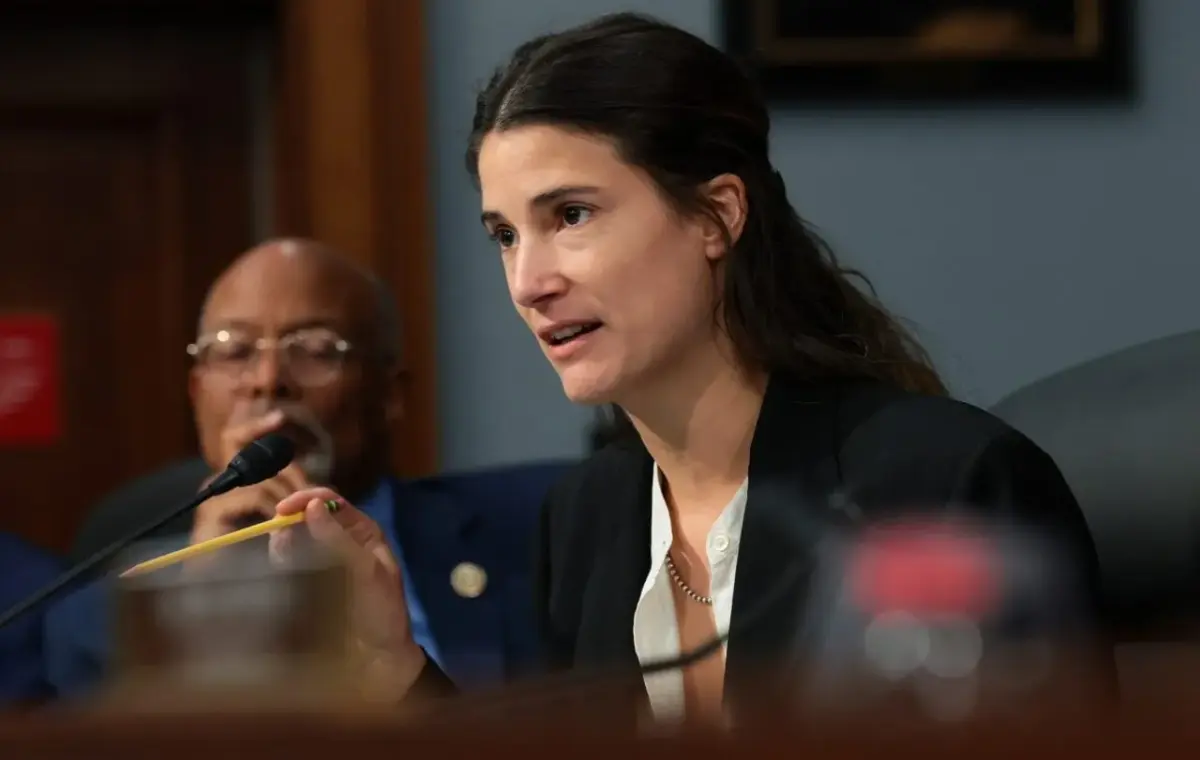
Rep. Marie Gluesenkamp Perez, a Democrat from Washington state, tweeted Tuesday about her efforts to allow illustrations—including blueprints, maps, and web page layouts—into legislation text.
“Have you ever thought that it’s really weird you can’t add pictures to laws?” Gluesenkamp Perez tweeted. “I see so many laws that would be clearer and more logical if we could just include a map or a blueprint.”
“Congress recently passed my initiative to bring legislation into the 21st century and explore including images in the text of bills—this is a long overdue step in the legislative process,” she continued.
Have you ever thought that it's really weird you can’t add pictures to laws? I see so many laws that would be clearer and more logical if we could just include a map or a blueprint.
Congress recently passed my initiative to bring legislation into the 21st century and explore… pic.twitter.com/9tlxnTLNpP
— Rep. Marie Gluesenkamp Perez (@RepMGP) August 25, 2026
Gluesenkamp Perez included the text of a letter she sent to both Republican and Democratic leaders in Congress about creating a standardized process for including images into legislation.
The congresswoman mentioned in her letter that an appropriations bill included a call to study this issue and generate a report on feasibility. But the most interesting lines come near the end of the letter, where she seems to acknowledge that we’re evolving into a world where text is no longer seen as the best way to convey information. Or at least not the most popular way.
Ultimately, this is about representation. For too long, our laws have been written for “staffer bros” with bow ties who will issue guidance on how to follow them from cubicles on Pennsylvania Avenue. We should be able to draft legislation that speaks to all Americans, regardless of how they learn or the profession they work in—from visual learners and foremen to lawyers and policy experts.
A blueprint, diagram, map, or other illustration can communicate legislative intent more clearly than text alone, and Congress should have a clear and consistent process for using that tool. Modernizing our drafting practices in this way will make our laws more accessible without undermining the integrity of the legislative process.
I respectfully ask for your support in advancing this important institutional improvement.
Gluesenkamp Perez, who took office in 2023, has been interested in this topic for some time. She complained in a 2025 Facebook video that Congress was “built by lawyers for lawyers.”
“Visual information is as true as legalese. Probably more so,” Gluesenkamp Perez said.
That’s certainly a populist message that will resonate with wide swaths of the population at first glance. But it’s also kind of a silly declaration on its face. Congress is crafting laws. Legislation has legalese because it pertains to laws. We might like to make laws simpler or easier for the common person to understand, but every field has specialized knowledge that needs to be studied and utilized in sometimes complex ways to succeed.