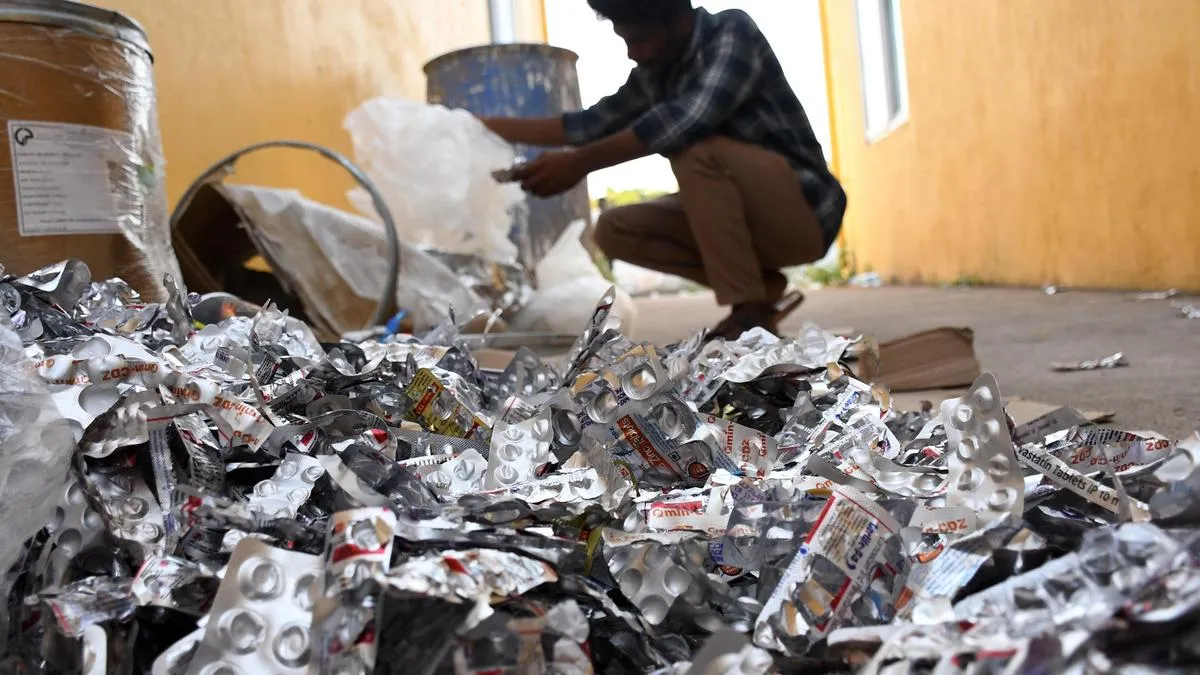
The IPC said the newly launched standards would also help promote harmonisation with international quality standards
| Photo Credit:
SAMRAJ M
The Indian Pharmacopoeia Commission (IPC), under the Union Health Ministry of Health and Family Welfare, has for the first time launched reference standards for seven nitrosamine impurities that can occur in pharmaceutical products, a move aimed at strengthening the country’s ability to detect and quantify potentially carcinogenic contaminants in medicines.
Nitrosamines are potent genotoxic and carcinogenic compounds that can unintentionally arise during drug manufacturing, storage or packaging, or through contamination from materials used during pharmaceutical production. Their control is particularly relevant for medicines used to treat conditions such as hypertension, gastric disorders, diabetes and tuberculosis.
The seven reference standards launched by the IPC are for N-Nitrosodimethylamine (NDMA), N-Nitrosodiethylamine (NDEA), N-Nitrosoethylisopropylamine (NEIPA), N-Nitrosodibutylamine (NDBA), N-Nitrosomethylphenylamine (NMPA), N-Nitrosodiisopropylamine (NDIPA) and N-Nitroso-N-methyl-4-aminobutyric acid (NMBA).
The IPC said the new standards would enable laboratories to more accurately detect and quantify nitrosamine impurities and support pharmaceutical testing, analytical method validation, quality assurance and regulatory compliance.
Pharmacopoeial reference standards serve as benchmarks against which the quality and purity of pharmaceutical substances can be assessed. Their availability is therefore important for laboratories conducting drug-quality testing.
The development comes as regulators internationally have tightened scrutiny of nitrosamine contamination in medicines. For example, the Canadian government maintains acceptable intake limits for a growing number of nitrosamine impurities and has reported drug recalls linked to their presence.
In 2022, India had introduced a general chapter on nitrosamine impurities in the Indian Pharmacopoeia, with the chapter intended to guide stakeholders on testing and control of such impurities. The IPC’s website also lists reference and impurity standards as part of its activities and provides for their procurement by stakeholders.
The IPC said the newly launched standards would also help promote harmonisation with international quality standards and strengthen self-reliance in critical reference materials.
The standards were launched at an interactive meeting organised by the IPC at the Central Drugs Laboratory and Central Cosmetics Laboratory in Kolkata on Tuesday. The meeting, titled “IP 2026: Perspectives, Suggestions & Way Forward”, brought together regulatory, laboratory and pharmaceutical experts to discuss strengthening pharmacopoeial standards and drug quality.
Copyright© 2026, THG PUBLISHING PVT LTD. or its affiliated companies. All rights reserved.
Comments have to be in English, and in full sentences. They cannot be abusive or personal. Please abide by our community guidelines for posting your comments.
We have migrated to a new commenting platform. If you are already a registered user of TheHindu Businessline and logged in, you may continue to engage with our articles. If you do not have an account please register and login to post comments. Users can access their older comments by logging into their accounts on Vuukle.
Source: Read the original article on www.thehindubusinessline.com