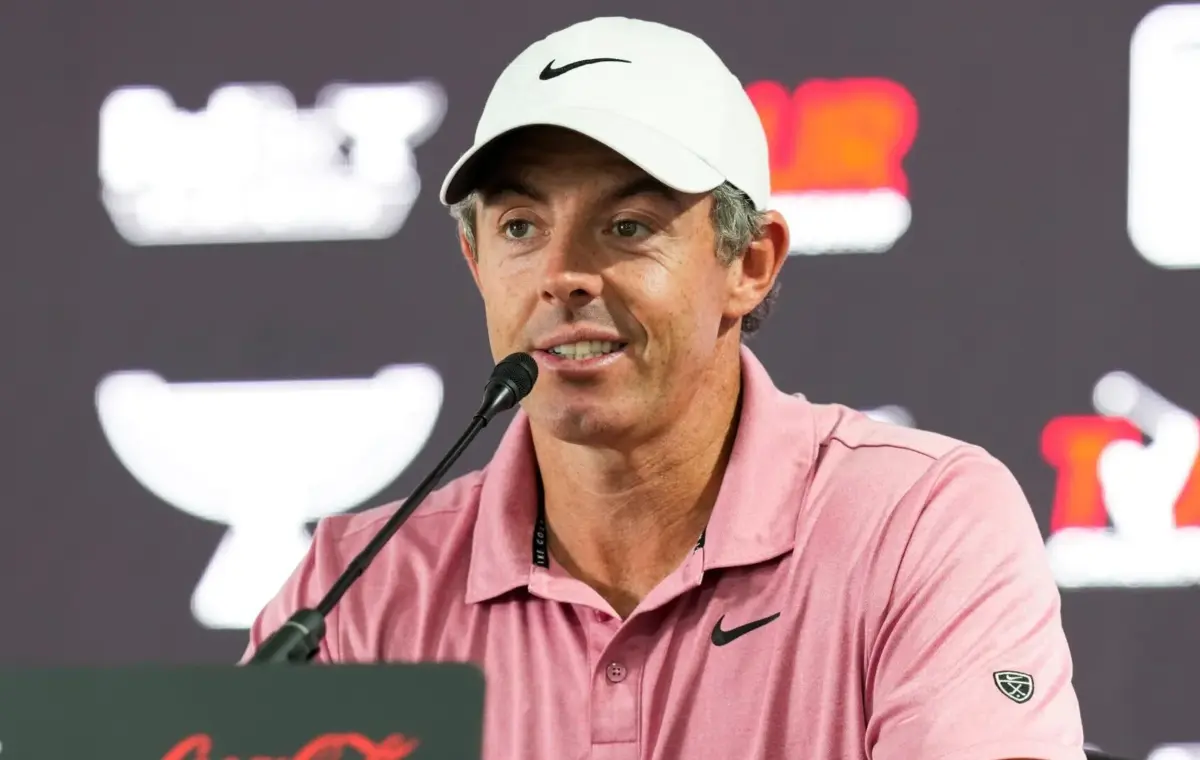
Rory McIlroy made waves earlier this year at the U.S. Open when he questioned whether the PGA Tour's two-tiered format coming in 2028 was really necessary, saying that the old tour format was "pretty good" in hindsight.
In the two months that have passed since those comments, McIlroy has gotten more of an opportunity to talk with PGA Tour CEO Brian Rolapp about the changes and get a better sense of the details of what's to come in 2028 — particularly with regards to the new match play format for the Tour Championship. Ahead of the 2026 Tour Championship, McIlroy met with the media on Tuesday and was asked about the new format for the tour's season finale, and had much more positive things to say.
"I think the PGA Tour, the Future Competition Committee, Brian [Rolapp] and everyone involved have really taken on board what the fans have been calling for and have wanted, which is match play," McIlroy said. "Brian took me through the plan last week for the first time. I didn't really know anything about it. It's certainly different. Two weeks, two different venues. But it's cool. I think they've taken a big swing, and conceptually, I think I really like it."
McIlroy noted that his lone concern is how engaged players will be in the second week playing out matches for position in the loser's bracket, but that he was generally a fan of the new format. He was particularly pleased that the tour was separating the Tour Championship from the regular season champion, noting that the final stroke-play event will reward the season-long champion and then the Tour Championship gets to be something totally different.
Aside from finally getting match play, one of the things that has fans most excited about the new Tour Championship is the PGA Tour's desire to branch out to some iconic venues. With match play, the score to par is irrelevant, and it'd be more of a made-for-TV event, which means they don't need huge buildouts for the crowds on site, which allows them to consider some of the country's most iconic, historic courses that aren't big enough to host a PGA Tour event.
When asked about what makes a venue prestigious in the minds of players, McIlroy noted that history plays a big role, but so many of those courses aren't part of the PGA Tour rotation.
"History is a big part of it. Even you take the U.S. Amateur last week at Merion, watching that on TV was really cool," McIlroy said. "I'm not saying that that's what the Tour Championship is going to be like, but if you think of places like Merion, you think of some of the courses that the USGA have sort of had a monopoly on over the past 50 to 100 years, places that the PGA Tour either haven't went to or maybe sometimes can't go to, those are the sort of courses — especially if we're going to go to a smaller footprint and a limited size of crowd, you can all of a sudden go to some of these historic venues, and especially playing match play. It doesn't matter, you can go to a 6600-yard golf course and par is irrelevant. I like that idea as well. Yeah, I'd say some of the historic courses and courses that typically the PGA Tour hasn't went to."
When asked for his dream venues, McIlroy questioned whether Pine Valley would really want to open their doors to the PGA Tour, but he'd love to see some more representation among historic venues on the East and West coast.
"It's hard. There's dream venues, but those dream venues I just don't think are a possibility. Like if you were to say Pine Valley, but I just don't think Pine Valley are going to want to host the PGA Tour.," McIlroy said. "… Again, there's geographical — could you do like Olympic Club? — I'm trying to think of West Coast. If it's going to be one week on the West Coast, one week on the East Coast, you could do Olympic Club and Baltusrol. I don't know. But those sort of older, traditional golf courses that have hosted big major championships."
For as much conversation as there's been about golf ball rollback and the distance debate, one way to mitigate some of that is by playing match play, where the score to par isn't as big of a deal. That opens the doors for some of those shorter, iconic venues to be in play, and if the PGA Tour can get some of those clubs on board with hosting early on and give a proof point for what this can become, it can open even more doors in the future.
The execution of that plan remains to be seen, but at the very least they plans they've made have piqued the interest of not just fans but top stars like McIlroy. That's not always an easy gap to bridge, but it's a credit to the tour for figuring out a format that can deliver something even more for the season finale.