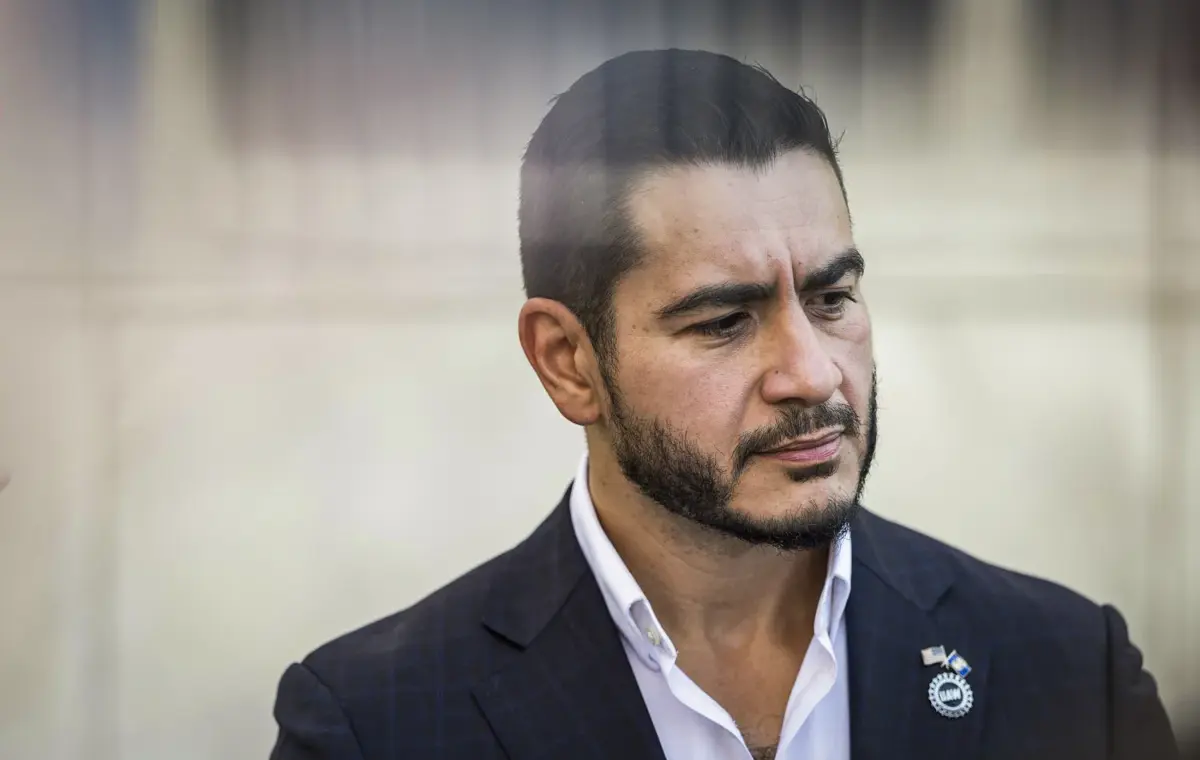
Abdul El-Sayed, the Democratic nominee for Senate in Michigan, tangled with Fox News host Jesse Watters in an interview Monday, repeatedly pivoting from “culture war” questions to refocus on affordability in his state.
“You want to bring up all this culture war,” El-Sayed told Watters during the 25-minute interview. “I’m not here to fight a culture war. I’m here to fight the affordability crisis that people are facing.”
Watters pressed the nominee on several hot-button topics in the combative but largely jovial interview, including whether he supports abolishing Immigration and Customs Enforcement (ICE), Sharia law, gender reassignment surgery, and whether “men should play women’s sports.”
On the ICE question, El-Sayed painted the department as brutal and ineffective.
“You and I both know that we’ve, long before we ever had ICE, we had INS,” he said, referring to the agency that predate ICE, the U.S. Immigration and Naturalization Service. “We were able to enforce our immigration policies without shooting people in the face and the back of the head. The INS worked a lot better.”
El-Sayed added immigration isn’t at the top of Michiganders’ minds.
“When I travel the state, and I have traveled my state, more people are asking me about how they’re going to afford their gas and groceries. They’re not asking me about immigration,” he said.
Asked about electric cars, the candidate said the “bigger question” is “why the president just started a trade war or escalated a trade war with Canada. It’s about to make all of our cars, especially the internal combustion engine cars, so much more expensive.”
E-Sayed used that same question to advocate for hiking taxes on people making over $100 million. “Do you want to drive on good roads, or would you rather have a billionaire make a second billion? That’s what Mike Rogers wants,” he said, referring to his Republican opponent. “That’s what Donald Trump wants. Apparently, that’s what you want. I think the people in Michigan want something different. They want good roads and good schools.”
“I just think I have the right to the fruits of my own labor,” Watters responded.
El-Sayed, who would be the first Muslim senator if elected in November, took a more libertarian tack when pushed on religious laws for Muslims and transgender issues.
“So, canon law is the name for Christian law,” he said. “I don’t begrudge you your right to practice your faith as you choose. I don’t know why the idea that I could practice my faith as I choose is a problem. Nobody is trying to push Sharia law on anyone else. Just like I hope, nobody is trying to push canon law on anybody else, because we live in an America where you should have the freedom of your religion.”
“The issue that people are worried about is not that somehow somebody’s going to come and push Sharia law on them,” he continued. “The issue in Michigan is people are worried about how they’re going to afford their gas. The issue in Michigan is how am I going to see a doctor when I get sick? How am I going to keep my job?”
After a brief exchange on whether El-Sayed thinks the National Football League is racist, prompting him to simply complain about high ticket prices, Watters then asked, “Sex changes for minors, do you support that?”
“I just think the government shouldn’t tell you what kind of health care you should have,” El-Sayed answered.