The unchecked deployment of artificial intelligence (AI) surveillance tools by the Argentinian government is reinforcing a “techno-authoritarian infrastructure of social control”, according to Amnesty International.
In a report published 19 August, titled Sensing the surveillance state, Amnesty documents how, in the first two years of Javier Milei’s administration, the Argentinian government has sought to significantly expand its intelligence gathering and surveillance capabilities.
Based on interviews with journalists, activists and human rights defenders – as well as an analysis of scores of procurement documents and data obtained through freedom of information requests – the report highlights how a mixture of new policies and technology acquisitions have created “a system of mass surveillance” throughout the country.
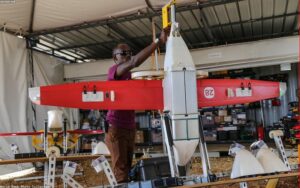
It shows that between 2024 and 2025, the Argentinian Ministry of National Security has acquired a range of surveillance technologies worth at least $1.2m, including social media monitoring tools, facial recognition and aerial drones.
In combination with institutional reforms and newly established protocols dictating how the web of surveillance infrastructure now in place can be used – implemented by the Milei administration without democratic oversight – Amnesty said it has created a situation where profiling and reprisals by state authorities are rife, reducing people’s participation in protests, and prompting them to self-censor both online and in public spaces.
“These acquisitions happened in a context of economic austerity, and a lack of sufficient information on oversight, impact assessments or human rights safeguards, barring minimum public procurement information,” the report stated, adding that new rules have provided a “concrete means for new surveillance activities to be carried out in digital and physical environments”.
It continued: “In particular, they expand state capacity to collect and process information on individuals, carry out facial recognition, track movements, and reinforce monitoring activities in public spaces, including during protests.”
According to Ana Tapia, a member of the Insurgent Pensioners (Jubilados Insurgentes) collective – which marches every Wednesday to the National Congress in Buenos Aires in protest against government pension cuts – she and others in the movement have been “identified for a long time now”, and are being overtly surveilled by the government.
“Sometimes as you’re walking you get to [where you were going] and suddenly you see the drone hovering just above your head. Sometimes within six feet. Why so close? Why is it so invasive?” she said.
These sentiments were shared by others who spoke to Amnesty, including Matías Darabós, a member of the Association Against Institutional Violence (ACVI), which in part seeks to record police abuses during protests: “There is a very strong feeling that you are being controlled and watched. In fact, when we go to marches to record what goes on, they are constantly pointing at us or filming us.”
For Matt Mahmoudi, a researcher and advisor on AI and human rights at Amnesty, the “pervasive” digital surveillance capabilities and technical infrastructure being levied against Argentinians are being used by the government to devastating effect.
“These technologies have become an integral part of the infrastructure of state control, targeting dissent, deterring protest movements, and harassing marginalised groups, among other authoritarian practices,” he said. “When powerful people don’t want accountability, they attack those who ask questions and use whatever is at their disposal to monitor, control and repress.”
Amnesty added that executive decrees and resolutions by the Milei administration have been used to establish the surveillance infrastructure without the participation of the National Congress.
This has led to the creation of new government agencies, the publication of specific protocols for federal law enforcement, the restructuring of the National Intelligence System, budget allocations, and a series of procurements and contracts aimed at implementing the new functions and objectives set out.
Amnesty is therefore calling on the Argentinian authorities to ban the development, production, sale and use of remote biometric recognition technologies for mass and targeted discriminatory surveillance, and to ban its unlawful use by all public and private actors.