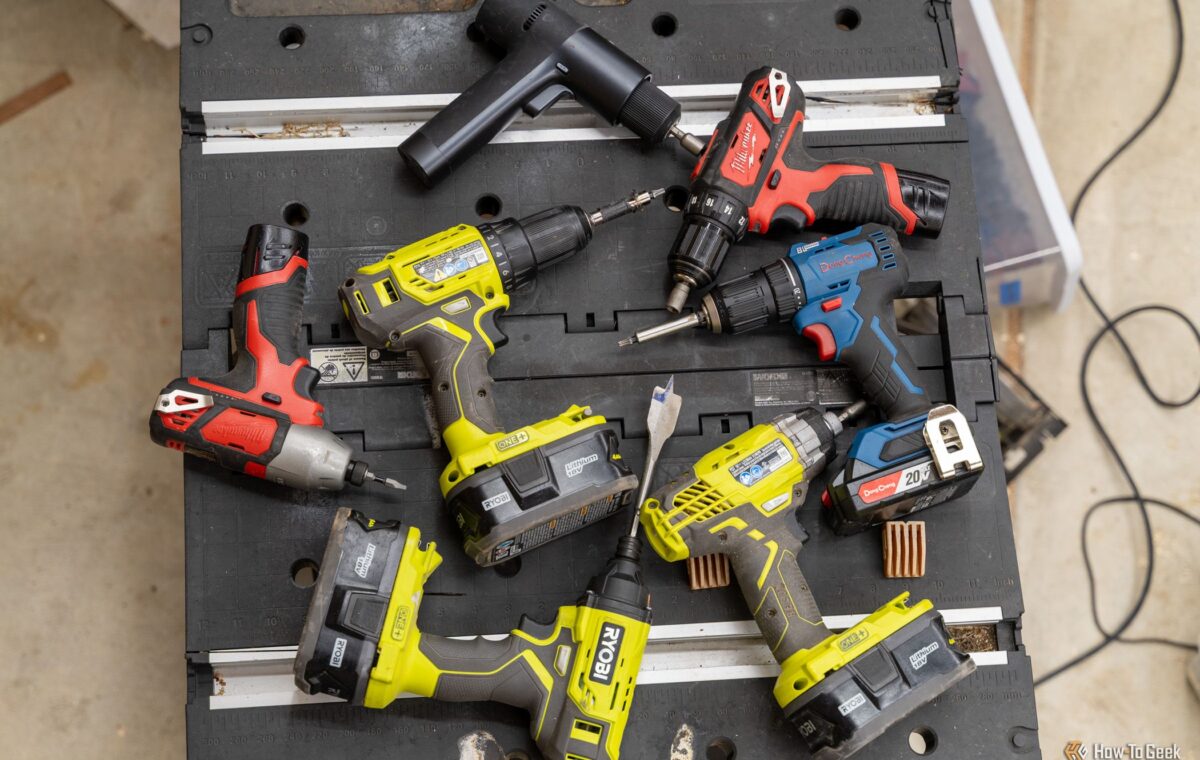
Cordless power tools are pretty expensive, especially from big-name brands like Milwaukee. But with retail prices steadily rising and premium job-site power tool lines (like Milwaukee's M18 FUEL series) increasing in cost, more people are looking for solid alternatives.
The debate between Milwaukee and Ryobi is a popular, never-ending topic, and lately, Ryobi is looking more and more like the better deal. Don't get me wrong, Milwaukee makes excellent tools, but so does Ryobi, which is why many DIYers love the brand. Fun fact: they're both owned and manufactured by the same parent company, TTI (Techtronic Industries). Each brand is designed for a specific customer, even though there's plenty of overlap.
With that in mind, here are a few things to know about which brand is right for you.
In recent years, we've seen all of our favorite power tool lineups get a little more expensive. That's largely driven by inflation, premium features (like FORGE battery packs and brushless motors), and higher component costs. For example, over the last five years, we've seen bare tools get a $30–$50 bump on average, while bigger or more powerful tools can easily be $120 more than they were a few years ago.
Home Depot still manages to keep prices relatively affordable, even on select Milwaukee tools, but there's no denying that prices are higher than ever.
When you can get a bare tool (without a battery) from Ryobi for under $130, while a similar tool from Milwaukee and Team Red runs you between $200-$300, people start to notice. It's a big financial commitment, and once you buy into a platform, you're locked into that battery ecosystem.
The 3 companies that own most of the world's power tools.
And as the gap between price tags continues to widen, Ryobi becomes all the more attractive. I have a few Milwaukee tools that I absolutely love, but I can't bring myself to buy more tools from the brand when Ryobi is far more affordable, nearly just as capable, and works with over 350 tools that all run on the same 18V ONE+ battery.
Milwaukee and Ryobi's parent company, TTI, has strategically positioned both brands in different categories, and that's something you'll want to pay attention to before deciding which to buy.
Naturally, your budget, the job, and task-specific tools will come into play, but the short answer is that Milwaukee is built for professionals and trade workers (electricians, automotive mechanics, etc.) while Ryobi is geared towards homeowners, DIYers, and light enthusiasts.
Milwaukee offers 250+ tools across its smaller M12 and larger M18 lineups, while Ryobi's main 18V ONE+ platform has over 350 tools to choose from.
The Ryobi 18V ONE+ HP Brushless Hammer Drill makes easy work of any house project. With several speed modes, a built-in handle, and LED lighting, you'll be all set.
For years, Milwaukee was clearly the better tool between these two brands, but that gap is starting to shrink, which is good news for everyone. Thanks to the parent company TTI, both brands share research, development, and even supply chain strengths, which has allowed Ryobi to access much of the same technology that makes Milwaukee such a popular choice among professionals.
A prime example is Ryobi's latest HP (High Performance) brushless power tools, along with the tabless lithium-ion packs in the Ryobi EDGE battery line. When the same brushless impact wrench or hammer drill from Ryobi is around $100 (or more) cheaper than a Milwaukee, you'd expect far less performance.
In practice, that's not the case, and Ryobi typically delivers an experience that's almost as good for less. Why spend significantly more on a tool you'll use occasionally around the house that'll get the job done almost just as fast? People constantly argue over which brand is better, and Ryobi is the butt of jokes online, but for most people, it's more than enough.