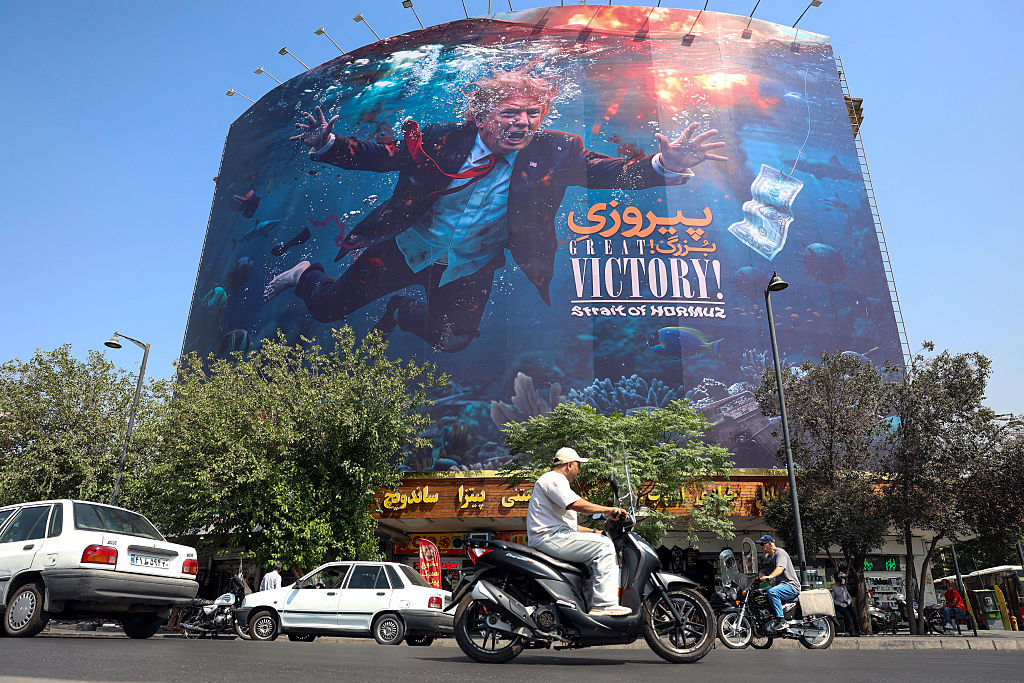
Iran has pledged to “attack” the U.S. financially after Washington unveiled a sweeping set of sanctions as part of ‘Economic D-Day', an attempt to further isolate Tehran and curb its access to the global financial system as the war between the two countries drags on.
Treasury Secretary Scott Bessent unveiled the measures as part of President Donald Trump’s announcement of the "most crushing economic operation" against Tehran, labeled “Operation Economic Outcast.”
"D-Day marked a historic campaign with our allies,” Bessent said Monday. “Today, in that same spirit, we are launching an economic onslaught against Iran's financial connections around the globe."
After the measures were announced, Tehran’s Economy Minister Seyed Ali Madanizadeh said the government was prepared to counter the newly-unveiled U.S. sanctions.
“They want to launch an economic terrorist attack against us. We also have our own tools, and we know the rules of this game,” he said in response to Bessent’s announcement during a televised interview with Iranian state media Monday.
“This time, they shouldn't think that our approach is purely defensive; they should also expect an attack from us.”
Although the Iranian minister did not elaborate on what such an attack would entail, he said the country had developed plans in preparation for the economic threats.
“Plans have been developed for various scenarios, including what actions should be taken if they attempt to cause damage in the financial sector or in the country's financial relations,” he said, adding that “the global financial system is not structured in a way that allows anyone to claim they can cut off” Iran’s economy.
During the announcement, Bessent stopped short of immediately imposing secondary sanctions on countries that trade heavily with Iran, instead favoring an approach that would give them time to decouple from that trade.
When asked why he was waiting to impose those sanctions, Bessent responded: "Why would I want to blow up the global financial system?"
“We believe that it is important to level set and give people a cure period, but they should know that that will move very quickly, and that we are serious,” he added.
Bessent did not name any countries that could face sanctions, but said "they know who they are."
China, one of Iran's biggest trading partners and the primary buyer of Iranian oil exports, has already pushed back against the threat.
Foreign Ministry spokesperson Lin Jian said China-Iran cooperation "should not be disrupted or undermined," noting that it had been conducted in accordance with international law.
“China has made clear on many occasions its firm opposition to illicit unilateral sanctions that have no basis in international law or the authorization of the U.N. Security Council. Economic warfare and maximum pressure provide no solution,” Jian said during a press conference Tuesday.