Account subscription benefits alongside Premium Stories, Editorials,
Opinions and more. Unlock these with Subscription
The View From India
Looking at World Affairs from the Indian perspective.
First Day First Show
News and reviews from the world of cinema and streaming.
Today's Cache
Your download of the top 5 technology stories of the day.
Science For All
The weekly newsletter from science writers takes the jargon out of science and puts the fun in!
Data Point
Decoding the headlines with facts, figures, and numbers
THEdge
At the cutting edge of education and careers
Health Matters
Ramya Kannan writes to you on getting to good health, and staying there
Gender Agenda
Stories from beyond the binary.
The Hindu On Books
Books of the week, reviews, excerpts, new titles and features.
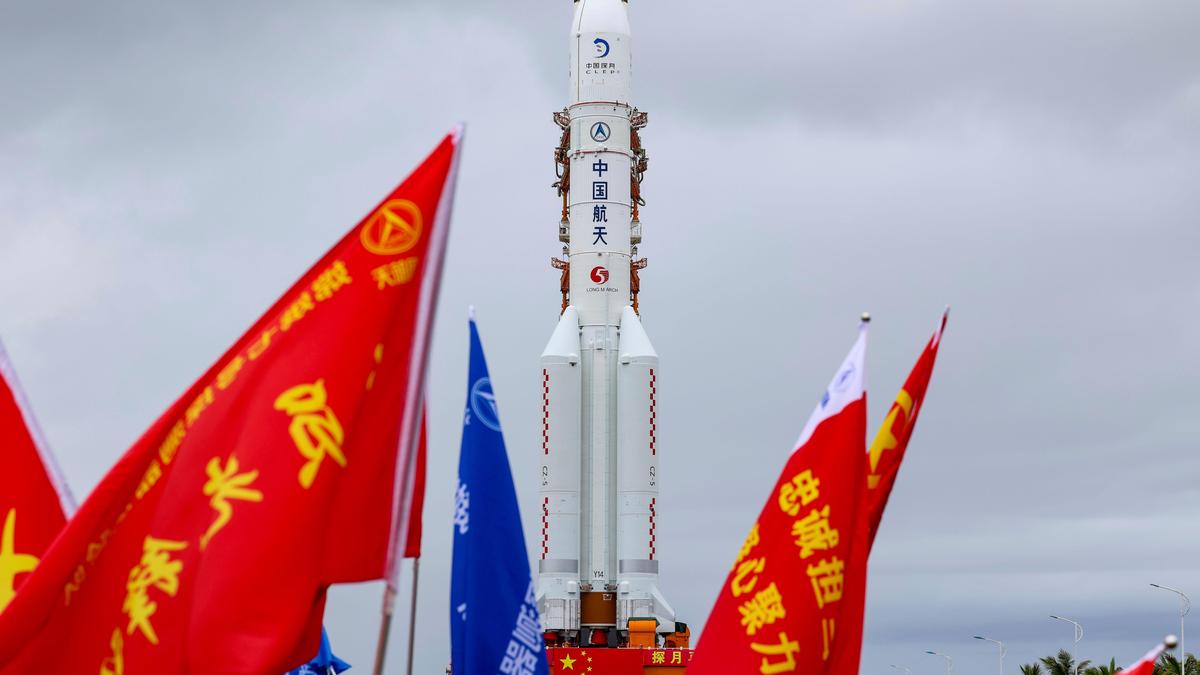
The Long March-5 Y14 rocket carrying the Chang'e-7 lunar probe is seen being transferred to the launching area at the Wenchang Spacecraft Launch Site in Hainan Province, China, on August 19, 2026.
| Photo Credit: AP
A: On August 24, China called off the launch of its Chang’e 7 mission to the moon’s south pole for the sake of “prudence, reliability and absolute mission success”. It will now have to wait until next year for another chance.
All space missions have specific launch windows — periods when the positions and motions of the satellite (on the rocket), the earth, and the target body are properly aligned. The moon orbits the earth once every 27.3 days, so launch windows to the moon open once a month. But if a mission has to go to the moon’s south pole region, the window changes.
A spacecraft approaching a point near the moon’s rotational pole will have to be orbiting the moon close to a north-south plane. The plane of the moon’s orbit is tilted by 5.1° relative to that of the earth’s orbit. And the moon’s equator is tilted by just around 1.5° relative to the earth. As a result, the desirable trajectory a spacecraft should achieve around the moon will change depending on the moon’s position around the earth.
The end goal is to launch the mission such that it achieves this trajectory after expending the least amount of fuel possible. Since the Chang’e 7 mission spacecraft will be powered by sunlight, it also faces a second constraint. The sun doesn’t rise high above the horizon at the moon’s south pole, so Chang’e 7 will have to land at its designated spot when it is sufficiently sunlit.