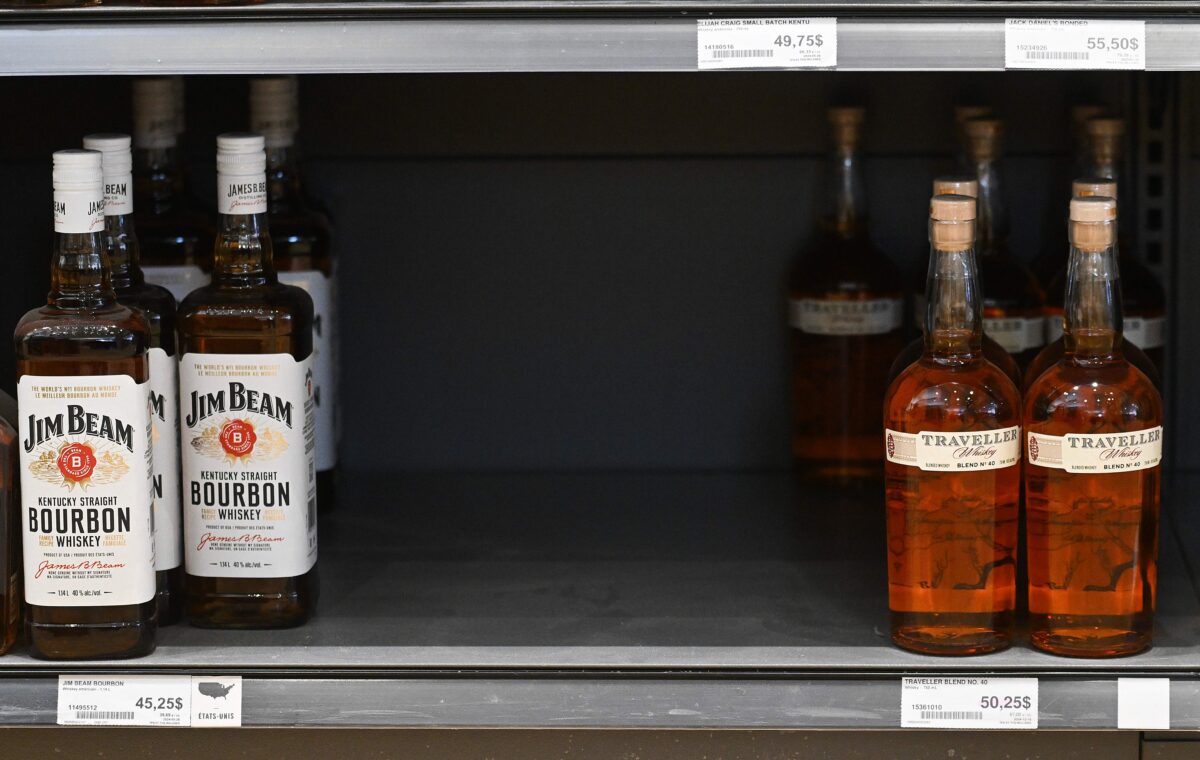
A white hot trade war between Canada and the U.S. has renewed a push on the Prairies to put American booze down and elbows up.
In Saskatchewan, the Opposition NDP urged Premier Scott Moe to stop “pandering” to U.S. President Donald Trump and remove U.S. liquor again from provincial shelves.
“Donald Trump has made his choice, now Scott Moe needs to make his,” NDP trade critic Kim Breckner said Monday in Saskatoon.
“When he put American liquor back on Saskatchewan shelves — it was an act of cowardice.”
Talk of tariff retaliation resurfaced over the weekend as a renewed round of trade fighting between Canada and the U.S. exploded with talks collapsing and the Americans imposing 50 per cent tariffs on US$20 billion in Canadian goods. The list includes honey, hockey sticks and flower bulbs.
Prime Minister Mark Carney promised dollar-for-dollar retaliatory tariffs starting Sept. 8.
Provinces have long curtailed U.S. booze on their shelves in response to earlier tariff fights with the Trump administration. Those battles have been waxing and waning for over a year.
In that time, Saskatchewan and Alberta, despite brief flirtations with booze bans, have chosen to keep American product on their shelves.
Over the weekend, Moe backed Carney’s plan to fight the new tariffs. He said on social media that U.S. demands, including conditions on Canada’s trade relationships with other nations, are beyond the pale and that he supports Carney’s promised dollar-for-dollar tariff retaliation.
Speaking to reporters Sunday, Moe said his Saskatchewan Party government would discuss how to approach American liquor, including considering a ban. But he qualified the remark.
“There are many other opportunities that provinces have as well when it comes to our relationship with American companies,” Moe said.
In Alberta, Premier Danielle Smith said Saturday on her call-in radio show that her government has been focused on diplomacy, and she urged Canada and the U.S. to strike a deal.
Smith said she won’t be shifting the province’s booze policy and will leave it up to consumers.
“We believe also in choice,” she said.
“We trust that Albertans can make their own decisions, so we won’t be going down that track.”