Iran’s currency plummeted in value Monday, hitting a record-low open-market rate of 2.02 million rials to the dollar, amid the White House’s launch of “Operation Economic Outcast,” which aims to force concessions from Iran through isolation and a financial stranglehold.
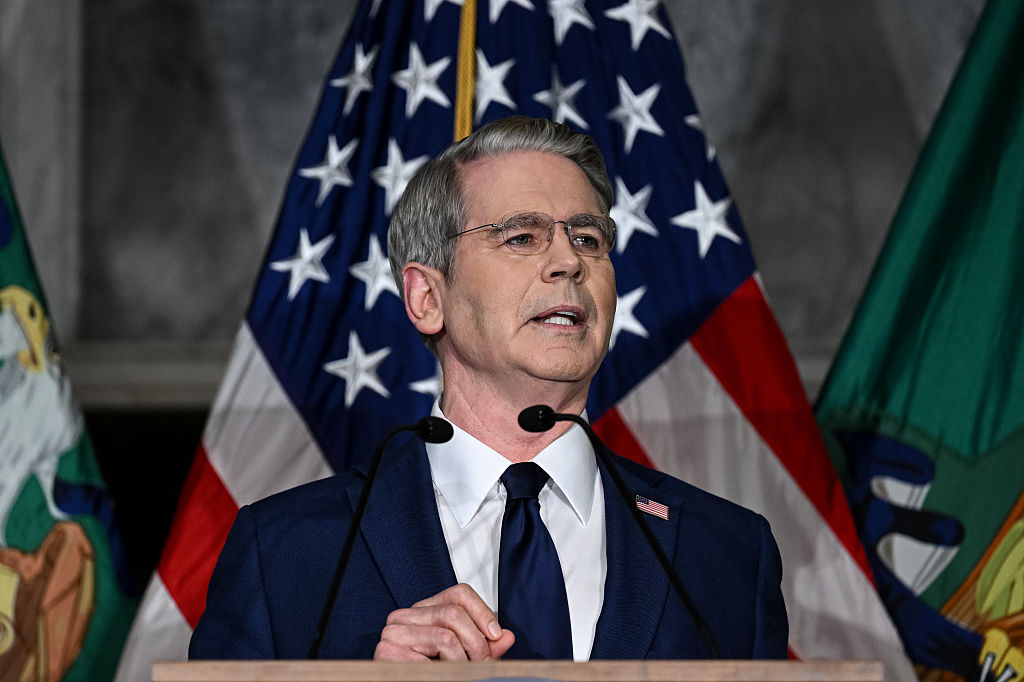
Treasury Secretary Scott Bessent warned Sunday that an “economic D-Day” was coming, and he shared a first sense of what that might look like at a press conference the following day.
"D-Day marked a historic campaign with our allies,” Bessent said Monday. “Today, in that same spirit, we are launching an economic onslaught against Iran's financial connections around the globe."
The U.S. announced sanctions on more than 60 targets while expanding sanctionable sectors to digital assets, technology, gold, aviation, and shipping—which Bessent described as some of the country’s “most vital lifelines.”
The government may also impose secondary sanctions on Iran’s trade partners, Bessent said, adding that those sanctions could roll out in a matter of weeks.
The threat is meant to deter countries from bolstering the country’s waning economy and “collapse every last option for Iran,” Bessent said, describing it as "economic asphyxiation."
Though Bessent didn’t identify which Iranian partners might be targeted by a new round of sanctions, he did name one financial institution: Bank Melli, the Iranian government-owned bank with branches in about a dozen countries. Bessent said that “every branch” of the bank must be “shuttered and dark” or it will lose access to the U.S. dollar. The Treasury has previously claimed that the bank provides services to entities that support Iran’s nuclear and ballistic programs.
Since the start of its war with Iran on Feb. 28, the Trump Administration has applied both military and economic pressure to achieve its goal of dismantling the nation’s nuclear program.
Bessent’s remarks elaborate on President Donald Trump’s announcement on Aug. 19 that the U.S. would launch “the most crushing economic operation ever mounted” against Iran.
Iran initially dismissed the threat. Its foreign minister, Abbas Araghchi, on Sunday called the U.S. “desperate.” And Mohsen Rezaei, secretary of Iran’s Supreme National Security Council, told state television on Aug. 22 that Iran would turn against any neighboring Gulf states that yield to the U.S. in what he called an “economic war.”
“Any country that takes part in imposing economic restrictions on us will be regarded as an enemy,” he said.
Given Iran’s sustained control over passage through the Strait of Hormuz, any retaliation could push Brent crude oil above Monday’s closing price of about $92 per barrel or the wartime high of about $120 per barrel.
In a war that has been largely defined by its threat to the global economy, experts wonder whether sanctions against Tehran’s trade allies will further isolate it—and if that will succeed in forcing Iran to capitulate to the demands of the United States.
The Trump Administration has argued that in tightening sanctions against Iran, the country will face unprecedented isolation and economic pain.
But Trita Parsi, the executive vice president of the Quincy Institute for Responsible Statecraft, tells TIME that the move doesn’t guarantee compliance.