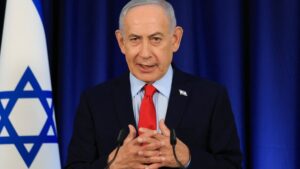
US President Donald Trump says economic sanctions are crippling Iran. Photo / Getty Images
US President Donald Trump says that Iran was “collapsing” as Washington prepared to announce the details of a new economic pressure campaign that Tehran has derided as an admission of defeat.
Almost six months into their war, the two sides are locked in a stalemate, with peace talks stalled, Iran
keeping the key Strait of Hormuz shut and Washington persisting with a naval counter-blockade of Iran.
Under political pressure at home over the economic impacts of the conflict, Trump has pivoted away from military action to economic levers.
On social media, Trump posted “Iran is completely collapsing” hours after US Treasury Secretary Scott Bessent, in a column for the Financial Times, declared that an “economic D-Day” had begun against Tehran and warned that any country that continued to enable the Islamic Republic would become a “global pariah”.
Bessent also claimed on X that the US had “dismantled Iran’s military capabilities, destroyed nearly 100 percent of its military factories, and buried its nuclear programme”.
Iran responded with defiance, saying the latest US measures were an admission of military defeat, and warned countries against aiding Washington.
Deputy Foreign Minister Kazem Gharibabadi posted on X that the US turn to financial warfare proved Bessent’s claims false.
Gharibabadi said the “narrative doesn’t add up”, asking why – if Washington had achieved its goals – “there is a need for ‘the largest financial invasion in history’ and the mobilisation of ‘all institutions and powers’ of the United States”.
He added: “Is this a victory or an admission of America’s defeat?”
The US and Israel linked the launch of their war in February to Iran’s nuclear programme, but the focus since the early days of fighting has been on the Strait of Hormuz.
Tehran continues to blockade the strait, which it did not restrict before the war, driving up global inflation and heaping domestic pressure on Trump ahead of mid-term elections in November.
Bessent was due to set out details of the US plan on Monday, but it is unclear how much more economic pressure Washington can put on Tehran.
Iran has weathered decades of crushing international sanctions, and before the war it continued to export millions of barrels of oil, mostly to China, and evade sanctions through complex international financial networks.
The US naval blockade of Iran has seen its oil exports via the Strait of Hormuz fall from two million barrels a day pre-war to just 0.4 million by mid-August, according to maritime tracker Kpler.