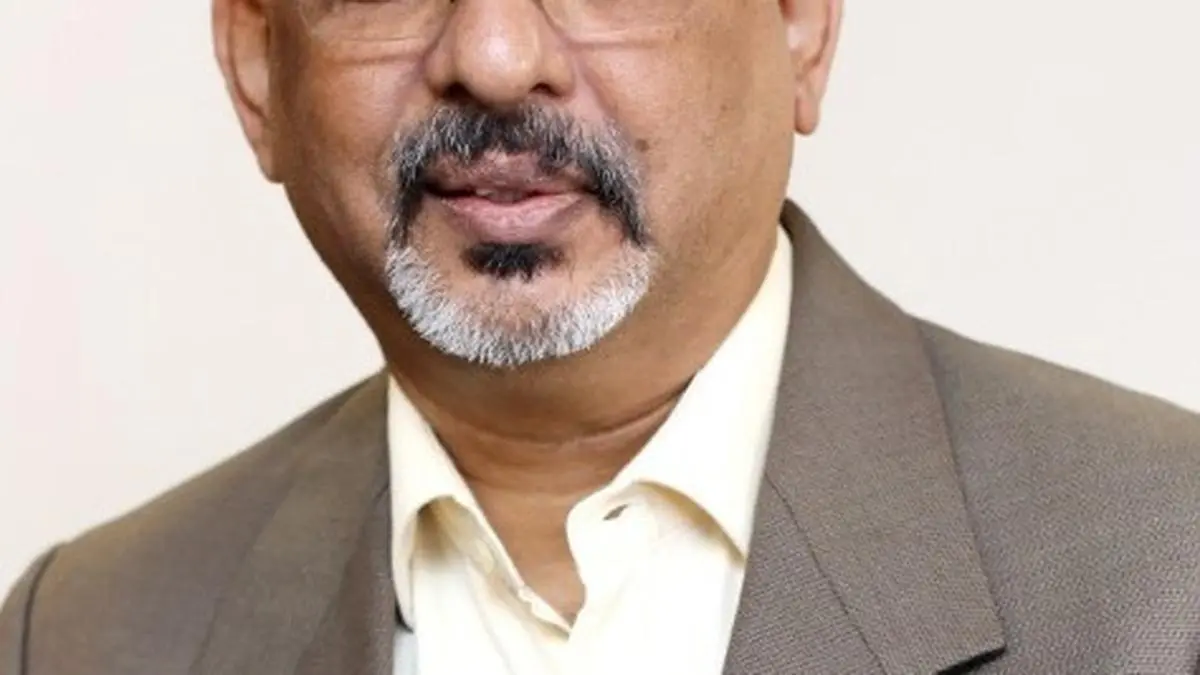
Kailash Kulkarni, Chief Executive Officer, HSBC Asset Management India
A few foreign brands has survived the twist and turns of regulatory and market changes to participate in the current bull run in the mutual fund industry. From being a tier-I player, HSBC MF has widened its reach after acquisition of L&T MF. Kailash Kulkarni, Chief Executive Officer, HSBC Asset Management India spoke to businessline on the industry outlook. Excerpt:
When HSBC acquired L&T MF, we had about ₹80,000-81,000 crore of AUM. Today, we are nearly double that. HSBC MF previously had limited third-party distribution, while L&T brought significant strength in that area. It took about a year for distributors and investors to get accustomed to the HSBC brand, but growth has been good since then. Our philosophy is also different. We are not a large NFO player. We launch an NFO only when we believe the product is unique or fills a genuine gap. Over the last 20 years, MFs have grown through market cycles, regulatory changes and various challenges. Pre-Covid, there were around 2 crore MF investors. Today, that number has crossed 6 crore, with about 6.2-6.3 crore unique investors. MFs have moved from being a push product to a pull product.
Can you give examples of products where you have followed differentiated approach?
We were among the first to launch a pure consumption fund. We also launched an India Exports Fund before the recent focus on free-trade agreements. We defined an exporter as a company generating at least 20 per cent of its revenue from exports and built the portfolio accordingly. More recently, in the specialised investment fund space, instead of following the conventional long-short strategy, we have adopted a different approach. We do not take direct equity exposure; the equity component comes through arbitrage and REITs, while the balance is invested in high-quality fixed-income instruments. The objective is to deliver an FD-plus kind of return while benefiting from equity-oriented taxation.
After lacklustre returns, do you see household savings to still bet on MFs?
Yes. While the Nifty and Sensex have delivered relatively subdued returns in recent periods, many diversified mutual fund categories have delivered double-digit returns over one- and three-year periods. Investors have also shifted from traditional large-cap funds towards flexi, multi and large-and-mid-cap funds. The preference today is increasingly for diversified exposure, along with some thematic funds depending on an investor’s outlook.
Are investors chasing past returns in mid- and small-cap funds?
Mature investors who have been in the market for five years or more generally maintain diversified portfolios and are less likely to rush into pure mid-cap funds. The newer and younger investors tend to look at one-year returns and invest through apps. They will learn through experience that MFs cannot be selected simply by choosing last year’s best performer. Markets and fund performance change, and investors need to look beyond trailing returns. First-time equity investors should not look at trailing returns. If they have some risk appetite, they can start with diversified funds. Otherwise, index funds are a good starting point because investors understand what the index represents. I strongly recommend SIPs and, more importantly, doing a risk assessment before investing in any product. Investments should be aligned with an individual’s goals and risk profile.
We are present in 58 cities and have a strong distributor network in smaller markets. Distributors increasingly see mutual fund distribution as a viable business. If someone builds an AUM of ₹30-40 crore in a small city, it can generate around ₹25-30 lakh of annual earnings, which is meaningful. Another major change is that the second generation of successful distributors now wants to enter the business. They see significant long-term potential in financial distribution.
We need to make communication much simpler. The common investor does not understand complicated ratios and jargon. We need to consistently tell investors not to chase one-year returns, to understand their risk profile and not simply invest based on advice from friends or relatives. Goal-based investing and investor education need to remain priorities for the industry.
Will passive funds and ETFs challenge active fund management?
Passives and ETFs are growing rapidly, but the numbers need context because a significant portion comes from government-led investments. In India, active management still has strong relevance. Investors want alpha, particularly when they believe the Indian economy can outperform many major economies. I expect passive products to become an important part of asset allocation, but active management is not going away. Over the next four or five years, I see investors using both rather than making an outright shift from active to passive.
AI is primarily about improving efficiency. For example, if eight analysts currently track 550 companies, AI could enable them to track 700-750 companies. It can improve MIS, research and analytics. I see AI helping fund houses become more efficient rather than simply reducing costs. Our core philosophy remains bottom-up stock picking, consistency of performance, product uniqueness, being true to label and maintaining a long-term orientation. That is what we believe will ultimately create value for investors.
Q) What role can AI play in the mutual fund industry?
Source: Read the original article on www.thehindubusinessline.com