You have reached your maximum number of saved items.
Remove items from your saved list to add more.
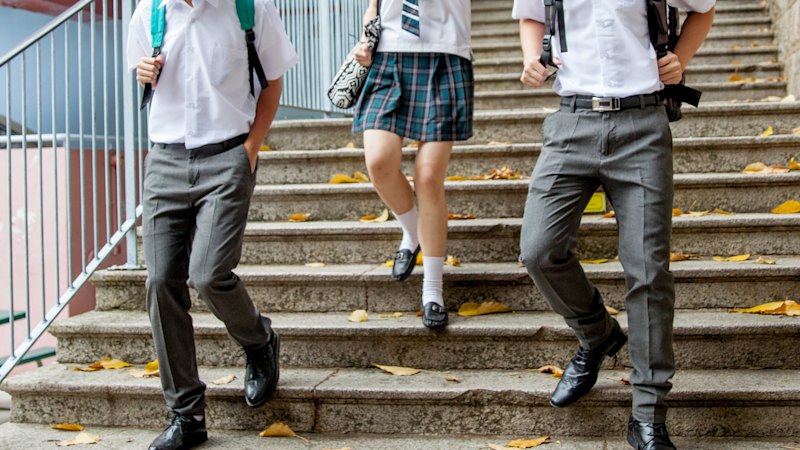
Thank you, Louise Clegg (“Blaming a school over sexual assaults just a cop-out”, August 24), for your timely reminder that schools are not the answer to all of society’s ills. Parents have primary responsibility for the values displayed by their children and, in most cases, the apple does not fall far from the tree. There are, however, no guarantees that come with parenting. It is a tough gig. What would help in the current educational environment is for those parents so inclined to cease their aggressive defence of their children, despite being provided with evidence of their bad behaviour at school. The attacks on principals, staff and teachers increase every year, and some have become physical. No wonder we lose many young teachers from the profession. Chris McGregor, Breakfast Point
Louise Clegg’s refreshingly accurate take on recent alleged sexual assaults by schoolboys was sorely needed. Parents have their children for a few years before they set foot in a school – and after that, only a small number of waking hours is spent on school grounds. The home environment has a greater impact on education outcomes than the school, so the home’s impact on character and behaviour must be even greater still. I don’t recall intense media scrutiny of the culture at the schools attended by the Skaf gang rapists. It seems that unless a teen sex offender attends an “elite” private school, their place of education doesn’t matter. Scott Hillard, New Lambton
Louise Clegg suggests the whole problem at Scots (and presumably other elite schools) is the parents. Maybe so, but what then is the solution? What tools do we have to make them better parents? None, of course. The only way forward is compulsory consent education for their children. But I hear from Scots parents that the nature of consent education there is making things worse. It focuses on the threat that girls allegedly pose to the good name and reputation of the boys there, not on girls’ own rights, autonomy and understandable fear of toxic masculinity. What external checking is done on the content of these courses? And of course there is the problem of single-sex schools, an artificial environment that does not help to prepare children for the real world. Andrew Taubman, Queens Park
I find as I read of the culture of certain schools that my memory is more than a little jogged. I spent a happy year as a resident of New College at the University of NSW in the 1970s. Among the many young men and women were the products of a number of elite private boys boarding schools.By their speech, many of those had the worst attitude towards women that I have experienced before or since, speaking of them as prospective sexual conquests, willing or not, or even almost as property. I’m not aware of any situations where such speech was acted on, but you always wonder. It seems things haven’t changed a lot. Bill Irvine, Goulburn
Those of us who have spent our careers working within schools know the expectations and pressures placed on schools and teachers to fix all of society’s problems. Teachers are expected to fill the parenting role as well as reach expectations in academic results for their students, and in expensive private schools, that role appears to be highlighted. Parents must accept responsibility for their children, in their homes, in social settings, on the sporting fields and at coffee shops. Schools can assist in guidance with experiences, while parents are often going alone with no experience. It can be a rough road to nurture adolescents from all positions of care. Janice Creenaune, Austinmer
Louise Clegg says Scots issued a letter to parents that “Parents and families have the primary and enduring role in the formation of their children”. How right she is. As I finished my many years in education, I sadly witnessed more and more parents and carers blaming schools for all sorts of unacceptable behaviour that their children exhibited. Parents and carers must accept the fact that they, not necessarily the school, must be responsible for values and habits displayed by their children. Denis Suttling, Newport Beach
Louise Clegg’s sympathy for private school headmasters is a bit rich. Both schools and parents have created and supported a system that privileges the children in their charge. Perhaps instead of growing Sydney’s next captains of industry, private schools should focus on producing good citizens. Colin Stokes, Camperdown
David Farley apparently had one job: to support the One Nation policy on migration (“Hanson forced to rebuke her MP over immigration claim”, August 24). It’s not like it’s a difficult task to remember One Nation’s policy offerings; there aren’t many of them. Farley tried to explain them on television, sounding remarkably like a Labor spokesman. Thankfully, he has had the benefit of his leader’s insight since then and a clarification of what their non-mathematical policy means. Unlike Barnaby Joyce, he didn’t have to phone a friend to clarify an actual policy; he apparently used common sense. Is this his second strike? He did vote with the teals when left unsupervised in parliament while his leader was absent in Europe.It is difficult to imagine how One Nation would cope with more than one policy, or more than two lower house members. The main issue here is: what was Farley doing appearing on the ABC, a media organisation that does ask questions and is not favoured by One Nation’s leadership? Geoff Nilon, Mascot
Michael Bachelard (“Brethren feed Taylor and Abbott in Nazi aftermath”, August 24) reports that the fringe Christian sect the Brethren spent millions of dollars attempting to influence the outcome of the last federal election.Coupled with the vast real estate portfolio held by its leaders and their families, and their reported $295 million in net assets, their funds are not being used for anything that should warrant their religious tax-exempt status. Their alleged use of payments to influencers and far-right activists to heckle Labor and independent candidates, as well as intimidation at the voting booths, warrants investigation and appropriate action needs to be taken. Truth and integrity, once deemed core Christian values, appear to be irrelevant both to the Brethren and to their main benefactors, the Coalition, which will gain no admirers from its attempts to undermine the electoral matters inquiry. Alan Marel, North Curl Curl
All credit to Canada and its courageous prime minister, Mark Carney, for standing up to the pompous bully in the White House, US President Donald Trump (“Canada walks away from US talks”, August 24). Carney has called for a coalition of middle powers to collectively oppose America’s unilateral economic belligerence. This might even give the EU the spine to adopt a stronger stance against Trump. Strength in numbers is the key to countering the blustering braggart who has “the attention span of a gnat”. If only more nations had the integrity of Mark Carney. Rob Phillips, North Epping
It can only be a matter of time before Trump threatens to bomb Canada. We’re lucky there are no bomber bases near us. Scott Poynting, Newtown
Concerns over the increasing use of unmoderated AI are legitimate (“Backlash over NSW universities turning to AI for role in lectures”, August 24). It is easy to forget that the initial “A” in its name stands for “artificial”. The intelligence is not real. It is a clever distillation of data made to read like human prose or sound like speech. As such, it is not immune from the fundamental weakness of all computer-based systems: garbage in, garbage out. Where the source data is false, ambiguous or out of date it makes mistakes. Therein lies the danger. To assume the omniscience of AI, and to act on its sometimes misleading certainties, can lead to unfortunate consequences. Who, then, do we sue? David Salter, Hunter’s Hill
Sally Rawsthorne reports how AI “continues its march on higher education”, with teaching being “the new frontier”. Yet again the role of a university in society and the significance of teaching at a university need to be revisited. Universities are not mechanised production lines. At the highest level, universities are about examining what it means to be human, continually reflecting on how we can better develop and what constrains our development. What marks us as being human is our ability to stand aside from the world that surrounds us, to reflect on our thinking, feelings and actions, and to be creative. The study of the Humanities is of the essence of a university and, indeed, civilisation. Use AI if it helps in any mechanical skills-related subjects. However, in the Humanities it is the quality of the personal interaction between students and human teachers that leads to the mutual development of knowledge, the imagination, and hopefully the ideal. Paul Casey, Callala Bay