Published
Aug 23, 2026 3:15 PM EDT
Get the Popular Science daily newsletter💡
Breakthroughs, discoveries, and DIY tips sent six days a week.
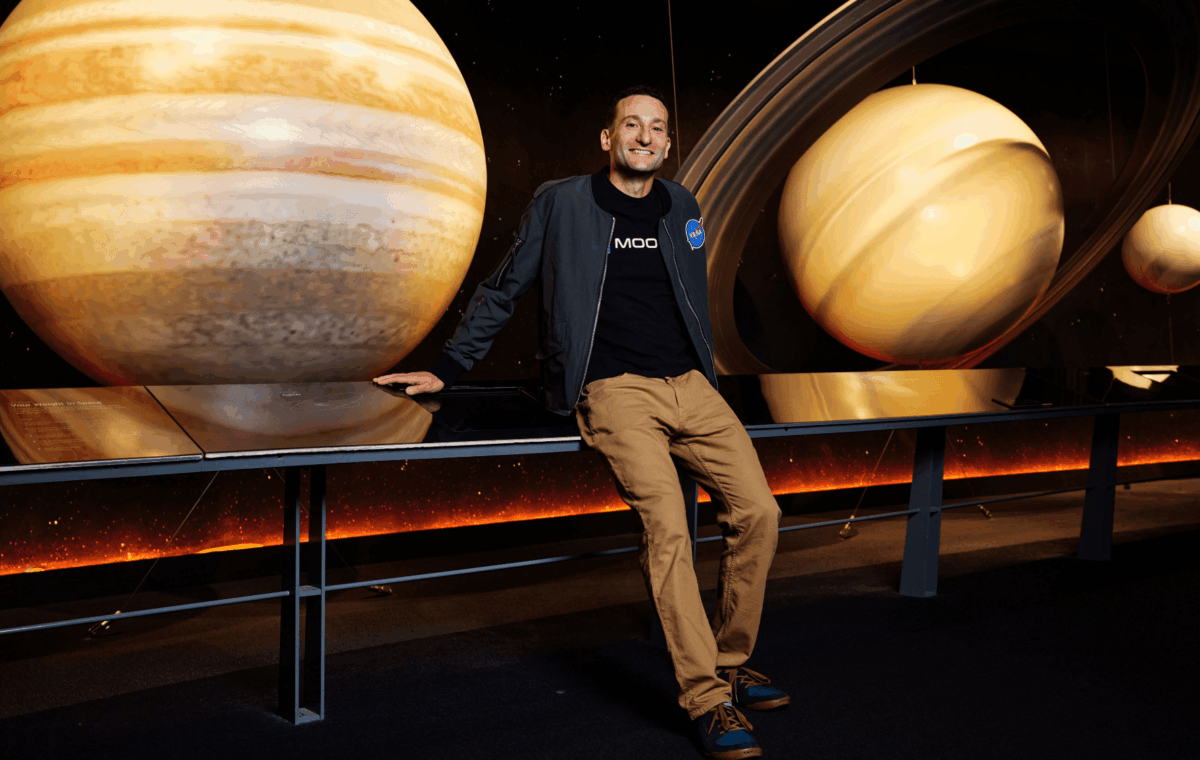
Cardiologist Dr. Eiman Jahangir was born during a war in Tehran, Iran, and immigrated to the United States at age four, settling in Nashville, Tennessee. He grew up with dreams of becoming a doctor and traveling to space, and his new book chronicles his childhood shaped by the Iran-Iraq War and journey becoming the first Iranian-American man to travel to space and the world’s first commercial physician astronaut.
Excerpted from A Heart for Space: An Astronaut’s Guide to Achieving the Impossible by Eiman Jahangir, MD. Copyright © 2026. Published by Forefront Books, distributed by Simon & Schuster. Reprinted with permission.
When I failed to even reach the interview stage in 2017, 2021, and 2025—at ages thirty-six, forty, and forty-four, respectively—it was clear that my door to NASA was shutting.
It was MoonDAO that finally gave me my ticket to space. A group of individuals decided to raise money through donations online to send someone to space. In one month, MoonDAO raised enough money to buy two tickets on Blue Origin’s New Shepard rocket. The first seat was reserved for a media influencer, and the community selected Coby Cotton from Dude Perfect to be their first astronaut. He flew to space on August 4, 2022. The second seat was put forward with a raffle.
The initial drawing was in 2022. We were on our babymoon, shortly before our daughter, Aylah, was born. I sat in the hotel lobby while my wife was asleep, watching the raffle drawing, waiting to see if I had won. I did not. Another blow.
A year passed, and the community and I were still waiting for MoonDAO to send their second astronaut to space. It never happened. For several reasons, the initial winner was unable to fly with Blue Origin. MoonDAO had to go back to the drawing board to select another astronaut. Over the course of that year, I had continued to enjoy the ride. I made friends with community members at MoonDAO, participated in events with them, and just was grateful to be around other space nerds. Still, I held hope I could find a way to space.
In late 2023, they repeated the raffle. Again, I entered. Again, I waited. This time I was sitting at our kitchen table with my wife and kids watching the drawing. They drew ten tickets, with the final ticket drawn being the grand-prize winner of a flight to space. I watched them pick each ticket. With each draw, my number was not picked. It was like a countdown to launch: 10, 9, 8, 7, 6, 5, 4 . . . and then mine was drawn! Fourth place . . . I had not won. I was bummed.
Amber looked up at me, smiling. “Don’t count yourself out,” she said. “You are closer to achieving this dream than you have been since you interviewed with NASA in 2013. If three people drop out or get disqualified, then you have your ticket to space.”
I waited. Months went by, and MoonDAO had not announced their second astronaut. Then, on April 8, 2024, as I was driving back from Bloomington, Indiana, with my family after watching the total solar eclipse, I got a message on my phone. It was Pablo Moncada-Larrotiz from MoonDAO. He wanted to talk. I assumed he would offer me a ticket to view the launch—a ticket I would happily take! We planned a call for the next day.
I was in clinic, between seeing patients, when he called. I rushed to my office to take it. Without much prologue, Pablo told me I had won the seat. I couldn’t believe it. I called my wife as soon as I got off with Pablo and then hurried down to my brother’s office and told him. I was going to space!
For the four months from my April 2024 phone call from MoonDAO to when I flew to space on August 29, 2024, I was on cloud nine. I couldn’t believe I would finally fulfill my dream. In fact, it still felt like it could be taken away at any moment. Honestly, even when I arrived at Blue Origin’s Astronaut Village outside of Van Horn, Texas—the site where astronauts spend their nights during training—I felt like my flight might not happen. I was enjoying every moment, from the sunsets and the food to the comradery and the training . . . but I wanted to be on that rocket hearing the countdown.
Finally, the day came, a culmination of approximately twenty years of work, from first looking up the qualifications to become an astronaut in March 2005 to flying on a single-stage rocket into space in August 2024.