Academics – and a former director of Australia’s Classification Board – say Halloween: The Game’s ban due to ‘incentivised drug use’ highlights an incoherent set of standards
Get our breaking news email, free app or daily news podcast
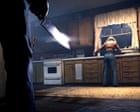
Halloween’s Michael Myers is one of film’s most feared boogeymen, responsible for some of the most brutal on-screen deaths in horror cinema. US video game developer Illfonic looked to reproduce those terrors in its upcoming title Halloween: The Game, with gruesome killings a major focus of the gameplay: for instance, you can stomp another player’s head through a toilet seat, or fry their brain by throwing them through a television screen.
But Australians will not be able to play Halloween: The Game, because it has been refused classification by the Classification Board, which means it is banned from sale within the country. And it’s not because of the violence or murders.
In the game, players can smoke marijuana to see the location of Michael Myers in order to avoid being killed – a use of drugs that Australia’s Classification Board has deemed a “gameplay advantage”. Under the Guidelines for the Classification of Computer Games 2023, video games are refused classification if they contain “illicit or proscribed drug use related to incentives or rewards”.
“Halloween: The Game contains illicit drug use that is linked to an incentive or reward, in that use of the drug provides a gameplay advantage to the player. It is on this basis that the game has been refused classification, as required under the Code and Guidelines,” the board wrote in a recent statement.
In the wake of the decision, Illfonic’s social media accounts have been flooded with comments from irate Australians. An FoI officer said the Classification Board had received more than 500 complaints in relation to Halloween: The Game.
The uproar has resurfaced longstanding grievances about how games are classified in Australia compared to film and television, and the inability for adults to access games widely available in other parts of the world.
Claire Henry, associate professor in screen at Flinders University and an Australian Research Council Decra fellow, says the board enforced the guidelines correctly but the controversy around the decision highlights “a mismatch between the community standards and the classification standards”.
The decision on Halloween: The Game follows several high-profile cases that have seen games such as State of Decay, Wasteland 3 and Saints Row IV banned in Australia for the same reason: incentivised drug use. All of these games were later reclassified after censoring aspects of their gameplay.
Dan Golding, professor of media at Monash University, says that two assumptions have been baked into the classifying of games in Australia. “Games have always been regulated based on the assumption there is something more impactful about doing, in a game, than there is about watching, in a film,” he says.
“A second assumption is that games are for kids – or at least the regulation system exists to protect kids.”
Ron Curry has battled these assumptions in skirmishes with the Classification Board over his nearly two decades as CEO of the Interactive Games & Entertainment Association (IGEA). Alongside a dogged public campaign and a cadre of journalists, the IGEA helped introduce an R18+ category for video games in 2013, the absence of which had stopped several games being released in Australia before.
After the R18+ classification was brought in, Curry noted the job was not finished – the trade-off for introducing the category was that video games were still seen as a distinct form of media, with greater risks attached.
“It still very clearly said games are different to all other media, it’s more dangerous, and we need to treat it more carefully,” says Curry.